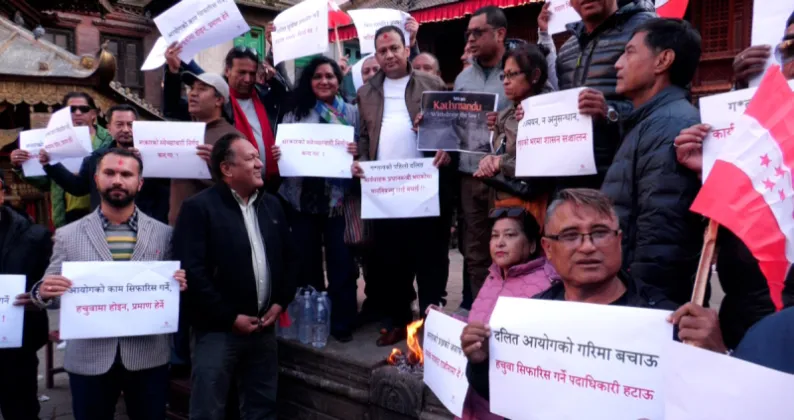
KATHMANDU — The Newar community of Kathmandu has launched a wave of protests against a classification that places 40 Newar surnames under the Dalit category, with demonstrations reported by Nepali news outlets on 28 and 29 November 2026. Community members say the listing fundamentally misrepresents their identity and have demanded that it be corrected without delay.
The demonstrations in the capital have brought members of the Newar community together in opposition to what they describe as an inaccurate and harmful classification of their surnames. According to reports by Thaha Khabar and Nepal Views, the community's grievance centers on the inclusion of 40 Newar surnames in the Dalit category, a move that protesters argue distorts the social identity of those who bear those names.
Community Says Identity Has Been Misrepresented
At the heart of the protest is the community's assertion that the listing misrepresents their identity. For the Newars, an indigenous community of the Kathmandu Valley with a rich cultural and linguistic heritage, surname carries deep significance as a marker of caste, clan and community belonging. Placing Newar surnames under the Dalit category, protesters contend, attaches to those names a classification that they say does not reflect the community's actual social standing.
The demand emerging from the protests is straightforward: the classification must be corrected. Community members have called on the authorities responsible for the listing to review and amend the categorization of the 40 surnames so that it no longer misstates the identity of the people concerned.
Protests Reported Across Nepali Media
The demonstrations drew coverage from Nepali news outlets over two consecutive days, on 28 and 29 November 2026. Thaha Khabar reported on the community's mobilization in Kathmandu, while Nepal Views covered the protest under the headline framing of the Newar community's objection to 40 Newar surnames being made Dalit.
The sustained coverage across multiple outlets on back-to-back days indicates that the issue has struck a nerve within the community and that protesters have kept up public pressure rather than staging a single-day demonstration. The protests have been centered in Kathmandu, the heartland of the Newar community and the location where the grievances have been most visibly aired.
What the Community Is Demanding
Based on the reporting available, the community's position consists of two core elements:
- Correction of the listing: The Newar community wants the classification of the 40 surnames under the Dalit category to be corrected, so that the record accurately reflects the community's identity.
- Recognition of the misrepresentation: Protesters have framed the issue not merely as an administrative error but as a misrepresentation of who they are, giving the demand a dimension that goes beyond paperwork to touch on dignity and self-identification.
The community has not, in the available reporting, indicated a willingness to accept the classification as it stands. The tone of the protests, as reflected in the news coverage, suggests members intend to pursue the correction until it is carried out.
Why the Classification Matters
Classification of surnames into caste categories in Nepal carries real consequences. Such listings are typically used for administrative purposes, including the design of social inclusion measures, reservation policies and targeted development programs for historically marginalized groups. When surnames are placed under a particular category, individuals bearing those names can find their official social identity defined accordingly in government records and related processes.
For the Newar community, the stakes in this dispute are therefore tied to how its members are recognized by the state and by society at large. Protesters argue that the inclusion of the 40 surnames in the Dalit category produces a picture of the community that its members reject, and that leaving the listing uncorrected would allow that misrepresentation to persist in official and public records.
Looking Ahead
As of the latest reporting on 29 November 2026, the protests in Kathmandu had continued, and there was no indication in the available coverage that the authorities had yet acted on the community's demand for correction. The Newar community's campaign now rests on whether the body responsible for the listing will review the classification of the 40 surnames and amend it as the protesters have asked.
What is clear from the demonstrations is that the community regards the matter as one that touches its core identity. The protests of 28 and 29 November 2026 have put the issue squarely before the public in Kathmandu, and the community has made its position unambiguous: the listing of 40 Newar surnames as Dalit is a misrepresentation, and it must be corrected.