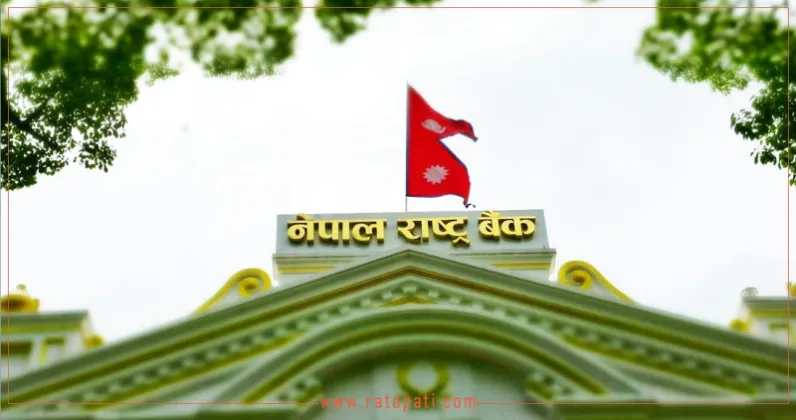
KATHMANDU - Nepal's economic growth rate slowed to 3.85 percent in fiscal year 2082-83, down from 4.43 percent in the previous fiscal year 2081-82, according to an annual report on economic activities published by Nepal Rastra Bank (NRB), the country's central bank. The report, which reviews the performance of key sectors across the economy, was published from Kathmandu with findings reported on November 25, 2026.
The deceleration in growth comes alongside worrying signals from the country's productive sectors. The report shows a decline in agricultural crop production and reveals that industrial capacity utilisation remained limited to just 48 percent, indicating that nearly half of the country's manufacturing potential went unused during the fiscal year.
Declining Agricultural Output Drags on Growth
A central finding of the Nepal Rastra Bank report is the contraction in agricultural crop production during fiscal year 2082-83. Agriculture remains one of the largest contributors to Nepal's gross domestic product and a primary source of employment for the majority of the population, making any downturn in crop output a significant drag on the overall growth figure.
The report's data confirms that crop production fell compared to the previous year, and this decline was a key factor behind the economy's deceleration to 3.85 percent from 4.43 percent in fiscal year 2081-82. When the agricultural sector underperforms, the impact is felt across rural incomes, food supplies and the wider demand environment, compounding the slowdown recorded by the central bank.
Industry Operating at Less Than Half Its Potential
The second major concern highlighted in the annual report is the state of the industrial sector. Capacity utilisation in industry remained limited to 48 percent during the fiscal year, meaning that more than half of the installed production capacity across the manufacturing sector stood idle.
Such a low level of capacity utilisation points to weak demand, constrained production activity and underperformance in an economy that has long struggled to expand its industrial base. With factories and production units running at less than half their potential, the industrial sector was unable to provide the momentum needed to offset the agricultural decline, reinforcing the overall slowdown captured in the 3.85 percent growth figure.
Central Bank Report Paints a Sobering Picture
Nepal Rastra Bank publishes its annual report on economic activities as a comprehensive assessment of the economy's performance over the fiscal year, drawing on data from key productive sectors. The latest edition documents a clear deceleration: growth of 3.85 percent in fiscal year 2082-83 against 4.43 percent in fiscal year 2081-82, a drop of more than half a percentage point.
The combination of slowing overall growth, shrinking agricultural output and low industrial capacity use suggests the slowdown was broad-based rather than confined to a single sector. Both of the economy's principal productive engines - agriculture and industry - underperformed during the year under review, according to the report.
The findings were widely reported by Nepali media outlets, including Ratopati and Khabarhub, on November 25, 2026, drawing public attention to the state of the economy as reflected in the central bank's own assessment.
What the Slowdown Means for Nepal
The figures published by Nepal Rastra Bank underline the challenges facing Nepal's economy in the current fiscal year. With growth falling below the previous year's 4.43 percent, and with agriculture contracting and industry running at only 48 percent of capacity, the report provides an official snapshot of an economy struggling to convert its productive potential into output.
The annual report serves as an important reference point for policymakers, businesses and observers of the Nepali economy, documenting the performance of economic activities in a single authoritative document. The data on declining crop production and underutilised industrial capacity is expected to inform discussion on how the country can revive growth in the coming fiscal years.
For now, the central bank's assessment makes clear that fiscal year 2082-83 was a year of deceleration for Nepal, with the 3.85 percent growth rate standing as the headline measure of an economy performing below its recent trajectory.