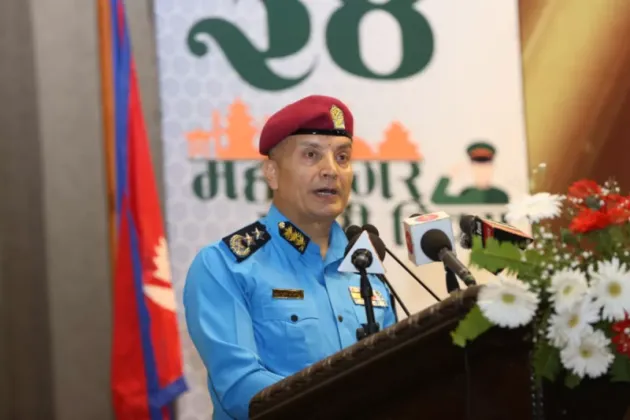
The Supreme Court of Nepal on Wednesday declined to issue an interim order in a writ petition filed by Dan Bahadur Karki, ruling that the circumstances did not currently warrant such an order. A joint bench comprising Justices Nripadhwaj Niraula and Shrikant Paudel delivered the ruling after conducting an initial hearing on the petition.
In its order, the bench observed that no situation had emerged at present that required the issuance of an interim injunction. The justices noted that the issues raised in the petition could be examined and resolved during the final hearing, and directed that the questions raised by the petitioner be addressed and settled at that stage.
What the Bench Decided
The joint bench of Justices Nripadhwaj Niraula and Shrikant Paudel heard the petition on Wednesday and made its decision public through an order issued in the name of the Office of the Prime Minister and Council of Ministers. The court concluded that there was no immediate need for an interim order and that the matters raised in the writ petition would be taken up for full deliberation at the time of the final hearing.
By refusing the interim relief, the Supreme Court has effectively allowed the status quo to remain in place until the petition comes up for a conclusive hearing. The court's ruling means that the substance of Karki's petition, including the specific demands and claims he has raised, will now be adjudicated through the normal course of judicial proceedings rather than through an emergency measure.
The Petition and Its Subject Matter
Dan Bahadur Karki had moved the Supreme Court through a writ petition seeking judicial intervention on matters he raised before the country's highest court. Interim orders in such petitions are typically sought by petitioners who argue that delay in judicial action could cause irreparable harm or that an urgent decision is necessary before the case can be heard in full.
The Supreme Court, however, was not persuaded that the case met the threshold for such emergency relief. The joint bench stated that no situation warranting an interim order was visible at present, a formulation commonly used by the court when it determines that the petitioner has not demonstrated sufficient urgency or irreparable harm to justify an injunction before the final hearing.
What Happens Next
With the interim order refused, the petition will proceed through the Supreme Court's regular procedural track. The questions raised by Dan Bahadur Karki in his writ petition will now be scheduled for a final hearing, where both sides will have the opportunity to present their arguments in full. The bench has made clear that the issues will be resolved and addressed at that stage.
The decision underscores the Supreme Court's established practice of reserving substantive rulings for the final hearing in writ proceedings, using interim orders only when a case presents genuine urgency. For the petitioner, Wednesday's ruling means a wait until the case is listed for conclusive adjudication; for the respondents, it means no immediate change in the state of affairs pending that hearing.
The ruling was reported by multiple Nepali media outlets, including Rastriya Samachar Samiti coverage carried by Gorkhapatra Online, Rato Pati, and Global Aawaj, which published details of the joint bench's decision on Wednesday.
Interim Orders in Nepal's Judicial Practice
Under Nepal's judicial practice, an interim order is a temporary directive issued by a court to preserve the rights of parties or prevent irreversible harm while a case is pending. The Supreme Court and High Courts in Nepal frequently face petitions seeking such orders, and benches routinely assess whether the petitioner has shown a pressing need before granting them. Refusing an interim order does not amount to a dismissal of the petition itself; the case remains live and is decided on its merits at the final hearing.
In this instance, the joint bench of Justices Niraula and Paudel followed that established approach, holding that the present circumstances did not justify interim intervention and that the petitioner's grievances would receive full consideration in due course. The final hearing of Dan Bahadur Karki's petition is expected to settle the questions he has placed before the court.
- The Supreme Court refused to issue an interim order on Dan Bahadur Karki's writ petition on Wednesday.
- A joint bench of Justices Nripadhwaj Niraula and Shrikant Paudel issued the ruling.
- The bench observed that no situation warranting an interim order existed at present.
- The issues raised in the petition will be resolved and addressed during the final hearing.
Further details of the case, including the specific relief sought and the respondents named in the petition, are expected to become clearer as the matter proceeds toward its final hearing at the Supreme Court.