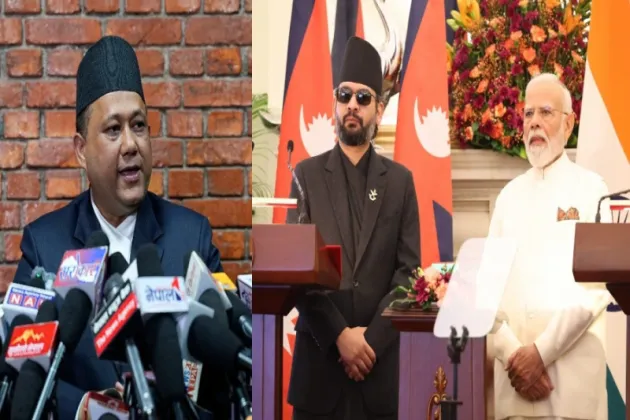
Prime Minister Balendra Shah and Indian Prime Minister Narendra Modi have directed their respective foreign secretaries to address outstanding boundary issues between the two countries, including the long-running map dispute, during a high-level bilateral engagement. The directive came in a joint statement issued following the Indian Prime Minister's visit to Nepal, marking a significant step in the two neighbours' efforts to resolve one of the most sensitive matters in their relationship.
In the joint statement, the two leaders noted with satisfaction the progress achieved in joint field work relating to the maintenance and repair of boundary pillars along the Nepal-India border. This cooperation on the ground, officials observed, has helped build momentum and mutual confidence in the broader boundary-management process between the two countries.
Foreign Secretary-Level Mechanism
The two Prime Ministers instructed their respective foreign secretaries to work on the outstanding boundary issues. To take the discussions forward, a foreign secretary-level mechanism is set to be used as the platform for dialogue, according to the joint statement.
The decision effectively elevates the boundary talks to the highest bureaucratic level, signalling political will at the top leadership in both New Delhi and Kathmandu to move beyond the stalemate that has persisted for years. The foreign secretaries of Nepal and India are expected to lead the process in the coming months.
The Map Dispute and Boundary Pillars
The outstanding boundary issues include the ongoing map dispute, which has remained a point of friction since Nepal released a new political map covering areas east of the Kali river, including Limpiyadhura, Lipulekh and Kalapani. India has consistently rejected Nepal's claims, and talks on the matter had remained frozen for years.
At the same time, both sides have continued cooperation on boundary maintenance. The joint statement highlighted the progress in joint field work on the maintenance and repair of boundary pillars, a routine but important exercise carried out by survey teams from both countries. Officials view this technical collaboration as a foundation for broader negotiations, as it demonstrates that the two sides can work together on boundary matters even amid political disagreements.
Broader Context of the Visit
The boundary agreement was part of a wider set of outcomes announced following Prime Minister Modi's visit. The joint statement covered a range of areas of bilateral cooperation, reflecting the depth and breadth of Nepal-India ties spanning trade, energy, connectivity and people-to-people links.
For Nepal, the inclusion of boundary issues in the joint statement is significant, as successive governments in Kathmandu have sought to bring the matter back onto the bilateral agenda. For India, engaging on the issue through an established mechanism offers a pathway to manage a dispute that has, at times, stirred strong public sentiment in Nepal.
Way Forward
With the directive now formally issued, attention will turn to the foreign secretary-level mechanism and how quickly the two sides can schedule substantive discussions. Observers note that while the joint statement represents progress in principle, the actual resolution of the boundary issues, including the map dispute, will depend on the sincerity and pace of the negotiations ahead.
Nevertheless, the agreement to advance border talks through a dedicated mechanism, coupled with continued cooperation on boundary pillar maintenance, is being seen as a positive signal. Both governments have framed the move as part of their shared commitment to maintaining peace, friendship and stability along the open border that the two countries share.
Source: My Republica. Read the original report here.