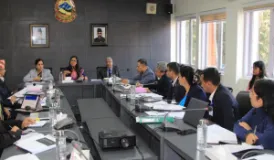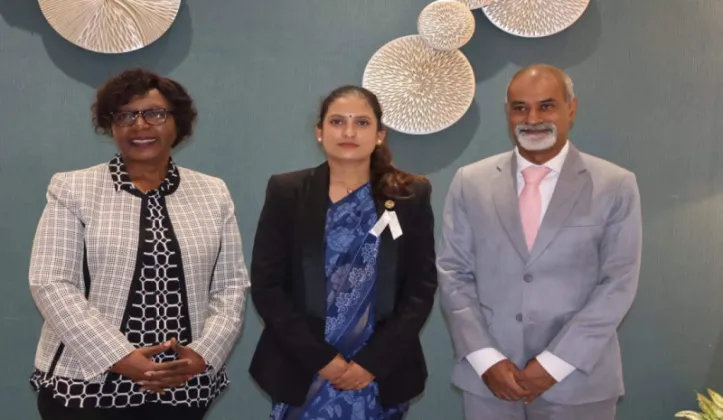
Minister for Women, Children, Gender and Sexual Minorities and Social Security Sita Badi held a meeting with Sanjay Wijesekera, UNICEF's Regional Director for East Asia and the Pacific, in Kathmandu on Thursday. The talks centred on strengthening cooperation and partnership between the ministry and the United Nations children's agency in the areas of children's education, health and protection.
The meeting, reported by Nepali news outlets including Gorkhapatra Online and Ratopati, also focused on ways to reduce violence against children and to combat child trafficking, issues that remain significant challenges for Nepal despite years of policy attention and joint programmes with international partners.
Deepening partnership with UNICEF
During the discussion, Minister Badi and the UNICEF regional director explored avenues for expanded collaboration between the government and the agency. According to reports of the meeting, the two sides discussed preparations for joint work aimed at reducing child violence and trafficking, signalling that both the ministry and UNICEF see these two areas as priorities for future cooperation.
Education and health featured prominently in the talks. Cooperation in these sectors has long formed the backbone of UNICEF's engagement with Nepal, covering areas such as school enrolment and retention, child nutrition, immunisation and access to basic health services. The meeting in Kathmandu is understood to have reviewed how the existing partnership can be taken forward to benefit children across the country.
Child protection, the third pillar of the discussion, encompasses a broad range of concerns including abuse, exploitation and trafficking of minors. The ministry, which holds the primary mandate for children's welfare within the government, has been working with development partners on legal frameworks, awareness campaigns and support services aimed at protecting children at risk.
Focus on child violence and trafficking
The reported emphasis on child violence and trafficking reflects persistent concerns within Nepal. Children, particularly those from poor and marginalised communities, remain vulnerable to various forms of violence, including at home, in schools and in workplaces. Trafficking of children, both across borders and within the country for labour and other forms of exploitation, continues to be flagged by rights organisations and government agencies alike as a problem requiring sustained intervention.
While Thursday's meeting did not produce a detailed public announcement of new programmes, reports indicated that both sides discussed preparations for collaboration specifically targeting these issues. Such preparatory talks typically precede the formalisation of joint initiatives between government ministries and UN agencies.
UNICEF's engagement in Nepal
UNICEF maintains a long-standing presence in Nepal, working with federal, provincial and local governments on child rights, education, health, nutrition, water and sanitation, and child protection. The agency's regional office covers East Asia and the Pacific, and its regional director's visit to Kathmandu underscores the importance the organisation attaches to its partnership with the country.
Sanjay Wijesekera, who leads UNICEF's work across the East Asia and Pacific region, met the minister as part of engagement with the government body responsible for children's welfare. The Ministry of Women, Children, Gender and Sexual Minorities and Social Security is the central government institution tasked with formulating and implementing policies related to children's rights and protection, making it UNICEF's key counterpart in the sector.
The road ahead
Thursday's meeting signals continuity in the relationship between Nepal's government and UNICEF on child-focused programmes. With education, health and protection identified as areas of cooperation, and with specific attention given to violence against children and trafficking, the discussions are expected to feed into future joint planning between the ministry and the agency.
For the ministry, engagement with international partners such as UNICEF provides technical support, funding channels and global expertise that complement domestic efforts. For UNICEF, coordination with the government is essential for delivering programmes that reach children nationwide, in line with the agency's mandate under the United Nations.
Further details on the specific outcomes of the meeting, including any agreements or programme commitments, have not yet been made public. Observers are likely to watch for follow-up announcements as both sides move from preparatory discussions towards concrete collaboration on reducing child violence and trafficking in Nepal.