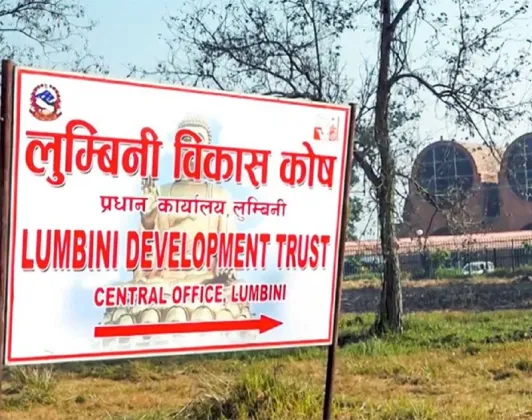
The Lumbini Development Trust has begun concrete steps to manage and systematize the Mundan ritual, the traditional head-shaving ceremony practised by pilgrims in the vicinity of the Mayadevi Temple in Lumbini. Trust member-secretary Er. Santosh Pandey has initiated a formal effort to bring order to the practice, which has so far been carried out informally around one of the world's most sacred Buddhist pilgrimage sites.
As part of this initiative, Pandey has sought detailed information from the concerned parties regarding the reasons behind delays in constructing the access road and parking area designated for the ritual site. The infrastructure was intended to support visitors who come to perform the Mundan ritual, and its slow progress has become a key concern for the Trust as it moves to formalize the ceremony.
A Ritual Site Within the Sacred Garden
The area earmarked for the Mundan ritual falls within the Sacred Garden section of the Lumbini Master Plan, the overarching framework that governs development in and around the birthplace of Gautam Buddha. The Sacred Garden is a protected monument zone, and any development work carried out there must follow prescribed procedures designed to safeguard the archaeological and spiritual integrity of the site.
This protected status means that construction of facilities such as the access road and parking area cannot proceed without adhering to the regulations set out under the Master Plan. The Trust's inquiry into the delays suggests that compliance requirements may be among the factors affecting the pace of the work, although the Trust has so far focused on gathering information from those responsible for the project.
Why Systematizing the Mundan Ritual Matters
The Mundan ritual, in which devotees shave their heads as an act of devotion, is a longstanding practice among pilgrims visiting Lumbini. Many visitors, particularly from Buddhist and Hindu traditions, perform the ceremony near the Mayadevi Temple, the exact spot believed to mark the birth of Prince Siddhartha, who later became the Buddha.
Formalizing the practice carries significance on several fronts:
- It helps maintain the sanctity and cleanliness of the Sacred Garden, a UNESCO World Heritage site that draws pilgrims and tourists from around the world.
- It provides designated space and facilities so that rituals can be performed without disturbing the monument zone.
- It supports the broader management goals of the Lumbini Development Trust, which is charged with preserving and developing the holy site under the Master Plan.
The Trust's Next Steps
By asking the concerned parties to explain the holdup in building the access road and parking area, the Trust has signaled that it intends to hold the project accountable and push the infrastructure work forward. A functioning road and parking facility are seen as prerequisites for properly managing the flow of devotees who wish to perform the Mundan ritual at the designated site.
The effort led by member-secretary Pandey reflects a wider push by the Trust to bring order and discipline to activities taking place within the sacred premises. As the designated custodian of Lumbini, the Trust must balance the religious needs of pilgrims with the conservation requirements that apply to the protected monument zone.
Looking Ahead
Once the pending information is received and the obstacles to construction are identified, the Trust is expected to chart a course for completing the access road and parking area in line with Master Plan procedures. The systematization of the Mundan ritual is likely to proceed in step with that infrastructure, giving devotees an organized, respectful setting for one of the most personal acts of devotion performed at the birthplace of the Buddha.
For now, the Trust's intervention marks the first formal step toward managing a ritual that has long been part of the pilgrim experience at Lumbini but has lacked dedicated, properly regulated space. Stakeholders and devotees alike will be watching to see how quickly the stalled infrastructure work resumes and how the new arrangements shape the pilgrimage experience at the Sacred Garden.
Sources: Ratopati, Nagarik News, Nepal Lead coming