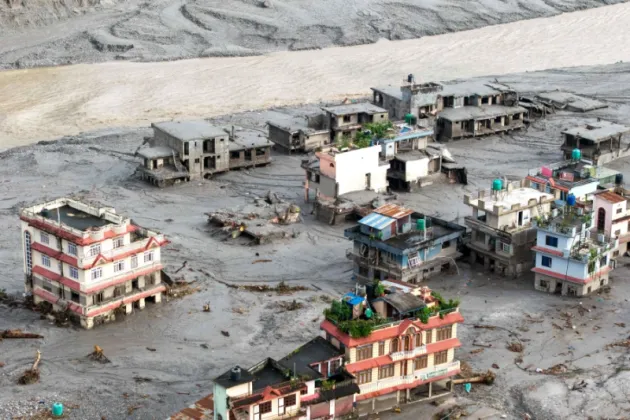
The Fund for Responding to Loss and Damage (FRLD) has approved a grant of 20 million US dollars, approximately Rs 3 billion, to support relief, rehabilitation, and reconstruction in Nepali communities affected by climate-induced flooding along the Bhote Koshi and Trishuli rivers. The decision was finalized during a special meeting of the fund's board on Thursday, securing a substantial package of international support for recovery and reconstruction following the devastating floods in the Bhote Koshi region.
What the Grant Will Fund
The approved allocation is designed to carry communities through the full cycle of disaster response. According to the decision, the money will back relief operations for flood-affected populations, the rehabilitation of damaged services and livelihoods, and the longer-term reconstruction of what the floods destroyed along the two river corridors.
For the communities settled along the Bhote Koshi and Trishuli, the board's approval converts international climate pledges into a concrete funding stream. The grant is intended specifically for recovery and reconstruction following the devastating floods in the Bhote Koshi region, which bore the brunt of the disaster.
Key Details at a Glance
- Amount approved: 20 million US dollars, equivalent to roughly Rs 3 billion
- Approved by: the board of the Fund for Responding to Loss and Damage (FRLD)
- When: finalized at a special meeting of the board on Thursday
- Where it will go: Nepali communities affected by climate-induced flooding along the Bhote Koshi and Trishuli rivers
- Purpose: relief, rehabilitation, and reconstruction, with recovery and rebuilding in the Bhote Koshi region at the center of the allocation
The three-part framing of the grant, covering relief, rehabilitation, and reconstruction, signals that the funding is expected to address both the immediate aftermath of the floods and the longer process of rebuilding. In disaster recovery, relief generally covers urgent needs in the period right after a disaster strikes, while rehabilitation and reconstruction extend into the months and years required to restore homes, roads, and the community infrastructure people depend on.
Why Grant Financing Matters
The fact that the support comes as a grant, rather than a loan, is central to its significance. Countries recovering from climate-induced disasters often face a difficult balance between meeting urgent reconstruction needs and taking on new financial obligations. A 20 million dollar grant, roughly Rs 3 billion, allows recovery work to proceed without adding a debt burden on top of the destruction already caused.
The approval also places Nepal among the developing countries turning to the Fund for Responding to Loss and Damage in the aftermath of extreme weather. The fund's mandate, reflected directly in its name, is to respond to loss and damage, the category of climate harm that occurs when floods and other disasters exceed what communities are able to adapt to or withstand.
For the affected river valleys, the practical meaning of the decision is that resources can now be directed toward restoring what the floods took away, from damaged physical infrastructure to disrupted livelihoods, under the umbrella of a single approved allocation.
The Loss and Damage Fund in Context
The Fund for Responding to Loss and Damage was established through the United Nations climate process to channel support to developing countries confronting climate impacts that go beyond what adaptation can prevent. Its board governs how the fund's resources are committed, and it was that board, meeting in special session on Thursday, that produced the formal decision approving the grant for Nepal.
That governance detail matters because board approval is what gives the allocation its force. The decision on Thursday does not simply signal intent. It finalizes the commitment of 20 million dollars for Nepal's flood response and opens the way for the funds to be applied to relief, rehabilitation, and reconstruction.
The fund's focus on climate-induced flooding in Nepal underscores the nature of the problem it was created to address. Flooding along rivers such as the Bhote Koshi and Trishuli is precisely the kind of climate-driven disaster that falls under loss and damage, striking communities whose exposure to extreme weather leaves them with recovery costs they cannot shoulder alone.
What Comes Next
With the board's approval finalized, attention now turns to delivery. The central questions ahead are how the Rs 3 billion allocation is programmed and how quickly relief reaches the families and communities along the Bhote Koshi and Trishuli who are still coping with the aftermath of the floods. The decision sets the funding envelope. The work of translating it into rebuilt homes, restored services, and recovered livelihoods now follows.
For Nepal, the approval represents a significant vote of international confidence in the country's flood recovery effort. For the fund itself, it demonstrates the loss and damage mechanism in operation, responding to a climate disaster with dedicated grant support for the people left to rebuild.
As reported by My Republica, the grant is intended for recovery and reconstruction following the devastating floods in the Bhote Koshi region.