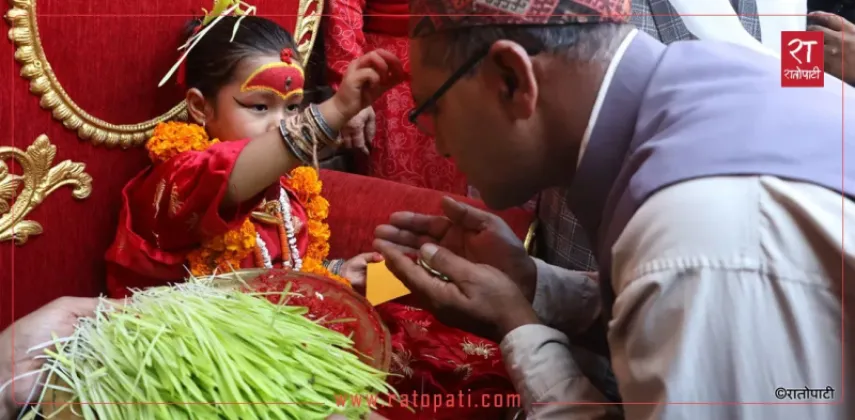
The living goddess Kumari of Madhyapur Thimi was taken to Layaku Durbar on Wednesday, returning to the historic palace after a gap of 62 years, according to reports by Ratopati and Setopati. Devotees who gathered at the durbar received Dashain tika from the Kumari, making the occasion one of the most memorable events of this year's festival season for the Newar community of the Bhaktapur region.
The homecoming of the living goddess to the palace, documented in photographs published with the reports, brought an end to a wait spanning more than six decades. For devotees of Madhyapur Thimi and the surrounding areas, the sight of the Kumari bestowing tika at Layaku Durbar was at once a religious blessing and a moment of deep cultural pride.
A Rare Homecoming After Six Decades
Layaku Durbar holds a central place in the history and identity of the region, and the Kumari's return there after 62 years lent the ceremony exceptional weight. Reports described how the living goddess was brought to the durbar, where worshippers received Dashain tika from her on Wednesday, the day devotees traditionally seek blessings at the height of the festival.
According to the reports, the goddess had not been taken to the durbar in 62 years, meaning that entire generations of worshippers had grown up without ever witnessing the scene that unfolded on the palace grounds. Ratopati's coverage, which was accompanied by photographs of the event, captured the atmosphere as the Kumari offered tika to the devotees who had assembled for the rare ceremony.
Dashain Tika: A Blessing from the Living Goddess
Dashain, Nepal's longest and most widely celebrated festival, reaches its emotional and spiritual peak with the bestowal of tika, the auspicious mark of rice, vermillion and yogurt placed on the forehead as a blessing for prosperity, health and protection. Receiving tika from the Kumari is regarded as especially auspicious, and devotees consider it a rare privilege to be blessed directly by the living goddess.
That is what made Wednesday's gathering so significant for those present. Bringing the goddess to the historic durbar allowed worshippers to receive her tika on grounds steeped in Newar history, fusing the region's living faith with its architectural and royal heritage. The bestowal of tika by the Kumari is one of the most sought-after rituals of the Dashain period, and the opportunity to receive it at Layaku Durbar gave this year's festival a dimension that devotees had never before experienced in their lifetimes.
The Living Goddess Tradition of the Newars
The Kumari tradition is one of the most distinctive cultural practices of the Kathmandu Valley, in which a young girl is venerated as the living embodiment of the goddess. Madhyapur Thimi, a historic Newar town in Bhaktapur district known for its festivals, music and craftsmanship, maintains its own Kumari, who occupies a cherished position in the community's religious life. Key features of the tradition include:
- The Kumari is a prepubescent girl worshipped as the living form of the goddess, with devotees believing that the divine presence dwells in her throughout her tenure.
- She is honoured with special rituals, and her blessings are sought on important occasions, particularly during major festivals such as Dashain.
- Devotees regard the darshan, or the sight of the Kumari, as auspicious, and her presence is considered essential to the completeness of festival observances.
- Her tenure traditionally ends with the onset of puberty, after which a successor is chosen and the unbroken tradition continues.
In Thimi, as in other Newar settlements across the valley, the Kumari is not a distant symbol but an intimate part of everyday devotion. Families regard her blessings as vital for wellbeing, and ceremonies involving the goddess draw participation from across the community. It is against this backdrop that her return to Layaku Durbar, a palace long intertwined with the ritual life of the region, carried such resonance for the devotees who gathered on Wednesday.
A Moment That Connects Generations
For the Newar community, the ceremony offered something rarer still: the chance to witness a ritual that had faded entirely from living memory. With 62 years having passed since the goddess was last brought to the durbar, most of those receiving tika on Wednesday had never seen the Kumari honoured at the historic palace, and elders who remembered earlier observances witnessed a tradition revived before their eyes.
The photographs published by Ratopati now stand as a visual record of the day the living goddess returned to Layaku Durbar. Beyond the individual blessings bestowed through the tika, the event underscored the enduring bond between the Kumari and the people of Madhyapur Thimi, and demonstrated how a tradition sustained across centuries can still gather an entire community in devotion when the goddess comes home.