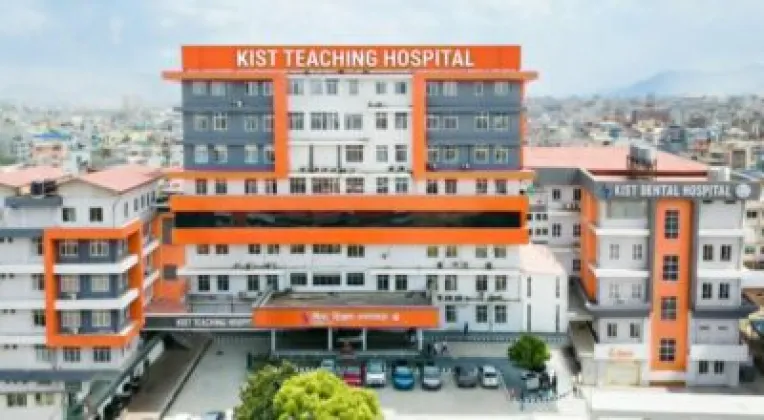
Kist Teaching Hospital in Gwarko, Lalitpur, and India's Medanta-Gurugram have completed one year of medical collaboration, a milestone the two institutions marked on Friday with a special ceremony and continuing medical education (CME) programme at the Radisson Hotel in Lazimpat, Kathmandu. Held under the title 'Clinico-Surgical Excellence in Collaboration', the event served a dual purpose: reviewing the first year of joint work between the Nepali and Indian hospitals, and announcing plans to expand specialist health services in Nepal through the partnership. It also gave doctors from both sides a platform to share information on the latest treatment methods and technologies.
Milestone Celebrated in Kathmandu
The gathering at the Radisson Hotel formally marked twelve months of cooperation between a teaching hospital in the Kathmandu Valley and one of India's prominent private multi-specialty hospitals based in Gurugram. Kist Teaching Hospital, located in Gwarko in Lalitpur district, and Medanta-Gurugram have spent the past year building a clinical relationship that spans medical and surgical care.
Friday's ceremony, however, was framed as more than a commemoration. According to reports published by Khabarhub and Ajako Artha, the hospitals used the occasion to look back at the collaboration's first year and, more significantly, to signal where it is headed next.
Among the key points to emerge from the event were:
- The completion of one year of medical collaboration between Kist Teaching Hospital and Medanta-Gurugram.
- A special ceremony and CME programme held on Friday at the Radisson Hotel in Lazimpat, Kathmandu.
- The sharing of information on the latest treatment methods and technologies between the two institutions.
- An announcement of plans to expand specialist health services in Nepal through the partnership.
A CME Built on Shared Clinical Learning
Continuing medical education occupies an important place in modern healthcare systems. These structured programmes allow practicing doctors and surgeons to stay current with developments in diagnosis, treatment and surgical technique, often learning directly from specialists working at the leading edge of their fields. By hosting Friday's CME jointly, Kist and Medanta turned what is typically an in-house academic exercise into a shared platform for exchange between the two partner institutions.
The event's title, 'Clinico-Surgical Excellence in Collaboration', reflected this dual character. It pointed both to the clinical and surgical focus of the partnership and to the collaborative manner in which the two hospitals have worked since the relationship began. For a teaching hospital such as Kist, direct engagement with specialists from a major Indian multi-specialty centre offers a channel through which contemporary treatment practices and technologies can be discussed and disseminated among Nepali medical professionals.
The emphasis on sharing information about the latest treatment methods and technologies was central to the day's programme, giving attending clinicians a structured setting in which the experiences of both hospitals over the past year could be compared and applied.
Plans to Expand Specialist Services in Nepal
The most consequential announcement of the day concerned the future: the two hospitals intend to expand specialist health services in Nepal through their collaboration. While further specifics of the expansion were not detailed in the available reports, the direction of travel was clear. The partnership, having completed its first year, is being positioned as a vehicle for broadening the range of specialist care available within Nepal itself.
The announcement carries particular resonance in the Nepali context. Each year, many Nepali patients travel to India for advanced investigations and complex treatment, with large private hospitals in and around the Delhi region among the most sought-after destinations. Gurugram, where Medanta is based, lies within this corridor of cross-border medical travel. Partnerships between Nepali hospitals and Indian healthcare institutions are widely seen as a way to shorten that journey, by bringing specialist expertise, training and technology to hospitals in Nepal so that more treatment can be delivered closer to home.
For Kist Teaching Hospital, the collaboration offers a pathway to deepen its specialist offerings in partnership with an established Indian institution. For patients in Lalitpur and the wider Kathmandu Valley, the announced expansion of specialist services points toward greater access to advanced care without leaving the country.
A Partnership Entering Its Second Year
With the first year complete and expansion plans on the table, the Kist-Medanta relationship now moves into a phase in which its impact will be measured less by ceremony and more by service delivery. Friday's event offered a template of sorts for what that phase could look like: Nepali and Indian specialists meeting in a shared academic setting, exchanging knowledge on the latest treatment methods and technologies, and communicating a clear intent to grow specialist capacity in Nepal.
The one-year milestone, marked amid the ceremony and academic sessions at Lazimpat, stands as a marker of intent from both institutions. The message from the event was straightforward: the collaboration's first year has laid a foundation, and the work of expanding specialist health services in Nepal through the partnership has now been formally set in motion.