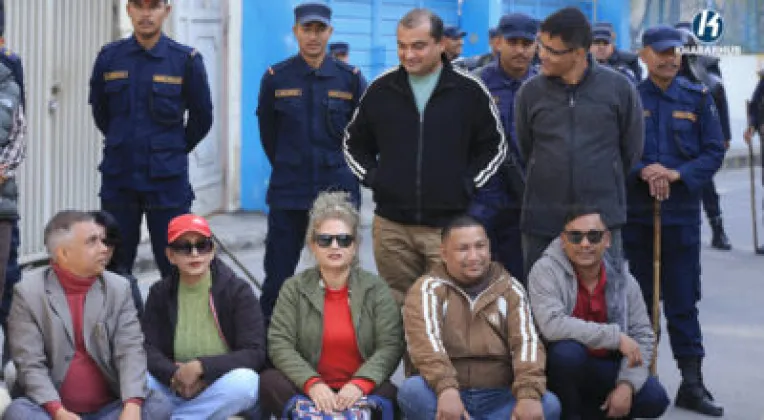
The Federation of Nepali Journalists (FNJ) Central Committee on November 29, 2026, staged a sit-in at the central office of the Rastriya Swatantra Party (RSP) in Balaju, Kathmandu, pressing the party to back the withdrawal of the Press Council ordinance.
Protesters raised slogans during the sit-in, demanding that the ordinance be scrapped and that any legislation concerning the press be introduced through Parliament instead. They also called for the reversal of cuts made to public welfare advertising, which has been a key concern for media houses struggling with shrinking revenues.
Demands raised by the FNJ
The sit-in focused on three principal demands:
- Withdrawal of the Press Council ordinance, which the federation says was brought in without parliamentary deliberation
- Introduction of press-related legislation through Parliament so that elected representatives can debate and scrutinise it
- Reversal of the cuts to public welfare advertising that have hit media outlets across the country
Journalists at the protest chanted slogans reflecting these demands, making clear that the federation intends to keep pressure on political parties until its concerns are addressed.
Targeting the RSP
The choice of venue carried significance. By staging the sit-in at the RSP's central office in Balaju, the FNJ aimed its protest squarely at a party represented in Parliament, signalling that the issue of press freedom is not confined to disputes with the government but extends to all political forces.
The Rastriya Swatantra Party has emerged as a prominent political force in recent years, and the FNJ's decision to bring its protest to the party's doorstep underscores the federation's strategy of mobilising directly against political parties whose positions matter in shaping press regulation.
Background: the ordinance dispute
The Press Council ordinance has become a flashpoint between Nepal's journalistic community and the authorities. Journalists have argued that bringing such a measure through an ordinance, rather than through Parliament, sidesteps democratic process and deprives lawmakers and stakeholders of the chance to debate provisions affecting the media.
The FNJ Central Committee has maintained that press-related laws must go through the legislative route, with full discussion in Parliament, rather than being enacted through ordinances issued without broader consultation.
Advertising cuts add to media woes
Alongside the ordinance dispute, the reduction in public welfare advertising has emerged as a serious grievance for the media sector. Public welfare advertising is a significant source of revenue for many outlets, particularly smaller and regional publications, and cuts to such spending have deepened financial pressures on media houses.
Protesters at the Balaju sit-in demanded that these cuts be reversed, raising slogans to that effect and linking the advertising issue to the broader question of the government's treatment of the press.
Continuing pressure
The November 29 sit-in is part of a wider campaign by the FNJ to defend press freedom and the economic interests of journalists and media organisations. By taking its protest to the central office of a major political party, the federation has signalled that it will target not only the government but also individual parties whose support is needed to change policy.
The federation's Central Committee led the action, and photos of the protest published by news outlets showed journalists gathered at the RSP office with banners and slogans. The event drew coverage from multiple news portals, reflecting the media community's united stance on the ordinance and the advertising cuts.
Whether the RSP responds to the demands raised at its doorstep remains to be seen, but the FNJ has made clear that the withdrawal of the Press Council ordinance, parliamentary legislation, and restoration of public welfare advertising are non-negotiable priorities for Nepal's journalistic community.