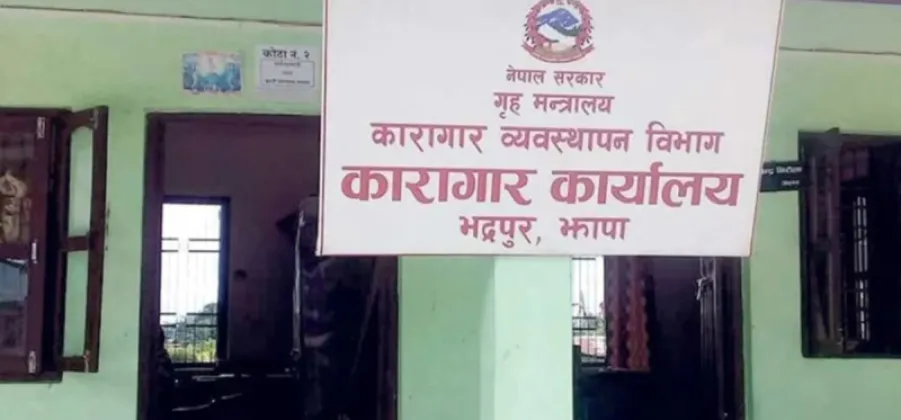
Jhapa Prison is currently holding more than twice the number of people it was designed to accommodate, with a total of 1,710 inmates and detainees living in severely cramped conditions. According to prison chief Purnabahadur Khatri, the facility, located in Jhapa district in Nepal's eastern Tarai, houses 929 convicts and 781 detainees, figures that far exceed the prison's official capacity of roughly 800 people.
The overcrowding has turned daily life inside the prison into a struggle. Inmates are forced to share cramped rooms with little space to move, and the situation has been worsened by the state of the building itself, which is now more than six decades old.
A Building Past Its Time
The prison's main structure was built around sixty years ago, and its age is showing. The rooms that were originally designed to hold a limited number of prisoners now accommodate far more people than they can reasonably fit. The walls, floors and general infrastructure have deteriorated over the decades, yet the facility continues to serve as the primary correctional institution for the entire district.
Prison chief Purnabahadur Khatri acknowledged that the building's condition and the sheer number of occupants have combined to create hardship for those held there. With nearly 929 convicts and 781 detainees sharing the same limited space, the prison's rooms have become congested, leaving inmates with inadequate room to sleep, move about or carry out basic daily routines.
Convicts and Detainees Alike
The 1,710 people currently held in Jhapa Prison fall into two broad categories. The 929 convicts are those who have been tried and sentenced by the courts, while the 781 detainees are individuals who are still undergoing trial or are otherwise in custody pending the resolution of their cases. The nearly even split between the two groups highlights the scale of the facility's burden, as it must simultaneously serve as a place of incarceration for convicted prisoners and as a holding facility for those awaiting judicial outcomes.
The presence of such a large detainee population also means the overcrowding is not a fixed or settled problem. As cases move through the district's courts, the numbers can shift, and new arrests add further pressure to a facility that is already stretched well beyond its limits.
Hardship Behind the Walls
Living conditions inside the prison have deteriorated to the point where inmates are suffering on a daily basis. The combination of a six-decade-old building and rooms packed with more than double the intended population has forced prisoners to live in hardship, according to the prison administration.
Overcrowding of this magnitude typically strains every aspect of prison life, from sanitation and hygiene to access to open space, ventilation and sleeping arrangements. While the available reports do not detail specific outbreaks of disease or other consequences, the prison chief's own acknowledgment that inmates are living in hardship underscores the seriousness of the situation.
A Wider Pattern in Nepal's Prisons
Jhapa is not alone in facing this challenge. Prisons across Nepal have long struggled with overcrowding, as facilities built decades ago for far smaller populations have been required to absorb growing numbers of inmates. Aging infrastructure, limited budgets and slow judicial processes that keep large numbers of people in detention for extended periods have all contributed to the problem.
In Jhapa's case, the numbers speak for themselves: a facility meant for roughly 800 people is holding 1,710, a ratio of more than double its capacity. Unless new infrastructure is built or alternative arrangements are made, the prison administration has little room to ease the pressure.
The Need for Attention
Prison chief Khatri's disclosure of the figures is expected to draw attention to the conditions in Jhapa. The hardship faced by the 929 convicts and 781 detainees housed there is a direct result of the mismatch between the prison's capacity and the population it is being asked to hold.
For now, the six-decade-old building continues to shelter more than twice the number of people it was built for, and the inmates, whether convicted or awaiting trial, continue to bear the consequences of that gap. Addressing the overcrowding will require decisions well beyond the prison walls, but as things stand, Jhapa Prison remains a facility in crisis, holding more than double its capacity while its occupants endure the daily reality of life in cramped, aging quarters.