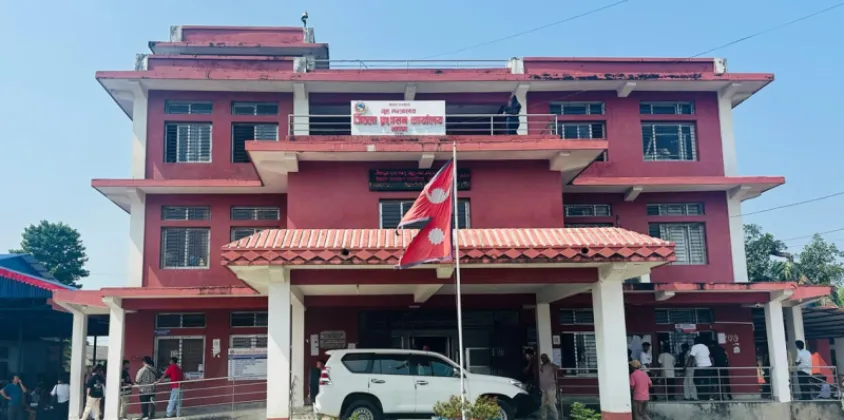
The District Administration Office in Jhapa has imposed a complete ban on playing loud DJ music during religious and cultural festivals, rallies, processions and idol immersion ceremonies across the district. The order, issued by the district's top administrative authority, states that the restriction is intended to protect religious tolerance, social harmony and public peace in Jhapa. Alongside the prohibition, authorities have warned that strict action will be taken against anyone found disturbing communal harmony, making it clear that loud DJ performances at such events will no longer be permitted under any circumstances.
Complete ban on loud DJ music across Jhapa
According to the directive, the ban applies fully and without exception to the main settings where amplified DJ music is commonly played in the district. These include:
-
Religious festivals organised by communities across Jhapa
-
Cultural festivals celebrated throughout the year
-
Rallies and processions that move through public streets
-
Idol immersion ceremonies, which traditionally mark the conclusion of major festivities
The order, as reported by Pradeskhabar, describes the restriction as a complete ban, meaning that organisers of the events listed above cannot include loud DJ music in their programmes. Idols are typically carried through residential areas and market routes in public processions before immersion, and such events often draw large crowds, which is precisely where the administration has now moved to prohibit loud amplified music.
The directive is significant because DJ sets, complete with high-powered speaker systems, have become an increasingly common feature of street celebrations in Nepal in recent years. By naming DJs specifically, the District Administration Office has targeted the single loudest and most contested element of modern festival celebrations, while leaving other forms of observance outside the scope of the order.
Safeguarding religious tolerance and social harmony
The stated rationale behind the ban centres on three concerns: religious tolerance, social harmony and public peace. The administration has framed loud DJ music at religious and cultural events as a potential threat to all three, arguing that its use during festivals, rallies, processions and idol immersions can disturb the environment of coexistence that communities in the district depend upon.
Jhapa, located in Koshi Province in eastern Nepal, is home to a diverse population of different religious and cultural communities whose festivals form a central part of public life in the district. Events such as processions and idol immersion ceremonies take place on public roads and pass through neighbourhoods belonging to people of many different backgrounds. It is in these shared public spaces that the administration has identified loud DJ music as a source of tension, and the order reflects an effort to ensure that celebrations do not turn into occasions for conflict between communities.
By invoking religious tolerance and social harmony directly in the text of the order, the District Administration Office has signalled that the decision is not merely about noise levels, but about preserving an atmosphere of mutual respect in which all communities can observe their festivals freely and peacefully.
Strict action warned against those disturbing harmony
Along with the ban itself, the administration has issued a clear warning about enforcement. According to Nepal Views, authorities have said that strict action will be taken against those who incite or disturb communal harmony. This warning applies to individuals and groups whose conduct, including the playing of banned loud DJ music, undermines peace in the district.
The warning places responsibility directly on those organising and participating in festivals, rallies, processions and immersion ceremonies. Event organisers in Jhapa are now expected to ensure that their programmes comply fully with the directive, and anyone choosing to ignore the prohibition faces the prospect of administrative action. The combination of a complete ban and an explicit enforcement warning indicates that the office intends the order to be taken seriously rather than treated as advisory.
Balancing celebration and public order
The directive highlights a tension that has grown alongside the popularity of DJ culture in Nepal. Loud music systems have become a marker of celebration at everything from religious processions to cultural rallies, and their powerful speakers can carry sound across entire neighbourhoods. In a district as diverse as Jhapa, where public festivals are experienced not only by participants but by everyone along the procession routes, the administration's decision reflects an attempt to draw a line between festivity and disruption.
For communities in Jhapa, the practical effect is that religious and cultural occasions will continue as before, but without the loud DJ music that has become a fixture of such gatherings in recent years. The order leaves the underlying festivals, rallies, processions and immersion ceremonies untouched, focusing only on the amplified music element that the office has judged to be a risk to tolerance, harmony and peace.
For now, the message from the District Administration Office is unambiguous: festivals in Jhapa can be celebrated, but the loud DJ music that often accompanies them is banned outright, and anyone whose actions disturb communal harmony will face strict action.