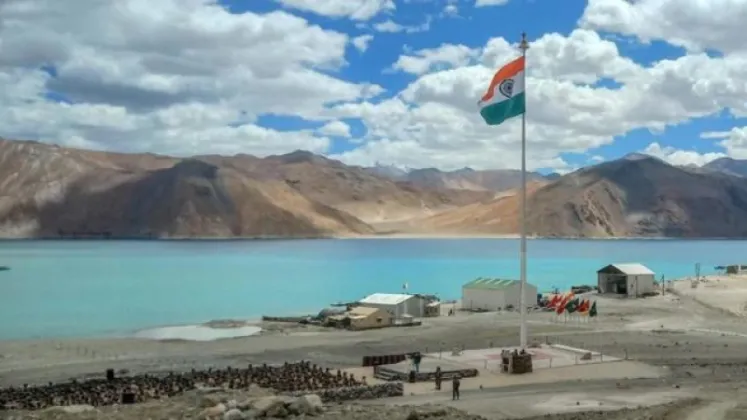
India on Tuesday firmly rejected China’s objection to New Delhi’s decision to standardise the names of 28 strategic locations and geographical features in Ladakh, reiterating that the Union Territory is an “integral and inalienable part of India.” The Ministry of External Affairs (MEA) said no amount of denial by China could change what it described as an established fact. The dispute centres on official names for places in Ladakh, including locations in Aksai Chin and areas associated with the 2020 India-China standoff.
India restates its position on Ladakh
The MEA’s response was a direct rejection of Beijing’s objection to India’s naming decision. New Delhi said its position on Ladakh was unchanged and emphasised that the territory formed an integral part of India. The ministry’s statement also rejected the suggestion that China’s denial could alter that position.
The exchange places the issue of place names within a wider disagreement over the status of Ladakh. India’s response linked the official identification of the locations to its stated territorial position, while making clear that it would not accept China’s objection as a basis for changing that position.
The ministry did not describe the naming decision as a change to the geography of the region. The action at issue was the standardisation of names for official mapping, while the MEA’s statement addressed India’s claim that Ladakh is part of the country. Those two elements - the formal recording of names and the stated position on territorial status - are central to the latest exchange between the two sides.
28 features added to official records
India formally identified the 28 geographical features on October 2. The list includes strategic locations in Aksai Chin as well as friction points connected to the 2020 standoff. By standardising their names for official mapping, New Delhi has placed the locations in permanent official records.
The move gives official form to India’s selected names for the features. It is the naming and recording of the locations that China has objected to, and the MEA’s response makes clear that India intends to maintain its position despite Beijing’s objection. The details available about the decision identify the number of features and the broad areas involved, but do not provide a full list of their names.
Including places associated with the 2020 standoff also connects the naming exercise with areas where the two countries have experienced friction. The summary of the decision does not specify which individual points are included or provide further detail about the 2020 events. It does, however, identify both Aksai Chin and the standoff-related friction points among the locations covered by India’s official mapping action.
A dispute over official mapping and territorial claims
The disagreement is therefore about more than the wording used on a map. India’s decision to standardise names and preserve them in official records reflects its stated claims over the territory, while China’s objection challenges New Delhi’s move. The MEA has rejected that challenge and repeated that India considers Ladakh an integral and inalienable part of the country.
India’s statement did not signal any change in its position. Instead, it reiterated the established stance in response to China’s objection and underscored that Beijing’s denial would not alter it. The formal identification of the 28 features on October 2, meanwhile, ensures that the names selected by India are recorded for official mapping.
The latest exchange leaves the two sides’ opposing positions clear: India has reaffirmed its claim to Ladakh and rejected China’s objection to the names, while the Chinese side has objected to the standardisation. New Delhi’s response maintains that its territorial position is not changed by that objection.