India and the United States have said their proposed bilateral trade agreement is in its final stage, with both sides committing to conclude it soon. The assurance from Washington came on Tuesday, when US President Donald Trump told reporters in the Oval Office that India wants a deal and that the United States is very close to reaching one. In India, the message was echoed in Mumbai, where External Affairs Minister S Jaishankar and US Secretary of State Marco Rubio met and discussed bilateral ties as well as regional and global developments, according to India's Ministry of External Affairs. Taken together, the statements from the two capitals point to a negotiation that has entered its closing phase, within a broader relationship that both countries are actively expanding across trade, defence, technology and energy security, as reported by Khabarhub.
Trump says Washington is very close to a deal with India
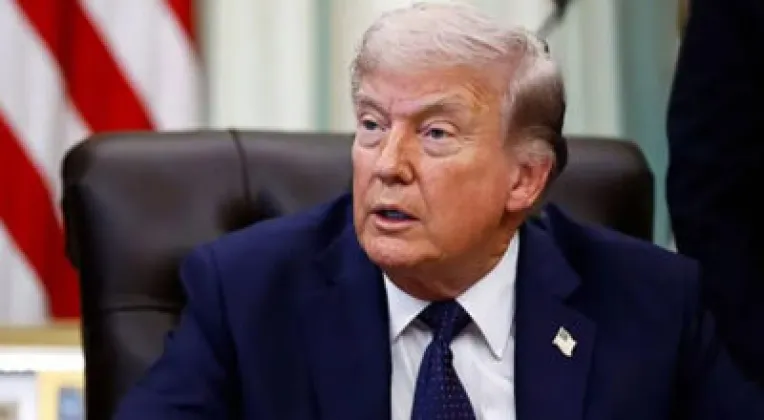
Speaking to reporters in the Oval Office, President Trump said India wants a trade agreement and that Washington is very close to concluding one. It was a clear signal from the very top of the US administration that the negotiation has moved past its more contentious structural questions and into the final stage of closure.
Comments of this kind from a head of state carry particular weight in trade diplomacy. Agreements of this scale typically require political endorsement once negotiators have settled the technical details, and a public statement that a deal is close suggests the remaining gaps are narrow enough for both leaderships to be talking openly about an early conclusion.
The remarks also serve a practical purpose for the negotiating teams. By stating publicly that India wants the deal and that the United States is very close to it, Trump has effectively signalled to officials on both sides that momentum should be maintained and outstanding issues resolved without delay. Both governments have now committed to concluding the agreement soon, and the president's language indicates that Washington intends to hold itself to that timeline.
Jaishankar and Rubio hold wide-ranging talks in Mumbai
The diplomatic track ran alongside the trade messaging. In Mumbai, Indian External Affairs Minister S Jaishankar met US Secretary of State Marco Rubio for discussions that India's Ministry of External Affairs said covered bilateral ties as well as regional and global developments.
The breadth of that agenda is significant. A readout that extends beyond commerce to include regional and global developments signals that the two governments approach the relationship as a strategic partnership rather than a narrowly transactional one. Top-level meetings of this kind are also where political direction is given on outstanding files, including trade, and where ministers can review how cooperation is progressing across the full range of shared interests.
The setting added its own symbolism. Mumbai, India's commercial and financial capital, provided the backdrop for a conversation in which economic partnership and regional stability both featured, reinforcing the sense that the two sides are coordinating across diplomacy, security and business at the same time as they close in on a trade agreement.
Cooperation deepens across four key sectors
Beyond the trade deal itself, the two countries are expanding cooperation in trade, defence, technology and energy security, sectors that both governments have identified as central to the partnership.
- Trade: The bilateral agreement now in its final stage is the most concrete expression of this deepening, and its early conclusion would give the wider relationship a formal economic framework.
- Defence: Sustained engagement in defence underscores the strategic dimension of the ties and keeps security cooperation moving in step with the economic agenda.
- Technology: Collaboration in technology links the trade negotiation to the industries expected to shape future growth for both economies.
- Energy security: Cooperation on energy security addresses a shared priority, tying the partnership to stable and reliable supplies.
The fact that the Oval Office remarks and the Mumbai talks came at a moment when this multi-sector cooperation is expanding suggests the trade agreement is being pursued not in isolation, but as part of a deliberate broadening of the India-US relationship.
A deal within reach
With the president describing the agreement as very close, the two foreign ministers reviewing the relationship in person, and both governments publicly committed to concluding the deal soon, the conditions appear set for the negotiation to move from its final stage to formal conclusion. What remains is for the two sides to convert that stated intent into a signed agreement.
For now, the coordinated messaging from Washington and Mumbai marks the clearest indication yet that India and the United States intend to finish what their negotiators have started, and to do so against the backdrop of a partnership that continues to widen across trade, defence, technology and energy security. Further updates are expected as the two governments work toward the promised early conclusion of the deal, according to Khabarhub.