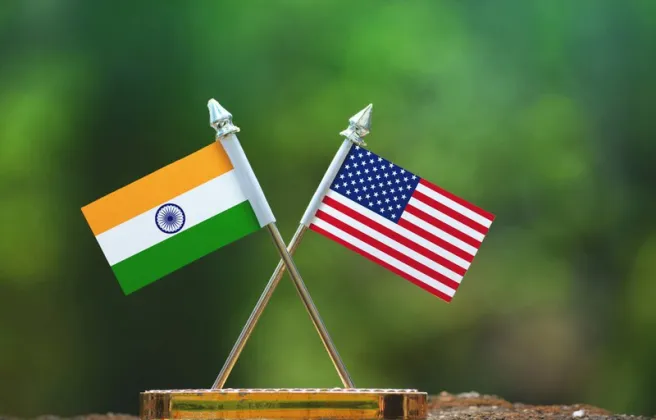
India and the United States have pledged to conclude their proposed bilateral trade agreement soon, in a clear signal of momentum between the two countries on economic ties. The commitment came during a meeting between Indian External Affairs Minister S Jaishankar and US Secretary of State Marco Rubio in Mumbai on Tuesday. According to India's Ministry of External Affairs, the two top diplomats reviewed the state of bilateral relations and agreed to expand cooperation in trade, defence, technology and energy security. Their conversation also covered regional and global developments, reflecting the breadth of the India-US partnership at a time when both capitals have been pushing to deepen engagement.
Key Takeaways at a Glance
- Trade: India and the US committed to concluding their proposed bilateral trade agreement soon.
- Wider cooperation: The two sides agreed to expand cooperation in defence, technology and energy security.
- Who met whom: Indian External Affairs Minister S Jaishankar held talks with US Secretary of State Marco Rubio.
- Where and when: The meeting took place in Mumbai on Tuesday.
- On the agenda: Bilateral relations as well as regional and global developments, according to India's Ministry of External Affairs.
Trade Pact Moves Closer to the Finish Line
The headline outcome of the Mumbai meeting was the shared commitment to bring the proposed bilateral trade agreement to conclusion soon. While the ministry's statement did not spell out a timeline or list the outstanding issues, the expression of intent from both ministers indicates that the negotiation is viewed in New Delhi and Washington as entering a decisive phase.
A bilateral trade agreement of this kind is broadly aimed at deepening economic ties between two of the world's largest economies, and the decision to keep it at the centre of ministerial talks underlines its priority for both governments. Concluding the pact would provide a structured framework for commerce between the two countries, something that businesses and traders on both sides have been watching closely.
The choice of Mumbai as the venue added its own weight to the occasion. As India's financial and commercial capital, the city is home to the corporate boardrooms and trading houses whose fortunes are most directly tied to the health of bilateral economic relations, making it a fitting backdrop for a conversation centred on a trade agreement.
Cooperation Beyond Trade
Beyond the trade pact, the two sides discussed expanding cooperation in three additional areas: defence, technology and energy security. Together with trade, these fields form the core pillars of the contemporary India-US agenda, and their inclusion in Tuesday's talks suggests that both governments see the relationship as continuing to broaden rather than narrowing to any single file.
Energy security in particular has become an increasingly prominent theme in international diplomacy, as countries work to secure stable and diversified supplies in a volatile global environment. Technology cooperation, likewise, has moved to the foreground of bilateral relationships around the world as governments compete to shape emerging industries. By committing to expand cooperation in these areas alongside trade, Jaishankar and Rubio signalled a deliberately wide-ranging partnership rather than a narrowly economic one.
The pledge to expand engagement across all four areas also carries a practical message: the two governments are not waiting for the trade agreement alone to advance ties, but are moving in parallel on multiple fronts even as the negotiation continues.
Regional and Global Issues on the Table
In addition to bilateral matters, India's Ministry of External Affairs said the two sides discussed regional and global developments. The statement did not specify which issues were taken up, but such reviews are a standard feature of meetings between the two countries' top diplomats, allowing them to compare perspectives on developments beyond their own relationship.
For a meeting held in Mumbai rather than in the national capital, the breadth of the agenda was notable. Covering regional and global questions alongside trade, defence, technology and energy security meant the conversation ranged well beyond economics, consistent with the scope that both countries have increasingly given to their dialogue.
What Happens Next
Neither government announced a date for the conclusion or signing of the trade agreement. The commitment to wrap it up soon will now be watched closely by businesses, exporters and policymakers in both countries, who will look for a formal announcement in the weeks ahead. Until the agreement is concluded and its provisions made public, the specific gains for either side remain to be seen.
High-level engagement of this kind is nonetheless significant for what it signals: that both administrations continue to prioritise the relationship and are prepared to invest ministerial time in it. With cooperation spanning trade, defence, technology and energy security, the Mumbai meeting offered a snapshot of a partnership that both sides describe as expanding, and the trade agreement stands as its most anticipated near-term deliverable.
The meeting details were reported by Nepal Press, Rato Pati and Pradesh Khabar, citing India's Ministry of External Affairs.