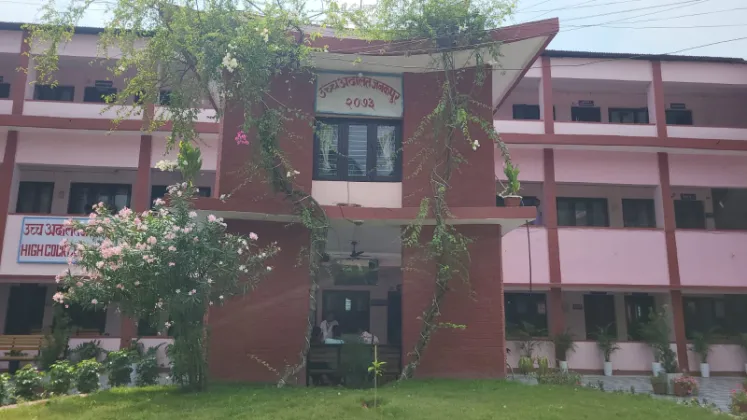
The High Court Janakpur has issued a directive order requiring the Madhesh Province government to make the necessary legal arrangements to implement the constitutional provision on using Maithili, Bhojpuri and Bajjika, besides Nepali, in official government business. The order, issued on 23 October 2026, responds directly to the constitutional guarantee of linguistic rights, a provision described in press reports as a fundamental right, and effectively instructs the province to move from recognition of its mother tongues to their active use in administration.
The directive places the question of official language use in the southern plains province firmly back on the institutional agenda. As reported by Nagarik News, the court's message to the provincial government was clear: Maithili, Bhojpuri and Bajjika should be made the official languages of Madhesh in line with the constitution, and the province must now build the legal framework to make that happen.
What the Directive Order Says
According to reports in Nagarik News and Pradeskhabar, the High Court Janakpur issued the directive order after taking up the matter of the constitutional provision on official language use. A directive order is the standard instrument through which Nepal's courts require a public body to discharge a duty, and here the duty falls on the provincial government. The key elements of the order are:
- The Madhesh Province government must make the legal arrangements necessary to implement the constitutional provision on official language use.
- The provision covers the use of Maithili, Bhojpuri and Bajjika, in addition to Nepali, in the conduct of official government business.
- The court framed the matter in terms of linguistic rights under the constitution, which the reports describe as a fundamental right.
- The order noted that the Language Commission had already submitted its recommendation on official language use to the Nepal government in 2078 BS, meaning expert advice on the question has been on the federal table for years.
The reference to the Language Commission's submission carries particular weight. It indicates that the groundwork for settling the official language question was laid long ago, and that what has been missing is the provincial legal framework needed to give those recommendations practical effect. By highlighting this history, the court has made clear that the remaining task is precisely the legislative one the constitution contemplates at the provincial level.
The Constitutional Backdrop
Nepal's constitution accords a special status to the country's languages. The constitution declares that all mother tongues spoken in Nepal are the languages of the nation, while designating Nepali in the Devanagari script as the language of official business. Crucially for the present case, the constitution also allows provinces to go further: a province may choose one or more mother tongues spoken within it as additional official languages, a choice to be made through the Provincial Assembly with a two-thirds majority.
It is this provision that the High Court Janakpur's order centers on. For Madhesh Province, formerly Province No. 2, the provision carries particular weight. Maithili, Bhojpuri and Bajjika are among the most widely spoken languages across the province, which stretches along Nepal's southern Terai plains, and they coexist with Nepali in the daily life of the region. The reports describing the linguistic rights at stake as a fundamental right underline the court's underlying logic: the use of a citizen's mother tongue in government business is treated not as a concession but as a constitutional entitlement.
The Language Commission's Long-Standing Recommendation
A distinctive feature of the directive order is its reference to the Language Commission. According to the court's order, the commission had already submitted its recommendation on official language use to the Nepal government in 2078 BS, the Nepali year corresponding roughly to the period from April 2021 to April 2022.
The Language Commission is the constitutional body responsible for advising on the use of the country's languages, and its submission was the formal step through which the question of which languages should serve official purposes was placed before the federal government. By noting that this recommendation had long been submitted, the court signaled that the delay in implementation could no longer be attributed to a lack of advice or analysis. The pending work, in the court's reading, is the legal arrangements that the Madhesh Province government itself must now create.
What Comes Next for Madhesh Province
The directive effectively sets a legislative task for the province. Because the constitutional provision contemplates a formal choice made through the Provincial Assembly, giving effect to the order will require the Madhesh Province government to bring forward the necessary law, with the Assembly then weighing in on the designation of additional official languages for the province.
Once such a framework is in place, the practical effect would be that citizens of Madhesh can engage with their provincial administration in Maithili, Bhojpuri and Bajjika, in addition to Nepali, in matters connected to official government business. The directive order issued on 23 October 2026 now stands as the benchmark against which the province's next steps will be measured, and the response of the Madhesh Province government will show how quickly the constitutional promise on linguistic rights is translated into working law.