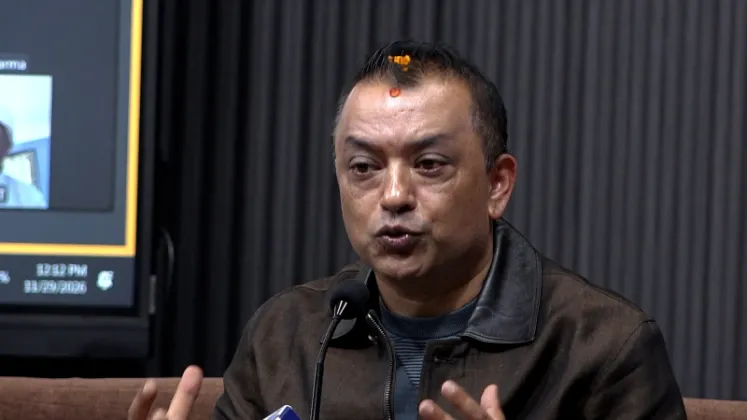
Nepali Congress leader Gagan Thapa has said the government must not act with bias and revenge in the name of investigation, warning that investigative actions driven by prejudice undermine the credibility of the process itself. Thapa made the remark on Sunday while speaking on the ongoing political debate surrounding the government's investigative moves.
His statement, reported by Nepali news outlets on November 29, 2026, comes at a time when questions are being raised in political circles about whether the government's probes are being conducted fairly or with political motives behind them.
A Warning Against Politicised Investigations
Thapa's core message was directed squarely at the government's handling of investigations. He argued that when investigative bodies act under the influence of bias or a desire for revenge, the entire purpose of the exercise is defeated. According to the Nepali Congress leader, investigations must remain impartial and credible, rather than becoming tools for settling political scores.
The remark is significant given Thapa's position within the Nepali Congress, one of the major political forces in the country. As a senior and vocal leader of the party, his comments add to the pressure on the government to demonstrate that its investigative actions are being carried out according to the law and without political targeting.
He stressed that the government should not use the language and framework of investigation as a cover for vengeance. In his view, actions taken in the name of inquiry must withstand public scrutiny, and any perception of prejudice damages both the institutions involved and public trust in them.
Remarks Amid Growing Political Debate
Thapa delivered the statement as debate continues over the government's investigative actions. The political atmosphere has been marked by discussion over whether those actions are proceeding on their legal merits or whether they reflect an agenda directed at political opponents.
While the summary of his remarks does not detail the specific investigations that prompted his comments, the timing of the statement indicates that the issue has become a talking point within the opposition and the wider political community. Leaders from the Nepali Congress have used such occasions to push back against what they see as an overreach or misuse of state machinery.
Thapa's intervention on Sunday follows a pattern in which opposition leaders have sought to hold the government accountable by questioning the fairness of its processes. By framing his criticism around the principles of impartiality, he positioned the debate not merely as a partisan dispute but as a question of democratic propriety.
Context: Nepali Congress and Government Accountability
The Nepali Congress, as a principal opposition party, has repeatedly emphasised institutional independence and the rule of law. Thapa, in particular, has been among the more prominent voices within the party on issues of governance and accountability, frequently commenting on matters of state conduct.
His latest remarks were carried by both Nepal Views and Nepal Samaya on November 29, 2026, with both outlets highlighting his insistence that the government should not act with prejudice and vengeance in the name of investigation.
The statement also underscores the continuing tension between the ruling side and the opposition over the boundaries of governmental power. For the opposition, the fairness of investigations is a measure of the government's broader commitment to democratic norms; for the government, defending its actions as lawful and necessary remains central to its position.
What the Statement Signals
Thapa's warning can be read as part of a broader effort by opposition figures to shape public opinion on the issue. By calling on the government to avoid bias and revenge, he effectively placed the burden on the ruling side to prove that its investigative measures are free of political motivation.
His comments also reflect the standard expectation in a democratic system that investigative institutions must operate independently of political pressure. The concern voiced by the Nepali Congress leader is that when investigations are perceived as punitive or politically driven, they lose legitimacy in the eyes of the public, regardless of their outcomes.
As the political debate over the government's investigative actions continues, statements of this kind are likely to keep the issue in the public eye. Whether the government responds to such criticism, and how it frames its own defence of the processes in question, will likely determine how the controversy develops in the days ahead. For now, Thapa's message is clear: investigation is a legitimate instrument of the state, but only when it is pursued without bias and without revenge.