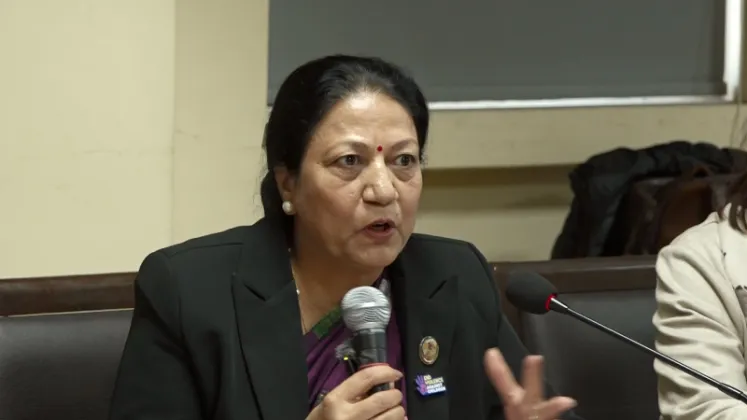
Rastriya Swatantra Party (RSP) lawmaker Gyanu Poudel has said that Nepal's law against human trafficking and transportation must be made victim-friendly, inclusive and effective. She made the remark while speaking during discussions on the Human Trafficking and Transportation (Control) (First Amendment) Bill, 2083, in Kathmandu on November 29, 2026.
Poudel's comments came as lawmakers weigh amendments to the country's principal legislation for combating trafficking in persons, a statute that governs how victims are identified, protected and supported, and how offenders are investigated and prosecuted. Her intervention placed the focus squarely on how the law treats those who have survived trafficking, arguing that the framework must work for victims rather than against them.
A Call to Center Victims in the Law
Addressing the House during deliberations on the bill, Poudel stressed that the legislation currently under amendment should not simply be tightened in procedural terms but reoriented around the needs and dignity of trafficking survivors. She argued that a law meant to control trafficking and transportation of persons can only be effective if it is inclusive and sensitive to those it is designed to protect.
The MP's position reflects a widely shared concern among rights advocates that anti-trafficking frameworks can inadvertently re-victimize survivors through insensitive identification procedures, lengthy legal processes and inadequate support systems. By calling for the bill to be victim-friendly, Poudel signaled that the amendment process should strengthen safeguards for victims at every stage, from rescue and rehabilitation to prosecution and reintegration.
The Bill Under Discussion
The Human Trafficking and Transportation (Control) (First Amendment) Bill, 2083, is currently in the process of parliamentary scrutiny. The first amendment to the existing control law is being debated at a time when human trafficking and the illegal transportation of persons remain pressing challenges for Nepal, with citizens regularly falling prey to exploitation both within the country and across borders.
The bill's deliberations in Kathmandu form part of the parliamentary process through which the amendment will be refined before it can be finalized and enacted. Lawmakers' input during these discussions shapes the scope of the changes, including how victims are treated under the law and how effectively perpetrators can be brought to justice.
Inclusive and Effective Legislation
Poudel emphasized three qualities she said the amended law must embody: it must be victim-friendly, inclusive and effective. The call for inclusivity points to the need for the law to account for the diverse circumstances of trafficking victims, while the demand for effectiveness speaks to the enforcement gap that has long accompanied anti-trafficking statutes.
Her remarks were reported from Kathmandu on November 29, 2026, by Nepali media outlets covering the parliamentary debate. As the RSP representative participating in the discussions, Poudel added her voice to the ongoing legislative effort to update the trafficking control law for the present day.
Why the Amendment Matters
Nepal's legal framework against human trafficking and transportation serves as the backbone of the state's response to a crime that disproportionately affects vulnerable communities, including women, children and migrant workers. Amendments to such legislation carry significant weight, as they determine the practical protections available to victims and the tools available to law enforcement.
With lawmakers like Poudel pressing for a victim-centered approach, the parliamentary deliberations on the First Amendment Bill, 2083, are expected to continue refining the balance between punitive measures against traffickers and protective measures for survivors. The outcome of the bill's passage will shape how Nepal identifies, assists and justice-serves victims of trafficking in the years ahead.
Further details of the amendment's provisions and the progress of the bill through Parliament are expected to emerge as deliberations continue.