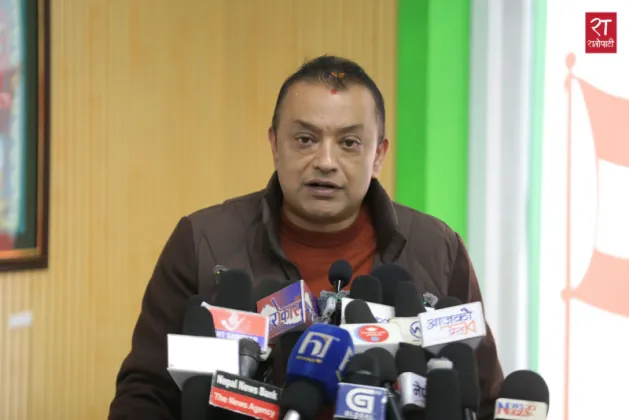
Kathmandu - Nepali Congress President Gagan Kumar Thapa has demanded that Prime Minister Balen Shah publicly explain the outcomes of his recent visit to India, stating that the government must answer to the people for the results of high-level diplomatic engagements. Thapa raised the demand while speaking at a meeting of the party's central working committee, where he sharply questioned the government's working style and the lack of visible gains from the Prime Minister's trip to the southern neighbour.
Questions Raised at Central Working Committee
Speaking at the central working committee meeting of the Nepali Congress, Thapa said the Prime Minister cannot avoid answering the questions that have been raised about the India visit. He argued that a visit of such significance, involving the country's most important bilateral relationship, naturally invites public scrutiny, and that the head of government is obligated to present the outcomes before the people.
Thapa's remarks reflect the party's position that transparency and accountability are essential in matters of foreign policy. According to the party leadership, the Congress intends to keep the government on its toes and will not hesitate to raise difficult questions whenever national interests appear to be at stake.
No Tangible Achievements on Long-Term Interests
The central thrust of Thapa's criticism was that no significant progress appeared to have been made on issues tied to Nepal's long-term national interests during the Prime Minister's visit. He asked why the trip produced no tangible achievements on matters that are of enduring importance to the country, pointing to the gap between the expectations built around such a visit and the results that followed it.
While Thapa did not present the outcomes as a matter of routine political criticism, he framed his question as one that goes to the heart of how the government conducts itself. His comments suggested that the Congress views the handling of the India visit as indicative of a broader working style within the government, one that the party finds wanting in seriousness and delivery.
Congress Will Not Remain Silent
Making his party's stance clear, Thapa said the Nepali Congress would not remain silent on such matters. He indicated that the party considers it its responsibility to speak up when questions of national interest arise, regardless of the political cost of doing so. The demand for a public explanation from the Prime Minister is expected to keep the issue alive within the party's engagement with the government.
The central working committee meeting provided a platform for the party leadership to take stock of recent political developments and to articulate its positions. Thapa's comments on the India visit stood out as among the most pointed, signalling that the Congress is prepared to press the government for answers rather than let the matter pass without scrutiny.
Accountability in Foreign Policy
Thapa's demand comes at a time when visits by Nepali prime ministers to India traditionally carry high expectations, given the depth of ties between the two countries spanning trade, transit, energy, water resources and people-to-people links. Successive governments have faced similar scrutiny over what such visits actually deliver, and opposition parties have routinely sought to hold prime ministers accountable for the outcomes of their diplomatic engagements.
By calling on the Prime Minister to explain the visit's outcomes publicly, Thapa has placed the burden of justification squarely on the government. Whether the Prime Minister responds to the demand and how the explanation, if offered, is received by the public and by political observers remains to be seen. For now, the Congress has made clear that it intends to keep pressing the question: what, concretely, did the India visit achieve for Nepal's long-term national interests?