Four ministers of the Nepal Communist Party (NCP) resigned from the Madhesh Province government on Friday, in a coordinated move that takes the party out of the ruling setup in Nepal's southern plains. Finance Minister Yubaraj Bhattarai, Industry and Tourism Minister Kanis Patel, Home, Communications and Law Minister Fakira Mahato, and Energy, Irrigation and Drinking Water Minister Jawaharlal Kushwaha submitted a collective resignation and were heading to formally tender it to the provincial government, according to a report by Pradesh Khabar. The joint resignation formalises the NCP's exit from the provincial administration in Madhesh, one of Nepal's seven federal provinces, and leaves the government in the province without a bloc of senior officeholders all at once.
Four key portfolios vacated at once
The four departing ministers
The ministers who stepped down on Friday held responsibility for a wide cross-section of the province's administration:
- Yubaraj Bhattarai - Minister for Finance
- Kanis Patel - Minister for Industry and Tourism
- Fakira Mahato - Minister for Home, Communications and Law
- Jawaharlal Kushwaha - Minister for Energy, Irrigation and Drinking Water
Taken together, the four portfolios span the province's financial management, internal security and administration, legal affairs, and major development sectors including industry, tourism, energy, irrigation and drinking water. The finance ministry shapes the provincial budget and spending priorities, while the home, communications and law portfolio touches on policing, district administration, government messaging and the provincial legal system. The simultaneous departure of the ministers holding these responsibilities means several of the government's core functions are without elected heads at the same time, pending any reshuffle or reassignment by the remaining administration.
Because provincial cabinets in Nepal typically bundle multiple sectors under a single minister, each individual resignation removes a substantial slice of administrative responsibility. Losing four ministers in a single stroke, covering finance, home affairs and law among them, is among the more significant internal shocks a provincial government can absorb, since it strips away an entire layer of the cabinet's political leadership rather than a single office.
A coordinated party exit, not individual departures
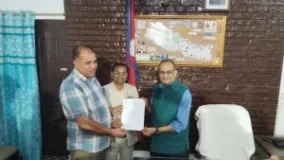
What distinguishes Friday's development is its collective character. Rather than ministers stepping down over separate grievances, all four NCP representatives in the Madhesh cabinet submitted their resignations together, in line with the party's decision to exit the provincial government. Reports indicate the ministers travelled together to formally hand in their resignations, underscoring that the move is an organisational decision by the NCP rather than a series of individual choices.
When a political party withdraws from a provincial government, the implications extend well beyond the cabinet table. Its ministers step out of the day-to-day administration of the province, and the vacated portfolios must be reassigned, either as additional charges to existing ministers or through a fresh expansion of the cabinet. The withdrawal also reshapes the arithmetic of the Provincial Assembly, since the NCP's provincial lawmakers would now sit outside the government's supporting camp, with the scale of that shift depending on the number of seats the party holds in the house. For the Madhesh government, the immediate challenge is administrative: keeping ministries functioning under their civil service leadership until new political appointments are made.
Context: governance in Madhesh Province
Madhesh Province lies in the southern Terai plains along Nepal's border with India and is one of the seven federal provinces created under the Constitution of Nepal 2015. Each province under Nepal's federal structure has its own Provincial Assembly, and the provincial government is formed by a chief minister who commands a majority in that assembly, supported by a council of ministers drawn from the ruling party or coalition. Provincial governments execute responsibilities devolved by the constitution in areas such as finance, internal affairs and law, industry and tourism, energy, irrigation and drinking water, agriculture, education, health and physical infrastructure.
The structure of the departing ministers' portfolios reflects how provincial administration is organised in practice. Home, communications and law are combined under one minister, while energy, irrigation and drinking water are grouped under another, with finance and industry and tourism held separately. In such a setup, ministerial resignations carry outsized weight, because each departure removes oversight of several sectors at once. The NCP's exit therefore does not simply reduce the number of faces around the cabinet table in the province, whose capital is Janakpurdham; it removes the party's executive presence from the government entirely.
What comes next after the resignations
With the NCP formally on its way out, attention in the province turns to how the Madhesh government manages the vacancies it now carries. Under standard practice, resigning ministers hand their resignations to the chief minister, and the portfolios they held are either reassigned to sitting ministers as additional responsibilities or filled through a cabinet expansion from the ranks of the Provincial Assembly. Until those adjustments are completed, the province's finance, home, communications, law, industry, tourism, energy, irrigation and drinking water functions are overseen without their elected heads.
For the NCP, the withdrawal brings to an end its participation in the executive of a province it had helped govern. For the Madhesh government, the task ahead is to stabilise administration after the departure of a bloc of ministers that, between them, controlled some of the central levers of provincial power. As reported by Pradesh Khabar, the four ministers submitted their collective resignation on Friday, closing one phase of the province's politics and leaving the composition of the government that remains the central question in the days ahead.