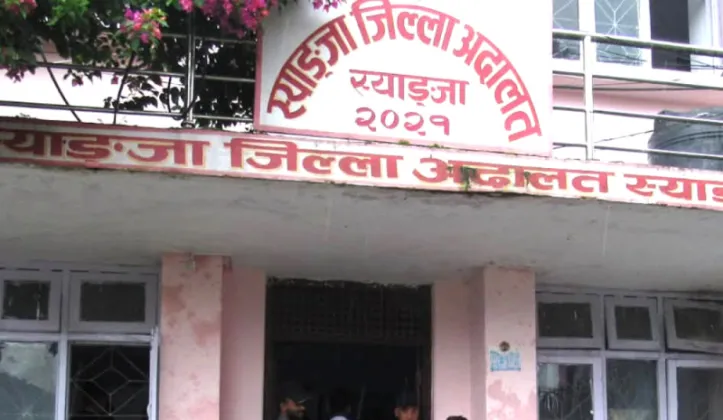
Four people, including three employees of the District Administration Office in Syangja, have been remanded to prison pending trial on charges of forging and unauthorisedly altering official citizenship records. The Syangja District Court issued the order after the District Government Attorney Office in Syangja filed a case against the four accused on Tuesday under the offence relating to government documents, or forgery.
Court Remands All Four Accused
The Syangja District Court ordered that all four accused, including the three District Administration Office staff, be sent to jail until the trial concludes. The remand came after the District Government Attorney Office pursued the case based on the findings of a police investigation into the alleged tampering of citizenship records.
The case was registered under the offence relating to government documents (forgery), reflecting the serious nature of the alleged manipulation of an official public document. Citizenship certificates are among the most sensitive documents issued by District Administration Offices in Nepal, as they serve as the foundation for an individual's legal identity, property rights and access to state services.
Case Built on Police Investigation
According to the District Government Attorney Office in Syangja, the case against the four was filed on Tuesday following the completion of a police investigation. The involvement of three government employees working at the District Administration Office has drawn particular attention to the case, as those staff members are the very officials entrusted with maintaining and safeguarding citizenship records.
While the attorney's office confirmed that the charges relate to forgery and unauthorised alteration of citizenship records, further details about the specific nature of the alterations and how the irregularities came to light were not disclosed in the filings reported publicly.
A Pattern of Citizenship-Related Irregularities
The case highlights the recurring problem of irregularities in citizenship documentation in Nepal. District Administration Offices, which issue citizenship certificates, have periodically been caught in controversies involving the fraudulent issuance or alteration of such documents. Because citizenship certificates are the gateway to passports, voter registration, land ownership and other legal entitlements, tampering with these records carries consequences that extend well beyond the immediate paperwork.
The decision to send the accused, including the government staff, to jail pending trial signals that the judicial process in Syangja is treating the alleged forgery as a serious offence. Under Nepali law, forgery of government documents carries substantial penalties, and cases involving public officials compounding such offences are typically pursued vigorously.
What Happens Next
With the accused now remanded in custody, the case will proceed through the Syangja District Court, where the prosecution, led by the District Government Attorney Office, will seek to prove the charges based on the evidence gathered during the police investigation. The defendants will have the opportunity to present their defence as the trial moves forward.
The remand of the three District Administration Office employees is likely to prompt internal scrutiny within the local administration regarding how citizenship records are handled and monitored. As the case unfolds in court, further details about the scale of the alleged forgery and the number of citizenship records affected may emerge.