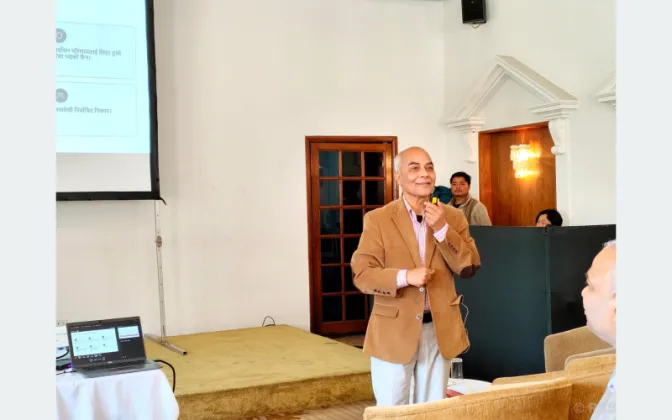
Former Chief Election Commissioner Bhoj Raj Pokharel has underlined the need for greater attention to election-related research and evidence-based policymaking in Nepal's electoral system. He made the remarks while speaking at a consultation meeting with stakeholders held in Lalitpur on Friday.
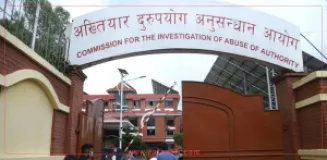
The meeting, organised by the Election Commission, was convened to review the mid-term evaluation of the Commission's fourth five-year strategic plan. Pokharel, who presented on the reforms needed in the electoral system, said that sound research and data-driven policy decisions are essential for strengthening Nepal's electoral processes.
Focus on Research and Evidence-Based Policy
Speaking at the consultation, Pokharel emphasised that election-related research has not received the level of attention it deserves. He argued that evidence-based policymaking must be prioritised so that reforms in the electoral system are grounded in facts, data, and systematic study rather than assumption.
His presentation focused on the reforms needed in the country's electoral system. As a former head of the Election Commission, he brought a long-standing perspective on how the institution can strengthen its planning, implementation, and evaluation processes.
Review of the Fourth Five-Year Strategic Plan
The consultation meeting brought together stakeholders to assess the mid-term evaluation of the Election Commission's fourth five-year strategic plan. Such strategic plans guide the constitutional election body's priorities over successive five-year periods, covering areas such as election management, voter education, institutional capacity, and electoral integrity.
The mid-term review provides an opportunity for the Commission to take stock of what has been achieved so far under the current plan, identify gaps, and incorporate feedback from stakeholders as it moves into the remaining period of the plan.
Stakeholder Consultation in Lalitpur
The meeting in Lalitpur was organised by the Election Commission itself, reflecting the constitutional body's effort to engage stakeholders in evaluating its strategic direction. Consultations of this kind allow the Commission to gather input from experts, civil society, and other actors involved in the electoral process.
By opening the review process to external stakeholders, the Commission signalled its intent to make the evaluation of its fourth five-year strategic plan as inclusive and grounded as possible.
Experience at the Helm of the Election Commission
Bhoj Raj Pokharel served as Chief Election Commissioner of Nepal and is widely associated with the period of landmark electoral exercises in the country, including the Constituent Assembly elections. His continued engagement in electoral affairs, including through platforms such as Friday's consultation, adds weight to discussions on how Nepal's electoral system can be reformed and modernised.
His call for research and evidence-based policymaking comes at a time when electoral institutions worldwide are increasingly relying on data and systematic evaluation to design reforms, build public trust, and improve the administration of elections.
Way Forward
Friday's consultation in Lalitpur marks one step in the Election Commission's ongoing mid-term evaluation of its fourth five-year strategic plan. With input from experienced figures like Pokharel and other stakeholders, the Commission is expected to refine its strategic priorities to ensure that future elections in Nepal are conducted with greater efficiency, credibility, and public confidence.
Pokharel's central message that research and evidence must inform electoral policy is likely to resonate in ongoing debates about electoral reform, as stakeholders and policymakers consider how best to strengthen the democratic process in the country.