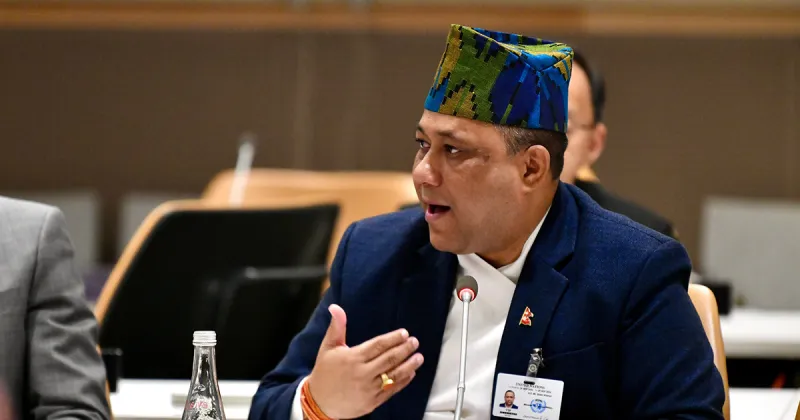
Foreign Minister Khanal is departing for Turkey tomorrow to lead Nepal's official delegation at COP31, the 31st Conference of the Parties to the United Nations Framework Convention on Climate Change. According to a report published by Thaha Khabar, the Foreign Minister will head the Nepali team at the global climate summit as part of Nepal's participation in the worldwide gathering. His journey places Kathmandu at the table alongside dozens of other governments at a moment when international climate diplomacy is working through some of its most difficult questions, from financing adaptation in vulnerable countries to cutting the emissions that drive global warming.
Leading the Delegation to the Climate Summit
The Foreign Minister's visit, which begins with his departure tomorrow, forms part of Nepal's engagement in the global climate summit being hosted by Turkey. As head of the delegation, Khanal will represent Nepal at the ministerial level of the conference, where national leaders and top envoys typically deliver country statements and take part in high-level dialogues on the direction of international climate action.
The report by Thaha Khabar confirmed the travel plans but did not provide further details about the size of the delegation, its full programme or the duration of the minister's stay. Such details are usually finalised closer to departure and announced through official channels.
The key facts reported so far can be summarised as follows:
- Who: Foreign Minister Khanal
- What: Leading Nepal's delegation at COP31
- Where: Turkey, the host country of the summit
- When: Departs tomorrow for the conference
A significant diplomatic engagement
For any government, attendance at a COP is both a negotiating exercise and a diplomatic signal. Sending the foreign minister, rather than a lower-ranking official or an environment-focused representative, to lead the delegation reflects the weight Nepal places on the summit and on climate diplomacy more broadly. Ministerial participation also raises the visibility of a country's priorities in the plenary hall and in the corridors where side events, bilateral meetings and informal negotiations take place.
What COP31 Is and Why It Matters
The Conference of the Parties is the supreme decision-making body of the UNFCCC, the treaty that underpins global climate cooperation. COP sessions are held annually and rotate among the world's regions, giving different parts of the globe the chance to shape the summit's character and priorities. This year's host, Turkey, will welcome negotiators, observers, journalists and civil society representatives from around the world for the duration of the session.
Recent COPs have grappled with a familiar set of issues: how quickly countries reduce greenhouse gas emissions, how adaptation in developing countries is financed, how funds for loss and damage are resourced and operated, and how existing international commitments are translated into national action. Negotiations on these files carry over from year to year, and each session produces a package of decisions that guides governments and institutions in the period that follows.
Hosting duties also matter for the host region. A COP in Turkey draws particular attention to climate issues across the wider neighbourhood, including Europe, the Middle East and Central Asia, and gives countries in those regions a direct opportunity to engage with the delegations and media that gather for the summit.
Why the Summit Matters for Nepal
Nepal is widely recognised as one of the countries most vulnerable to climate change, despite contributing very little to global emissions. The country's mountain landscapes are highly sensitive to rising temperatures, and the Himalayan region is already experiencing consequences that include changing precipitation patterns and growing stress on the glaciers and snowpack that feed its river systems.
The stakes extend well beyond the mountains. Agriculture, which sustains a large share of the population, depends on predictable monsoon and river flows, while the country's hydropower ambitions are tied to the health of its watersheds. Erratic weather events, from floods to droughts, carry real economic and human costs, and adapting to them requires resources that exceed what the national budget alone can provide.
For a country in this position, COP summits are the principal venue for pressing the international community on climate finance, technology transfer and support for adaptation and loss and damage. Nepal has long used the COP platform to put mountain issues on the global agenda, arguing that high-altitude ecosystems receive far less attention and finance than their importance warrants. Its delegations have repeatedly highlighted the impacts of glacial retreat and changing water availability on communities living downstream and in the hills.
By leading the delegation in person, Khanal will be positioned to make Nepal's case directly to counterparts and to the international media covering the summit, joining other vulnerable countries in arguing that those least responsible for the crisis should not bear its heaviest burdens alone.
What Happens Next
The Foreign Minister's departure tomorrow marks the start of Nepal's formal engagement with this year's summit. The Thaha Khabar report did not specify his return date or the full details of the delegation's schedule, and further information is expected once the visit is under way. As negotiations unfold in Turkey, attention in Kathmandu will focus on the outcomes that matter most to a Himalayan nation: progress on climate finance, recognition of mountain priorities and agreements that help vulnerable countries cope with a warming world.