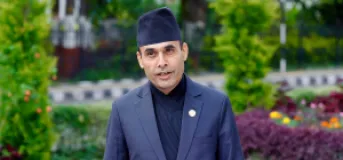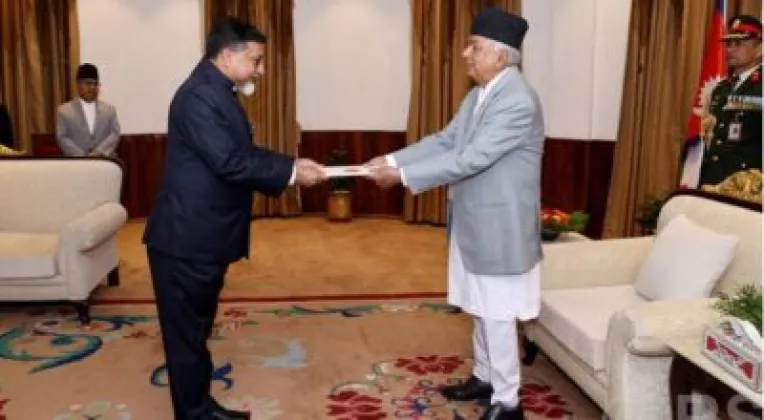
Newly appointed ambassadors of India, Laos and Panama presented their letters of credence to President Ram Chandra Paudel at a special ceremony held at the President's Office, Shital Niwas, on Friday, formally marking the beginning of their diplomatic missions to Nepal. The envoys who submitted their credentials were Sudhakar Dalela, Ambassador of India, Vithaya Xayavong, Ambassador of Laos, and Alonso Miguel, Ambassador of Panama, according to a report published by Khabarhub. While Dalela will serve as a resident ambassador to Nepal, his counterparts from Laos and Panama are non-resident envoys who will represent their countries in Nepal from their respective stations abroad.
A Ceremony Steeped in Diplomatic Protocol
The presentation of letters of credence is one of the oldest and most formal traditions in international diplomacy. The letters are official documents issued in the name of the head of state of the sending country and addressed to the head of state of the receiving country, certifying that the named envoy is duly authorized to represent their government. Only after the document has been presented and accepted is the ambassador formally recognized and able to begin official work in the host country.
Friday's ceremony at Shital Niwas, the office and official workplace of the President of Nepal, followed this long-established practice. As head of state, President Paudel receives the credentials of newly appointed ambassadors to Nepal, an act that constitutes the formal acceptance of the envoys by the country. Such ceremonies are customary whenever countries with diplomatic ties appoint new ambassadors to Kathmandu, and they are typically conducted with full diplomatic protocol befitting the occasion.
Resident and Non-Resident Envoys
The three ambassadors who appeared before the President on Friday will assume their responsibilities in notably different ways. Sudhakar Dalela, the Indian ambassador, is a resident envoy, which means he will be based in Kathmandu for the duration of his tenure. A resident ambassador is engaged directly and continuously in the affairs of the host country, maintaining day-to-day contact with government officials, fellow diplomats and other interlocutors, and serving as the principal channel of communication between the two governments.
Vithaya Xayavong of Laos and Alonso Miguel of Panama, by contrast, are non-resident ambassadors. Envoys of this kind are accredited to Nepal but do not take up residence in Kathmandu, instead looking after bilateral relations from a base in another country. They generally oversee ties with Nepal alongside their wider diplomatic responsibilities and travel to the country for official engagements. The practice of accrediting non-resident ambassadors is common among states that maintain diplomatic relations with a large number of countries while operating a comparatively smaller network of embassies abroad.
The Work Ahead for the New Ambassadors
With their credentials now accepted, the three envoys can formally discharge their duties as representatives of their governments. The role of an ambassador typically spans a wide range of responsibilities, including political dialogue, the promotion of trade and investment, cultural exchange, consular services for citizens, and the coordination of cooperation between the two countries. Incoming ambassadors to Nepal also take on the task of building on the relationships their countries already enjoy with the Himalayan nation.
For Dalela, whose posting carries particular weight given that India is one of Nepal's closest neighbors, the focus will be on managing the day-to-day course of bilateral relations from Kathmandu. For Xayavong and Miguel, representing Laos and Panama respectively, the task will be to advance their countries' engagement with Nepal while operating from a distance, relying on periodic visits and close coordination with their missions in the region.
Why the Ceremony Matters
Although largely ceremonial in character, the presentation of credentials carries real diplomatic significance. It marks the moment at which a new ambassador's mandate officially begins, and it signals continuity in relations between the sending and receiving states. For Nepal, the presentation of credentials by three ambassadors in a single ceremony underscores the country's engagement with partners stretching across South Asia, Southeast Asia and Latin America.
President Paudel accepted the credentials in accordance with established tradition, as has been the practice for successive heads of state receiving newly appointed envoys at Shital Niwas. The occasion brings the number of ambassadors formally accredited to Nepal up to date and closes one chapter of diplomatic transitions while opening another.
As the new ambassadors settle into their roles, attention will naturally turn to their early engagements and the priorities each will bring to their respective assignments. For now, with the formalities at Shital Niwas complete, Nepal's diplomatic corps has been joined by three envoys formally accredited to the country, and the work of strengthening existing ties can proceed in earnest.