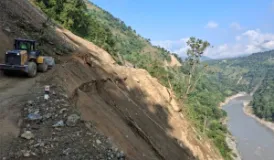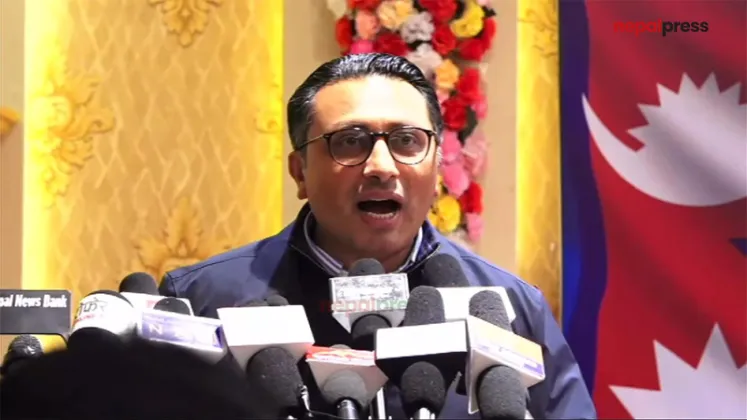
Finance Minister Dr. Swarnim Wagle said on Friday that the government would ensure budget constraints did not obstruct relief, reconstruction and recovery in areas affected by the Bhotekoshi flood. He made the commitment at Singha Durbar during a meeting of the Parliamentary Special Committee on the Impact of Climate Change in the Himalayas, Climate Justice and the Bhotekoshi–Trishuli Disaster, saying the government was serious about arranging adequate funds for rebuilding affected areas.
Government commitment to recovery funding
Wagle’s statement places the availability of public funds at the centre of the government’s response to the flood’s aftermath. He said a shortage of budget would not be allowed to hinder work in affected areas, identifying relief, reconstruction and recovery as the needs that must continue to receive attention. He also said the government was serious about arranging adequate budget for reconstruction.
The pledge was made during a parliamentary committee meeting focused on climate change in the Himalayas, climate justice and the Bhotekoshi–Trishuli disaster. By raising the funding commitment in that forum, the finance minister addressed the resources required for rebuilding as part of a wider discussion that included the disaster and climate-related concerns in the Himalayan region.
The statement sets out the government’s position on financing recovery, but the details provided do not specify a total allocation or a timetable for disbursement. Wagle’s assurance was that budget shortages would not be permitted to become a barrier to the work needed in flood-affected areas. His remarks therefore emphasized the commitment to secure funding rather than announce a specific budget figure.
Parliamentary focus on climate and disaster impacts
The meeting brought together the subject of the Bhotekoshi–Trishuli disaster with wider questions of climate change in the Himalayas and climate justice. Its formal title reflects those linked areas of focus. Wagle’s comments connected that discussion to the practical requirement of providing public resources for relief and reconstruction in the places affected by the Bhotekoshi flood.
Relief, reconstruction and recovery refer to distinct elements of the response identified by the minister. Relief addresses immediate needs, while reconstruction and recovery concern the work of rebuilding and restoring affected areas. Wagle’s pledge covered all three, making clear that the government’s stated commitment was not limited to rebuilding alone.
The finance minister said the government was serious about arranging adequate funding for reconstruction. That assurance is significant to the response because rebuilding depends on resources being available, though no project list, funding breakdown or implementation schedule was included in the information provided about his remarks. The commitment, as stated at the meeting, was that a budget shortage should not prevent reconstruction from moving forward.
A pledge, with funding details to follow
Wagle’s remarks amount to a public assurance that the government intends to support the affected areas through the recovery process. They also indicate that financing is being treated as a necessary part of the response to the disaster, alongside the relief and rebuilding work named by the minister.
The meeting at Singha Durbar provided the setting for the pledge, before a parliamentary special committee whose remit includes the Himalayan climate context, climate justice and the Bhotekoshi–Trishuli disaster. Wagle’s message was direct: the government would not allow a budget shortage to stand in the way of relief, reconstruction and recovery in areas affected by the Bhotekoshi flood.