Kumar Lamichhane, a civil engineer originally from Khahare in Siranchok Rural Municipality-7, Gorkha district, is now earning Rs 1.5 million per month from cattle and buffalo farming, a business he runs alongside his engineering career. His venture, Kshitij Integrated Agriculture Farm Pvt. Ltd., was established in Jestha 2077 (May-June 2020) and operates from Ramkot, Dandapauwa in Nagarjun Municipality-6, Kathmandu. As reported by NepalPress and Pradesh Khabar, Lamichhane is being cited as an example of how hard work and dedication can turn agriculture into a profitable, professional enterprise.
From Blueprints to Livestock: A Dual Career
Lamichhane's path is notable because he has not abandoned his original profession to enter farming. He continues to work as a civil engineer while simultaneously managing a commercial livestock operation on the outskirts of Kathmandu. His roots, however, remain firmly in Gorkha, where he hails from Khahare in Siranchok Rural Municipality-7.
Rather than choosing between the two fields, Lamichhane has built a career that spans both. By day he applies his engineering expertise, while his agricultural venture generates a substantial monthly income from the cattle and buffalo he raises. This ability to manage two demanding professions at once is a central part of the story that has made him a subject of media attention.
Kshitij Integrated Agriculture Farm: Over Five Years in Operation
The farm was formally established as Kshitij Integrated Agriculture Farm Pvt. Ltd. in Jestha 2077 of the Nepali calendar, which corresponds to May-June 2020. In the years since, the business has grown into a steady income source, now based at Ramkot, Dandapauwa in Nagarjun Municipality-6 of Kathmandu.
Key facts about the enterprise include:
- Owner and founder: Kumar Lamichhane, a civil engineer from Khahare, Siranchok Rural Municipality-7, Gorkha
- Business name: Kshitij Integrated Agriculture Farm Pvt. Ltd.
- Established: Jestha 2077 (May-June 2020)
- Location: Ramkot, Dandapauwa, Nagarjun Municipality-6, Kathmandu
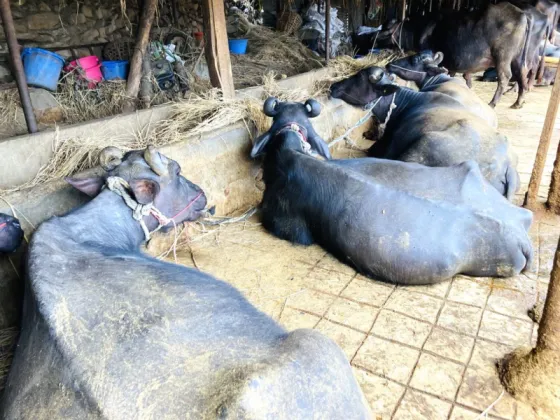
- Focus: Cattle and buffalo farming
- Monthly earnings: Rs 1.5 million
The farm's location within the Kathmandu valley area places a commercial livestock operation close to one of the country's largest urban markets, a factor that underscores the business-oriented approach Lamichhane has taken to agriculture.
Rs 1.5 Million a Month: The Numbers Behind the Story
The headline figure attached to Lamichhane's farm is its monthly income of Rs 1.5 million from cattle and buffalo farming. According to the reports, this earning is the direct result of the livestock business he built from the ground up after registering his company more than five years ago.
The scale of that income is significant in itself. A monthly return of Rs 1.5 million places the farm among the more successful commercial livestock operations highlighted in the Nepali media, and it demonstrates that cattle and buffalo farming, when run professionally, can rival the earnings of established urban professions. That this revenue is being generated by someone who still actively works as an engineer adds a further dimension to the achievement, showing that the farm functions as a serious business rather than a side interest.
Cited as an Example of Hard Work and Dedication
Beyond the financial figures, the reports present Lamichhane as a broader example. Both NepalPress and Pradesh Khabar describe him as an example of success achieved through hard work and dedication.
The message drawn from his experience is straightforward. Lamichhane identified an opportunity in commercial livestock farming, committed to it through the formal establishment of a registered company, and sustained the effort over more than five years until it reached its current level of monthly earnings. His decision to enter agriculture while maintaining an engineering career also highlights that farming, in his case, was pursued not as a fallback but as a deliberate professional choice.
For a man who left his home village of Khahare in Gorkha and built a business in Kathmandu, the journey reflects a combination of persistence and planning. As his farm continues to operate from Ramkot, Dandapauwa, his story stands as a documented case of agricultural entrepreneurship delivering measurable results, with Rs 1.5 million in monthly earnings serving as the clearest evidence of that success.