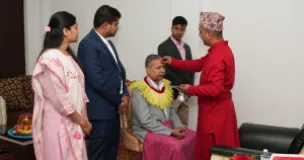
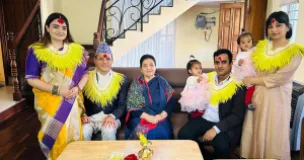
Vice President Ram Sahay Prasad Yadav received the Bijaya Dashami tika prasad and jamara at the auspicious hour of 10:26 am at Lainchour in Kathmandu, marking the most important day of Dashain, Nepal's greatest Hindu festival. The details of the observance were shared by the Vice President's Press Advisor, Dinesh Yadav. Bijaya Dashami is celebrated by millions of Nepali families across the country and around the world, as elders bestow tika and jamara upon their juniors along with blessings for health, happiness and prosperity.
An auspicious ceremony at Lainchour
The Vice President received the tika prasad and jamara precisely at 10:26 am, the hour regarded as auspicious for the tika ceremony this Dashami. Rituals on Bijaya Dashami are traditionally performed at a favourable moment determined for the day, and households across Nepal, along with public dignitaries, schedule their tika observances accordingly.
After receiving the tika from the priest, the Vice President, in keeping with the customs of the day, offered tika and jamara to his family members, extending to them the same blessings he had just received. This exchange within the family is the heart of Bijaya Dashami, when elders place the red mark of blessing on the foreheads of the younger generation and wish them long life and good fortune.
The meaning of tika and jamara
Bijaya Dashami, also spelled Vijaya Dashami, falls on the tenth day of the fifteen-day Dashain festival and is the day on which the central ritual of the celebration takes place. Each element of the ceremony carries its own symbolism:
- Tika: A mixture of rice grains, red vermilion and curd or similar binding ingredients, applied by elders to the forehead of their juniors as a mark of blessing.
- Jamara: The pale yellow-green shoots of barley, sown at the start of the festival and grown in specially prepared sand, placed on the ears or head of the recipient.
- Blessings: Along with the tika, elders offer wishes for long life, courage, prosperity and the triumph of virtue in the year ahead.
The combination of tika and jamara is regarded as the prasad of goddess Durga, whose victory over the demon Mahishasura is commemorated during the festival. Receiving tika from elders, beginning with the most senior members of the family, remains one of the most cherished traditions of Dashain, and many families continue the exchange through the days that follow Dashami itself.
From Ghatasthapana to Dashami
The jamara offered on Bijaya Dashami has its origins at the very beginning of the festival. During Ghatasthapana, the first day of Dashain, barley seeds are sown in sand and kept in a darkened space, with the shoots watered and nurtured over the following days. By the tenth day, the seeds have grown into the golden jamara that accompanies the tika. The period leading up to Dashami is dedicated to different manifestations of the goddess Durga, culminating in the victory celebrated on the tenth day.
Dashain: Nepal's most widely observed festival
Dashain is the longest and most widely celebrated festival in Nepal, observed with enthusiasm by Hindus across the country as well as by the Nepali diaspora. It commemorates the victory of goddess Durga over the demon Mahishasura, symbolizing the triumph of good over evil. In the days before Bijaya Dashami, homes are cleaned and decorated, markets fill with festival shoppers, kites dot the skies, and bamboo swings are erected in villages and neighbourhoods for children and adults alike.
The festival is also the great occasion of family reunion. People working or studying far from their hometowns return home, often after months away, to receive tika and blessings from parents, grandparents and other elders. For many families, the tika ceremony on Dashami and the days that follow is the emotional center of the year, renewing bonds across generations.
Public figures, including the President, the Vice President, the Prime Minister and other senior officials, customarily observe the tika ritual on Bijaya Dashami, and their ceremonies are widely followed in the media as part of the national celebration of the festival.
A day of blessings and togetherness
For Vice President Yadav, as for countless households across the country, this year's Bijaya Dashami began with the reception of tika prasad and jamara at the auspicious hour and the sharing of blessings within the family. The tradition does not end on Dashami itself: the exchange of tika continues through the remaining days of the festival until Kojagrat Purnima, the full moon day that marks the conclusion of Dashain, as juniors make the rounds of the homes of their elders to receive blessings and festive greetings.