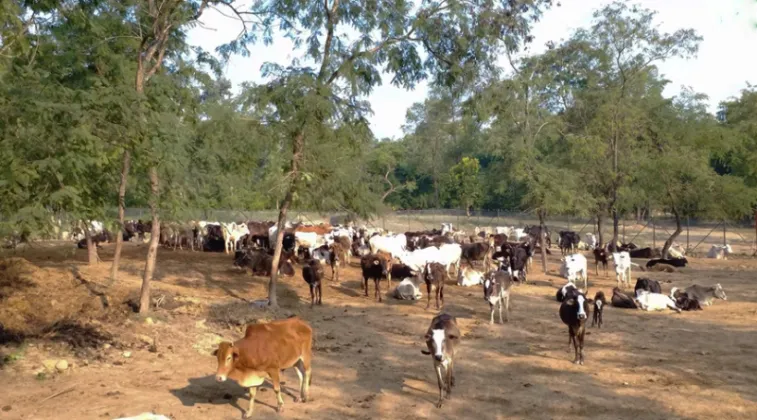
Residents of Dhangadhi Sub-Metropolitan City in Kailali district say a long-standing nuisance has finally found a lasting remedy. According to reports published on November 29, the sub-metropolitan city has begun keeping community livestock in cow shelters, known locally as gaushalas, built at different locations within the city. The move has reduced the earlier hardship caused by animals left loose in settlements and on the roads, where stray cattle often wandered unchecked.
Relief for residents
For years, locals had to live with the daily inconveniences and dangers posed by stray cows and other community livestock. Sita Joshi of Dhangadhi is among the residents who said the shelters have made a visible difference in everyday life. According to her, the gaushalas have eased the fear of road accidents caused by animals roaming freely, as well as the burden of protecting crops from stray livestock.
Stray cattle in Nepali towns and cities commonly feed on vegetables left out to dry, damage standing crops and pose a hazard to motorists, particularly motorcycle riders who encounter animals suddenly on the road. With the animals now kept in shelters, residents of Dhangadhi say those worries have considerably lessened.
A model for stray animal management
The practice has been described as an exemplary one in stray animal management. Rather than leaving community livestock to fend for themselves in streets and settlements, the sub-metropolitan city has taken responsibility for housing them in shelters constructed at various locations. This approach addresses the problem at its source instead of relying on ad hoc measures such as periodically chasing animals out of town.
Community cattle in Nepal are often abandoned by owners once they stop producing milk, adding to the population of stray animals in urban areas. Municipalities across the country have struggled to manage such livestock, which are considered sacred by many and therefore cannot simply be culled or removed. Cow shelters offer a way to care for the animals while freeing public spaces for residents and commuters.
Broader lessons
Dhangadhi's experience suggests that municipal-level intervention can succeed where individual efforts fail. By building gaushalas at different sites, the city has distributed the cost and logistics of keeping the animals while ensuring that neighborhoods no longer bear the brunt of stray livestock.
The reports from November 29 highlighted the initiative as a practice worth emulating, noting that it has delivered tangible benefits to locals. If sustained, the shelters could serve as a template for other municipalities in the Tarai and across Nepal that face similar challenges with community cattle roaming their streets.
For now, residents of Dhangadhi say the change is already felt on the ground: roads are safer, fields are better protected, and the animals themselves have a place to stay.