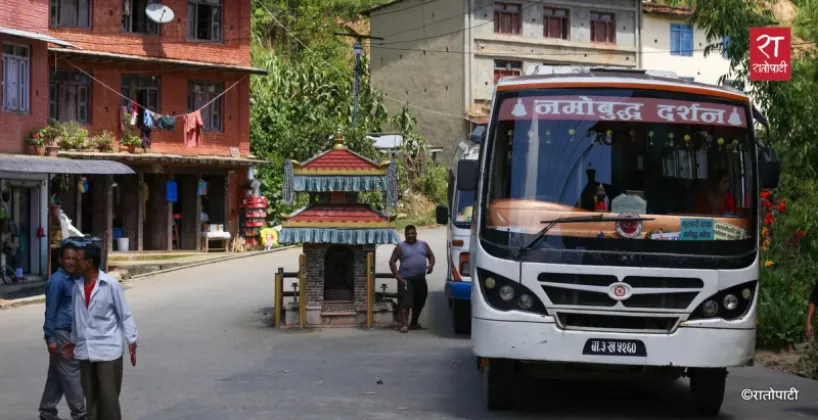
Dapcha Bazaar in Namobuddha Municipality-9 of Kavrepalanchok district, once a bustling stopover and trading hub on the route linking Kathmandu with eastern Nepal, is now largely deserted. The quiet market reflects a major change in the role of a place that had served travellers and trade, while its old houses, narrow alleys and cultural character continue to evoke its past.
A market shaped by its place on the route
Dapcha’s earlier importance was closely tied to its position between Kathmandu and eastern Nepal. The bazaar functioned as both a trading centre and a stopover, bringing activity to a settlement that served people moving along that connection. Its identity was therefore not limited to the buildings lining its streets: the movement of travellers and the exchange of goods helped make it a busy place.
That role has diminished over time. The construction of the BP Highway is identified as a key factor in the bazaar’s decline. The change in transport routes altered the circumstances that had supported Dapcha as a stopping point and trading hub. As the route’s importance shifted, the market lost much of the activity that once gave it a prominent place in travel between the capital and eastern Nepal.
Migration and a quieter present
Migration has also contributed to the change. Together with the highway’s construction, it is associated with the decline of a bazaar that is now described as largely deserted. The result is a contrast between Dapcha’s reputation as a once-bustling market and its quieter condition today. The available accounts point to these broader forces rather than a single event as the explanation for the transformation.
The change can be seen in the bazaar’s diminished activity. Dapcha remains a place with a recognisable history, but it no longer holds the same role as a busy stopover and centre of trade. Its present quietness marks a shift in how the settlement is experienced: the market is now associated as much with the traces of its earlier life as with the activity that once defined it.
Old streets preserve the story
Despite the decline in bustle, Dapcha’s old houses and alleys remain important parts of its character. They offer visible reminders of the settlement’s past and of the period when the bazaar was a significant point on the connection between Kathmandu and eastern Nepal. The place’s culture, too, continues to reflect that history. These features give Dapcha an identity beyond its current level of activity.
The contrast between quiet streets and a lively past is central to the story of the bazaar. Its buildings, lanes and culture preserve a sense of the place that once drew travellers and supported trade, even as the highway and migration have helped reshape its fortunes. Dapcha’s history remains legible in its physical surroundings, although the market no longer carries the bustle for which it was known.
Dapcha’s changing landscape is a reminder of how a settlement’s role can be tied to the routes and movement around it. Once a trading hub and stopping point, it is now largely quiet, with its older streets and cultural character standing as links to its past. The bazaar’s story is not only one of decline: it is also a record of the connections that made it important and the features that continue to distinguish it today.