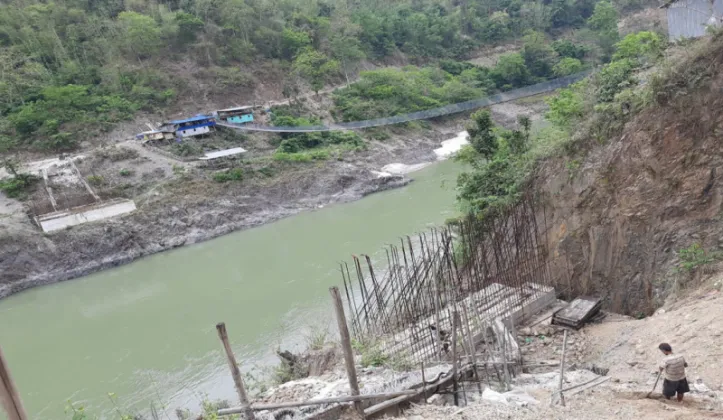
Construction of the long-stalled Chuhar motorable bridge over the Dudhkoshi River, lying on the border of Udayapur and Bhojpur districts, has finally resumed after remaining halted for five to six years. The bridge is considered a vital infrastructure link connecting Bhojpur's southern region to the Tarai, and its resumption has brought renewed hope to residents of the area who have long waited for an all-weather connection to the plains.
A Project Stuck for Years
The bridge was inaugurated on 27 Asoj 2077 BS with much expectations, but the construction work could not be completed after the project stalled. Despite the inauguration ceremony having taken place years ago, the structure remained incomplete, forcing local residents to continue relying on alternative and often difficult routes to reach the Tarai.
The prolonged halt left the bridge in a half-finished state, causing frustration among the local population for whom the crossing over the Dudhkoshi River had been a longstanding demand. The resumption of work now marks a turning point for the project that had become a symbol of unfinished development promises in the region.
Target of Completion Within 18 Months
With work now back on track, officials have set a target of completing the bridge within the next 18 months. The renewed timeline has raised expectations that the people of Bhojpur's southern belt will finally get the motorable crossing over the Dudhkoshi that was promised when the bridge was inaugurated.
The completion of the Chuhar bridge is expected to significantly ease transportation between the hill districts of Bhojpur and the Tarai plains through Udayapur. Improved connectivity along this route is anticipated to benefit locals who depend on the corridor for trade, movement of goods, and access to services in the lowlands.
Strategic Importance of the Bridge
The Dudhkoshi River forms a natural barrier along the Udayapur-Bhojpur border, and the Chuhar bridge is regarded as strategically important for opening up Bhojpur's southern region. A motorable bridge at this point would provide the district's southern areas with a direct route to the Tarai, reducing travel distances and dependence on longer, roundabout routes.
For years, the incomplete state of the bridge meant that the envisioned benefits of the connectivity project remained out of reach for local communities. The resumed construction has therefore been welcomed as a step toward fulfilling a promise made to the residents of both districts when the bridge was formally inaugurated in Asoj 2077 BS.
Road Ahead
While the resumption of work has generated optimism, attention will now turn to whether the contractor and concerned authorities can stick to the 18-month deadline. Delays and cost overruns have historically plagued infrastructure projects in Nepal's hill and remote districts, and the Chuhar bridge itself stands as an example of how a project can stall for years after an inauguration.
Local residents, who have awaited the bridge's completion since its inauguration in 2077 BS, will be watching closely as construction picks up pace. If the new timeline is met, the Chuhar bridge will finally deliver on its promise of linking Bhojpur's southern region with the Tarai, marking a significant milestone for connectivity in the eastern hill region.