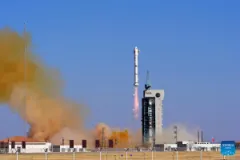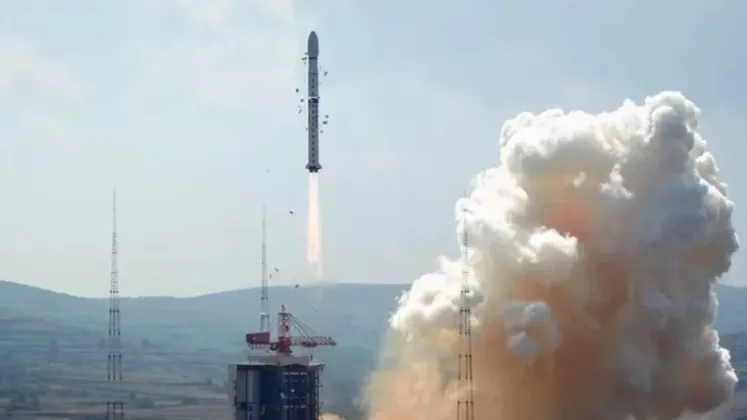
China successfully launched four new satellites into space on Sunday, further expanding its growing fleet of orbital assets. The launch took place at 11:53 am local time from the Taiyuan Satellite Launch Center, located in Shanxi Province in northern China.
The satellites were carried into orbit aboard a Long March-6C carrier rocket, which lifted off from the launch facility without any reported complications. Among the four satellites placed into space were two dedicated space-based cloud technology verification satellites, along with the AirSat-12 and AirSat-13 spacecraft.
Details of the Launch
The launch was conducted on Sunday at 11:53 am Beijing time, marking another operational mission for the Long March-6C rocket family. The Taiyuan Satellite Launch Center, one of China's major spaceports, has historically been used for launches of Earth observation, technology demonstration and weather-related satellites, owing to its location in Shanxi Province in the country's north.
The payload consisted of four satellites in total. Two of them are space-based cloud technology verification satellites, which are expected to be used to test and validate cloud-related technologies from orbit. The remaining two, AirSat-12 and AirSat-13, also joined them on the same flight, with the Long March-6C delivering all four spacecraft into their intended orbits.
The Long March-6C Rocket
The Long March-6C is part of China's Long March family of carrier rockets, which forms the backbone of the country's space launch program. The successful deployment of all four satellites on this mission adds to the rocket's record of orbital deliveries from the Taiyuan facility.
China has increasingly relied on its Taiyuan Satellite Launch Center for missions involving technology verification satellites and smaller orbital payloads. The center's geographic position in northern China makes it a regular choice for launches of this type, and Sunday's mission was consistent with that pattern.
Satellite Payloads and Purpose
The cloud technology verification satellites aboard the mission are designed to test cloud-related technologies in the space environment. Verification satellites of this kind are typically used to demonstrate new systems in orbit before they are adopted for wider operational use.
The AirSat-12 and AirSat-13 satellites round out the four-spacecraft payload. With this mission, both spacecraft have now been delivered to orbit alongside the two cloud technology verification satellites, completing the objectives of the Sunday launch.
China's Ongoing Space Program
The mission underscores the steady pace of China's satellite launch activity, with the country conducting regular orbital missions from its network of launch centers. Sunday's successful launch from Taiyuan adds four more Chinese satellites to the growing number of spacecraft the nation has placed in orbit.
The launch was reported by Nepali news outlets including Ratopati and Pradesh Khabar, both of which confirmed the successful deployment of the four satellites aboard the Long March-6C rocket from the Shanxi Province spaceport.
Further technical details about the satellites' orbits and operational missions were not provided in the initial reports. With the launch declared a success, the four satellites - the two cloud technology verification spacecraft, AirSat-12 and AirSat-13 - are expected to begin their respective missions in orbit.