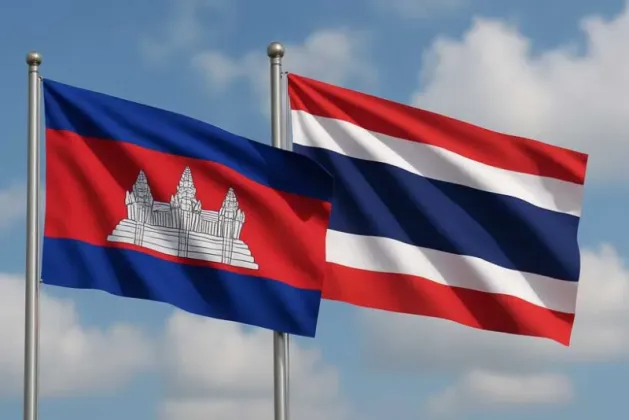
Cambodia and Thailand have agreed to allow a United Nations commission to conduct on-site visits to both countries' coasts and related islands in an effort to better understand the geography of their long-disputed maritime area. The agreement came at the conclusion of the third four-day meeting of the conciliation commission, held under the United Nations Convention on the Law of the Sea (UNCLOS) in Kuala Lumpur, Malaysia.
The decision marks a practical step forward in a process that both Southeast Asian neighbours have chosen to pursue through peaceful, rules-based means. By welcoming commissioners to the contested zone, the two governments have signalled their willingness to let the UN-facilitated body examine the physical realities of the area before it makes recommendations on how the dispute should be resolved.
What Was Agreed in Kuala Lumpur
According to details of the meeting, the conciliation commission will carry out site visits along the coasts of both countries and to the islands connected to the disputed maritime area. These visits are intended to give the commissioners first-hand knowledge of the geography of the zone, which is considered essential groundwork for any future determination of the maritime boundary.
Beyond the site-visit arrangement, the Kuala Lumpur talks also covered the substantive question of maritime boundary delimitation - the technical and legal process of drawing the line at sea that separates the two countries' respective maritime entitlements. The four-day session was the third such meeting of the commission, indicating that the conciliation process has moved into a sustained and structured phase rather than remaining a one-off engagement.
The UNCLOS Framework
The dispute is being addressed through the conciliation mechanism of the United Nations Convention on the Law of the Sea, the international treaty that governs how states define and manage their maritime rights, including territorial seas, exclusive economic zones and continental shelves. UNCLOS provides procedures for settling disagreements between states over maritime boundaries without resort to unilateral action or force.
Conciliation under UNCLOS involves a commission that hears the parties, examines the facts and geography of the disputed area, and works toward proposing terms of settlement. The agreement to allow on-site visits fits squarely within this approach, as commissioners typically need to verify geographical features - coastlines, islands and their positions - before they can assess how a boundary might be delimited in accordance with international law.
Holding the meeting in Kuala Lumpur gave the process a neutral venue away from both capitals, consistent with the practice of conducting sensitive boundary negotiations at a location acceptable to both sides.
Why the Dispute Matters
Maritime boundary disputes in Southeast Asia carry significant stakes. The waters off the coasts of Cambodia and Thailand are tied to fishing grounds, shipping routes and, potentially, seabed resources whose value depends on where the boundary is ultimately drawn. Uncertainty over the maritime limit has long been a source of friction between the two neighbours, complicating activities at sea and adding an unresolved item to their otherwise close bilateral relationship.
By committing to a UN-supervised conciliation process, both governments have opted to manage the dispute through dialogue rather than confrontation. The latest agreement keeps that process moving and demonstrates continuity: three meetings have now been held, each building on the work of the last.
Next Steps in the Process
The site visits agreed in Kuala Lumpur will take commissioners to the coasts of both countries and to the islands associated with the disputed zone, allowing them to assess the geography that will underpin the delimitation discussions. Details such as the timing of the visits and the schedule of further commission meetings were not specified in the available information.
The conciliation commission is expected to continue its work as the two sides address maritime boundary delimitation in subsequent sessions. For now, the outcome of the Kuala Lumpur round - a mutual agreement to open the disputed area to UN commissioners - stands as the most concrete signal yet that Cambodia and Thailand intend to settle their maritime disagreement peacefully and within the framework of international law.
Observers of regional diplomacy will watch whether the momentum from Kuala Lumpur carries into future rounds, as the two countries work toward a final delimitation of their shared maritime boundary under UNCLOS.