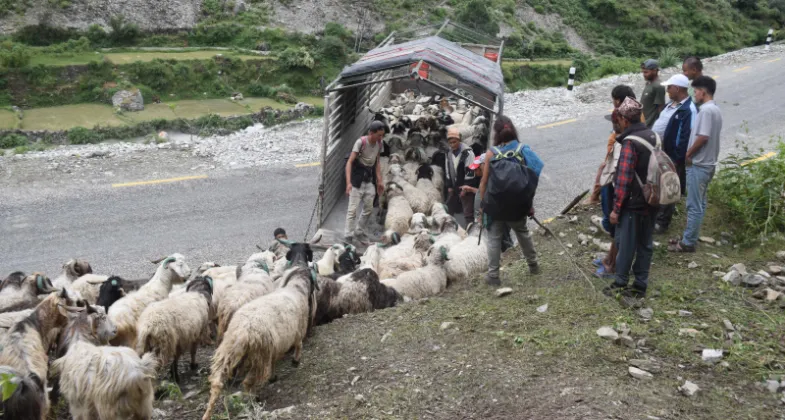
Ghuran Bahadur Bohara, a trader from Saipal Rural Municipality in Bajhang, has spent the Dashain and Tihar seasons away from home for 15 years, taking flocks of sheep and mountain goats to Pokhara and Kathmandu for trade. While his animals bring the taste of Himalayan meat to city kitchens, his mother and family remain at home, and he misses receiving tika and jamara from his mother's hands and celebrating the festivals together.
A festival season spent on the road
For Bohara, the two major festivals have become a time of work away from his village rather than a period of reunion with family. His trade takes him from Saipal to the cities with sheep and mountain goats, keeping him away from home during Dashain and Tihar. The pattern has continued for 15 years, leaving him to observe the festive season at a distance from the people with whom he would otherwise celebrate.
The separation is especially meaningful at Dashain, when Bohara misses receiving tika and jamara from his mother. Those rituals are part of the family celebration he cannot share while away for trade. His absence is not simply a matter of missing a gathering: it means missing a familiar moment between mother and son that he associates with the festival.
His family remains at home in Bajhang while he travels with the animals to Pokhara and Kathmandu. The account of his work places that contrast at the centre of his story: his family marks the season at home, while he carries on with the trade that takes him to the cities. The festivals return each year, but for Bohara they have also meant another season spent apart from his family.
Bringing Himalayan meat to city kitchens
Bohara's work connects the flocks he takes from the mountain region with consumers in Pokhara and Kathmandu. His trading brings Himalayan meat to city kitchens, even as the work keeps him from his own family celebrations. The trade therefore has two sides in his story: it is the work he undertakes during the festive period, and the reason he cannot be at home to share that period with his mother and family.
The available account does not detail the number of animals he takes, the length of each journey or the arrangements involved in the trade. What it makes clear is the central choice reflected in his 15-year experience: he takes sheep and mountain goats to the cities during Dashain and Tihar, while the family celebrations he misses continue at home. His work is tied to a seasonal demand for meat, but its personal cost is measured in the rituals and time together he gives up.
The cost of missing family traditions
Bohara's story draws attention to the people whose work continues while others celebrate. His absence means missing tika and jamara from his mother's hands and the chance to mark Dashain and Tihar alongside his family. Those are the specific losses described in his experience, repeated across 15 years away from home during the festivals.
For his mother and family, the festival season comes with Bohara away on trade; for him, the work brings Himalayan meat to urban kitchens but leaves the family gathering out of reach. His experience links rural trade with city consumption in a personal way, showing what the journey means for the person doing the work. After 15 years of spending the festive period away, the tradition he misses most remains a simple one: celebrating at home and receiving tika and jamara from his mother.