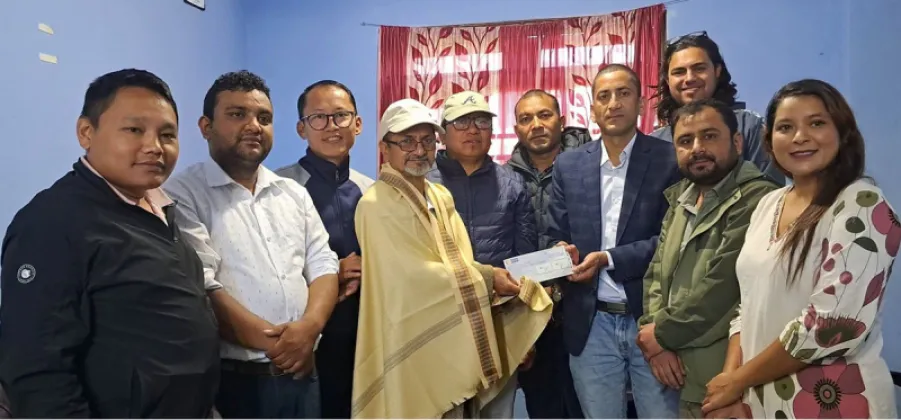
The Nepal Journalists Association’s Khotang branch has begun distributing monthly pensions of Rs 3,000 to senior journalists in Khotang district, launching a scheme intended to support a more dignified, secure, respected, professional and accountable journalism sector. Krishna Acharya is the first journalist to receive the pension, according to reports by Nagarik News, Gorkhapatra Online and Pradesh Khabar.
Pension scheme begins in Khotang
The branch’s decision introduces a regular monthly payment for senior journalists, with the amount set at Rs 3,000. The distribution has started in Khotang district, and Acharya has become the first recipient under the scheme. The available reports identify him as the initial beneficiary but do not provide further details about the scheme’s eligibility rules, funding arrangements or the process for selecting future recipients.
By making the support monthly, the programme is structured as continuing assistance rather than a one-time payment. Its stated purpose is to help make journalism a dignified, secure and respected profession, while also encouraging professional and accountable practice. The branch’s initiative places both support for senior journalists and the broader standing of journalism at the centre of the scheme.
A focus on dignity and professional security
The pension reflects an effort by the Khotang branch to address the place of senior journalists within the profession. Its stated aims connect financial support with a wider vision for journalism: a field in which practitioners can work with greater security and the profession is treated with respect. The reports establish the monthly amount and name the first recipient, while describing these aims as the rationale for beginning the distribution.
The programme also explicitly links professional dignity with accountability. That framing matters because the branch has presented the pension not only as assistance for senior practitioners, but as part of an effort to promote journalism as a professional and responsible occupation. The scheme’s launch therefore combines a direct benefit for its first recipient with an institutional statement about the kind of journalism the branch wants to encourage.
First recipient and next steps
Acharya’s selection as the first recipient marks the start of the pension distribution. The initial announcement establishes that senior journalists are the intended beneficiaries, but it does not specify how the branch defines “senior,” how many journalists may eventually qualify or whether additional beneficiaries have already been identified. Those details were not provided in the reports cited here.
The start of the programme gives the branch a concrete mechanism for pursuing its stated goals: a monthly pension of Rs 3,000. How widely the scheme will be extended, and how it will be administered over time, remains unclear from the information available. For now, its launch in Khotang and Acharya’s designation as its first beneficiary mark the beginning of a local initiative focused on support for senior journalists and on strengthening the dignity, security, respect, professionalism and accountability associated with journalism.