The Maladhunga bridge linking Baglung and Parbat districts reopened to traffic on 12 October 2026, restoring direct transport after a 15-day closure caused by flooding in the Kali Gandaki River. The floods damaged the bridge and washed away its approach road on 11 Asoj, disrupting journeys from Baglung and dozens of other districts across western Nepal. Repair work continued for about 10 days, with the Nepal Army, Nepal Police and Armed Police Force deployed at the site.
Flood damage cut a key road connection
The closure followed flood damage to the Maladhunga crossing and the loss of the road leading to it. With the approach road washed away, vehicles could not use the bridge as a direct link between Baglung and Parbat. The resulting interruption affected transport in Baglung and beyond, halting direct movement for people travelling to and from districts across western Nepal.
The disruption extended to districts including Rolpa, Rukum, Jajarkot, Dolpa and Salyan. The bridge’s closure therefore affected a much wider area than the two districts it directly connects. For 15 days, the route could not provide the direct transport connection that travellers and road users had relied on before the flood damage.
The available information identifies the washed-away approach road as a central part of the problem. Repair efforts focused on restoring that damaged section so traffic could use the crossing again. The reopening on 12 October marked the end of the interruption to direct transport through Maladhunga.
Security forces supported continuous repairs
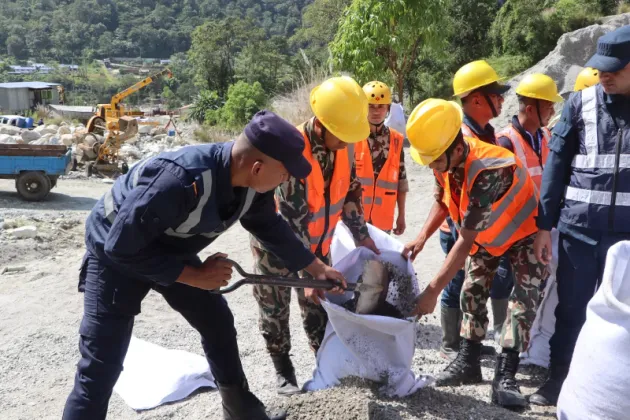
Repair work at the site continued for about 10 days. The Nepal Army, Nepal Police and Armed Police Force were deployed to support the work, as crews addressed the flood damage and repaired the approach road. Their presence continued during the effort to restore the route after the Kali Gandaki River floods.
The work took place within the 15-day period between the flood-related closure and the reopening. The bridge returned to service on 12 October, after the approach road had been repaired. The deployment of the three security forces was part of the response at the site, where work was carried out continuously for about 10 days.
The timeline shows the scale of the interruption: the crossing remained closed for 15 days, while repair activity continued for roughly 10 days. The reopening restored direct traffic between Baglung and Parbat and removed the immediate road barrier created when the approach was washed away.
Direct traffic resumes across the region
The reopening is significant for the districts whose direct transport had been halted by the closure. Along with Baglung, the affected areas included Rolpa, Rukum, Jajarkot, Dolpa and Salyan, as well as dozens of other western Nepal districts. The restored crossing allows direct transport to resume on the route linking Baglung and Parbat.
The bridge’s return to service does not change the sequence of events that led to the closure: flooding in the Kali Gandaki River damaged the crossing and washed away its approach on 11 Asoj, repair work followed, and traffic resumed on 12 October. It does, however, restore a direct connection that had been unavailable for more than two weeks.
With the approach road repaired and the bridge open, traffic through Maladhunga has resumed after the 15-day disruption. The reopening concludes the immediate repair effort carried out with the Nepal Army, Nepal Police and Armed Police Force at the site.