The Tika ceremony of Bada Dashain continued across Nepal on Saturday as the country observed the fourth day of the festival's most cherished tradition of receiving blessings from elders. People visited the homes of senior relatives, where they received Tika on their foreheads along with Jamara and warm wishes for long life, good health and prosperity. Reports published on October 22 and 24, 2026, documented the ongoing exchange of blessings among relatives, noting that the practice remains in full swing nationwide, with no single location or individual singled out in the coverage.
Fourth Day of the Tika Tradition
While the main day of Dashain Tika draws the largest family gatherings, the custom does not conclude with a single day of observance. As reported by Nepal Views, the process of seeking blessings from relatives continued on the fourth day, with people still receiving Tika, Jamara and blessings from their elders across the country.
The fourth day followed the familiar rhythm of the festival: elders applying Tika, younger relatives receiving Jamara and blessings, and families spending the day together in celebration. For many households, the days after the main Tika day are just as meaningful as the first, since the extended schedule allows relatives who could not gather on the opening day of Tika to make their rounds over the afternoons that follow.
This staggered pattern is a defining feature of how Bada Dashain is observed. Rather than treating the Tika ceremony as a single appointment, families spread the visits across several days, giving elders and younger generations alike the time to meet, exchange greetings and reaffirm their bonds. The reports from the fourth day suggest that this rhythm was proceeding as usual throughout the country.
What the Ritual Involves
The Tika ritual at the heart of these days follows a pattern familiar to households across Nepal:
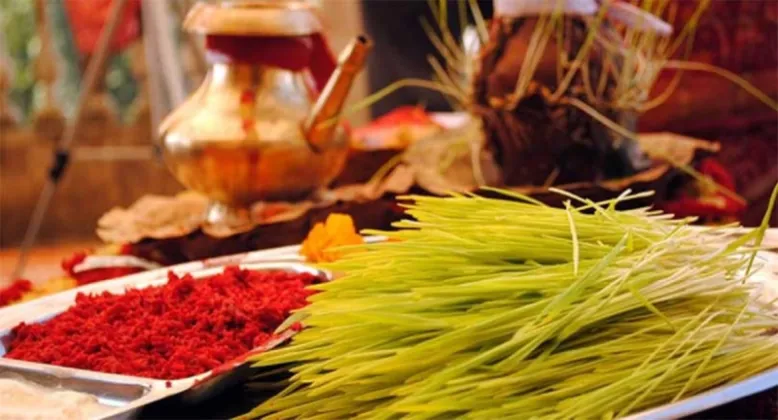
- Tika: Elders apply a mixture of rice, red vermilion and other auspicious ingredients to the forehead of each younger relative who comes before them.
- Jamara: Along with the Tika, elders present Jamara, the tender yellow-green shoots that are a signature symbol of the festival.
- Blessings: Elders place their hands on the heads of the younger ones and offer blessings for their wellbeing, success and happiness in the year ahead.
- Respect and gifts: Younger relatives show reverence to their seniors, and elders in return often give money or small gifts, a gesture that adds to the festivity of the occasion.
The Jamara handed out during these days carries particular meaning within the festival. It is grown from seeds sown at the start of Dashain and nurtured until the shoots are ready to be given along with Tika. Receiving Jamara together with the elders' blessings is considered an essential part of the Dashain experience, and its continued distribution through the fourth day underscores how central the custom remains to the celebration.
Significance Within the Festival
Bada Dashain is regarded as the biggest festival in Nepal, and the Tika ceremony is its emotional centerpiece. The tradition brings together multiple generations under one roof, and for families separated by work, study or distance, the Tika days represent one of the few occasions in the year when everyone gathers in the same place.
The extended nature of the Tika period serves an important practical purpose as well. Because relatives travel from different places to reach their home towns and family homes, the continuation of the ceremony over several days gives everyone the opportunity to complete their visits. The fourth day of Tika, falling on Saturday, offered precisely such an opportunity, and the reports indicate that people across the country made full use of it.
The coverage published on October 22 and 24, 2026, focused not on events at any particular place but on the continuity of the tradition itself. That emphasis reflects the character of the observance: the Tika ceremony is less a single moment than an open stretch of time in which blessings flow from the older generation to the younger one, and in which kinship ties are renewed year after year.
A Celebration Measured in Days
That the process of seeking blessings was still going on by the fourth day highlights how the festival unfolds at the pace of family life rather than by the clock. Elders remain at home to receive visitors, while younger relatives move from house to house, ensuring that no elder or younger member of the extended family is left out of the exchange.
With the Tika period still underway, households across the country are set to continue receiving relatives in the days ahead as Bada Dashain moves toward its conclusion. The fourth day of the ceremony, as reported, showed the tradition functioning exactly as generations of Nepali families have known it: elders bestowing Tika, Jamara and blessings, and the younger generation carrying those blessings forward.