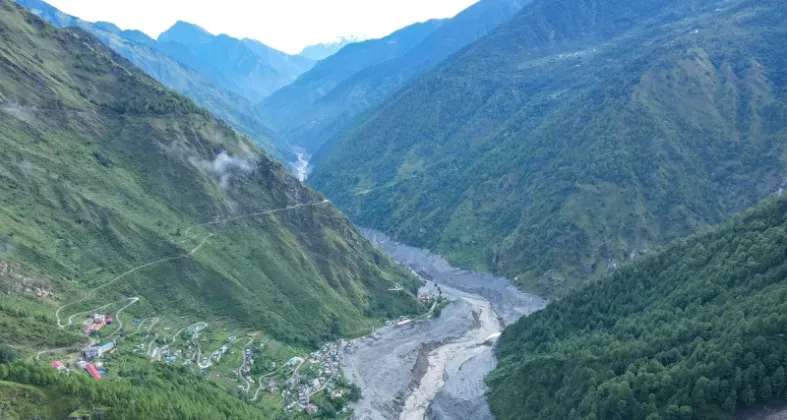
The Adaptation Fund has approved proposals for three climate adaptation projects in Nepal, a decision expected to strengthen the resilience of communities living with the growing impacts of climate change. The approvals were granted at the 47th board meeting of the fund, where Nepal's board member Naresh Sharma took part in the proceedings on behalf of Nepal. According to a report by RatoPati, the projects are expected to build the resilience of communities at risk from climate change, promote nature-based solutions, and strengthen early warning systems for floods and landslides.
Three proposals clear the board
The three proposals secured approval at a single meeting of the fund's board, underlining Nepal's ability to frame projects that meet the standards of international adaptation finance. While further details of the proposals, including budgets and timelines, were not immediately available, the approved projects converge on three broad objectives:
- Community resilience: strengthening the capacity of people and settlements most exposed to climate hazards to anticipate, withstand and recover from shocks.
- Nature-based solutions: promoting approaches that work with healthy ecosystems to buffer communities against climate impacts while supporting livelihoods.
- Early warning systems: reinforcing the systems that give people advance notice of floods and landslides, allowing evacuations and preparations before disaster strikes.
The emphasis on flood and landslide early warning speaks directly to Nepal's disaster profile. Every monsoon season, landslides and flooding across the country's hills and lowland plains cut highways, wash away farmland and claim lives, and reliable, community-level warnings are widely regarded as one of the most cost-effective ways to reduce those losses. Similarly, nature-based solutions have gained growing traction in international climate finance in recent years, because they deliver protection against hazards while also conserving biodiversity and sustaining local economies.
Green Koshi project among the approvals
One of the three approved projects is the 'Green Koshi' project, which is to be implemented by the National Trust for Nature Conservation, one of Nepal's longest-standing conservation institutions. As its name suggests, the project takes its name from the Koshi river system, which drains a large part of the eastern Himalayas and has long been associated with flooding and riverbank erosion that displace communities and damage farmland in the eastern plains.
The report did not specify the implementing agencies or funding amounts for the other two approved projects, leaving those details to be announced as arrangements between the fund and Nepal's implementing bodies are finalised. The involvement of the National Trust for Nature Conservation in the Green Koshi project nonetheless signals that conservation expertise will sit at the heart of at least one of the new initiatives, in line with the stated focus on nature-based solutions.
Nepal's voice at the Adaptation Fund
Naresh Sharma, Nepal's board member to the fund, represented the country at the 47th board meeting as the proposals were considered. A seat at the board gives Nepal a direct voice in the deliberations of a body that channels adaptation finance to developing countries that are particularly vulnerable to the adverse effects of climate change.
The Adaptation Fund finances concrete adaptation projects and programmes in such countries, with proposals undergoing review before they reach the board for a decision. Clearing that process is a prerequisite for funding to flow to the ground, which makes the approval of three Nepali proposals at one board meeting a notable outcome for the country's adaptation agenda.
Climate pressures make the approvals timely
Nepal emits a negligible share of global greenhouse gases, yet it is widely counted among the countries most exposed to climate change. Rising temperatures are reshaping its mountain landscapes, accelerating glacial melt and unsettling monsoon patterns, while floods and landslides recur with deadly regularity across the hills and plains. For a country with limited fiscal space, international finance for adaptation is therefore a central pillar of its climate strategy.
Against that backdrop, the approval of three projects at once carries weight. The projects, as approved, are expected to leave communities at risk better prepared for climate shocks, embed nature-based approaches in local adaptation efforts, and tighten the early warning net around flood- and landslide-prone areas.
Attention will now turn from approval to implementation. If the projects deliver on their stated aims, they could offer a measure of protection to some of Nepal's most exposed communities and add momentum to the country's broader push to secure international climate finance for adaptation on the ground.