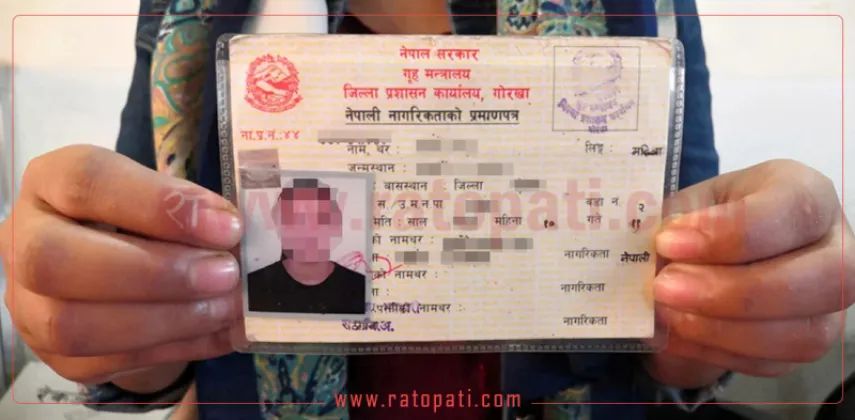
Chitwan has seen 28 people formally give up their Nepali citizenship over the first three months of the current fiscal year, according to the District Administration Office. The renunciations were recorded between Shrawan, the first month of Nepal's fiscal calendar, and the end of Ashoj, the third month, a window that corresponds roughly to mid-July through mid-November. Over the same period, the office issued citizenship by descent to 3,062 people and provided copies of citizenship certificates in 6,766 cases. The figures were released by Vikas Bik, information officer at the District Administration Office Chitwan, and cover services delivered both by the main district office and by the Area Administration Office in Madi, as reported by Rato Pati.
Three Months of Citizenship Services in Chitwan
The District Administration Office is the government authority responsible for maintaining citizenship records and processing citizenship applications at the district level. Its latest compilation of service statistics, covering Shrawan to the end of Ashoj of the current fiscal year, offers a snapshot of how heavily residents of Chitwan rely on these services, and how a small but notable number of citizens choose to leave the rolls altogether.
The headline figures for the period are:
- 28 people renounced their Nepali citizenship.
- 3,062 people acquired citizenship by descent.
- 6,766 copies of citizenship certificates were issued.
Information officer Vikas Bik said the data draws together transactions handled at the District Administration Office and at the Area Administration Office in Madi, meaning the statistics reflect demand across the district rather than at a single counter. The announcement was also covered by Khabarhub and Nagarik News.
What the Different Services Involve
Citizenship by descent is the standard route through which Nepali citizens secure citizenship for their children. Under Nepal's citizenship framework, a person born to a Nepali citizen parent can obtain a certificate by descent, which establishes their nationality and is required for passports, voter registration, property transactions and a wide range of administrative purposes. The issuance of 3,062 such certificates in roughly three months points to steady demand from young people completing their documentation as they come of age.
Renunciation, by contrast, is the process by which a citizen formally surrenders Nepali nationality. The published figures do not include the reasons behind each individual case, but renunciations in Nepal typically take place when a citizen acquires the nationality of another country, as the country's legal framework does not recognise dual citizenship. Each of the 28 cases recorded in Chitwan represents the completion of that formal legal process, after which the person's name is removed from the citizenship records.
Copies of citizenship certificates, the third service captured in the statistics, are provided when a citizen needs a duplicate or corrected document, for example where an original certificate has been lost or damaged or where personal details must be updated. The 6,766 copies issued during the period make this by far the highest-volume service of the three, more than double the number of new certificates issued by descent.
Services Reaching Madi
A notable feature of the reporting is that the figures incorporate the work of the Area Administration Office in Madi. Area administration offices extend citizenship and other administrative services to parts of a district that lie away from the main district office, sparing residents the need to travel long distances for basic documentation. Including the Madi office in the count means the statistics capture citizens served across the district, rather than only those who visit the headquarters counter.
Reading the Numbers
Measured against the wider flow of citizenship services, renunciations remain a small slice of the district's caseload. The 28 people who gave up their citizenship compare with 3,062 who acquired it by descent, meaning that for every person who renounced, more than one hundred new citizens were added to the rolls through descent. Put another way, renunciations accounted for less than one percent of the total certificates issued and renunciations processed during the period.
At the same time, the volume of copies issued, at 6,766, underscores how significant duplicate and corrected documentation is to the office's day-to-day workload. Every copy represents a citizen who needed their certificate reissued, and that demand considerably exceeds both new issuances by descent and renunciations over the same three months.
The timing of the data is also worth noting. Because Nepal's fiscal year begins in Shrawan, the figures cover only the opening stretch of the current fiscal year rather than a full-year total, giving an early indication of the scale of demand the office can expect as the year continues.
The District Administration Office Chitwan compiles such service statistics to keep the public informed about the volume of work handled at its counters. For now, the Shrawan-to-Ashoj record stands at 28 renunciations, 3,062 citizenship-by-descent issuances and 6,766 copies issued, a set of figures that documents both the steady inflow of new citizens in the district and the small stream of those who choose to surrender their nationality.