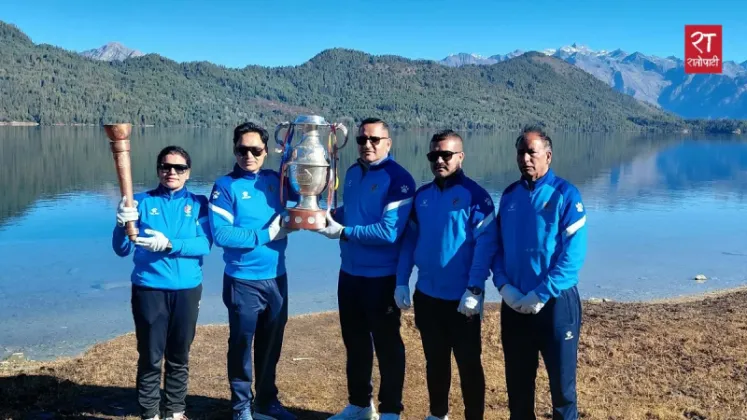
The trophy and Olympic torch of the 10th National Games have reached Rara, one of Nepal's most famous tourist destinations, located in Mugu district of Karnali Province. The arrival of the trophy and torch at the iconic Rara Lake marks a significant milestone in the promotional campaign for the upcoming national sporting event, which is being hosted in the Karnali region.
The trophy and torch tour was formally launched with the objective of publicising the 10th National Games among the general public while simultaneously introducing Karnali's natural, historical and tourist identity at the national level. By carrying the symbols of the games to prominent locations across the province, organisers hope to build excitement ahead of the competition and showcase the region's unique attractions to a wider national audience.
Promoting Sport and Tourism Together
Speaking on the occasion, Olympian Bista said that bringing the trophy and Olympic torch to Rara would contribute to promoting the games as well as Karnali's tourist destinations. His remarks underlined the dual purpose of the tour, which seeks to link the spirit of the National Games with the campaign to position Karnali as a leading destination for domestic and international visitors.
The choice of Rara for the trophy and torch tour is particularly symbolic. Rara Lake, the largest lake in Nepal, sits at a high altitude within the Rara National Park in Mugu district and is celebrated for its pristine blue waters, surrounding pine forests and tranquil mountain scenery. The destination has long been regarded as a gem of Karnali Province, though it remains relatively remote and less visited compared with other tourist hubs in the country.
Showcasing Karnali's Identity
The 10th National Games represents a major opportunity for Karnali Province, which has historically remained on the margins of national development, including in the fields of sports and tourism. Hosting the games offers the province a platform to demonstrate its capabilities and to draw attention to its rich natural and cultural heritage.
According to the organisers, the trophy and torch tour is designed not merely as a ceremonial exercise but as a deliberate effort to introduce Karnali's identity to the rest of the country. The province is home to dramatic Himalayan landscapes, deep river gorges, high mountain passes and distinctive cultural traditions that have been shaped by its isolated geography. Events such as the torch tour are expected to help bring these attributes into the national spotlight.
Building Momentum Ahead of the Games
The arrival of the trophy and Olympic torch in Rara is part of a broader journey that the symbols of the games are expected to undertake before the opening of the competition. Such tours are a common feature of major multi-sport events in Nepal, where the torch and trophy are carried through various districts and landmarks to generate public enthusiasm and a sense of shared ownership over the event.
For the people of Mugu, the visit carries special significance. The district is among the most remote in Nepal, and the presence of the National Games trophy and Olympic torch at Rara is a rare moment of national attention for the area. Local communities and tourism entrepreneurs are likely to view the event as an opportunity to highlight the potential of Rara as a destination that can attract visitors year-round.
The connection between sporting events and tourism promotion has become increasingly important in Nepal, where adventure tourism, trekking and natural attractions form a key pillar of the national economy. By tying the 10th National Games to destinations like Rara, organisers are tapping into this synergy, using the games as a vehicle to encourage travel to lesser-known parts of the country.
As preparations for the 10th National Games continue, the trophy and torch will remain a visible symbol of the event's journey across Karnali. The stop at Rara has set the tone for a campaign that aims to celebrate both athletic excellence and the extraordinary natural beauty of the province, reinforcing the message that sport and tourism can grow hand in hand in Nepal's most remote regions.
Source: Ratopati