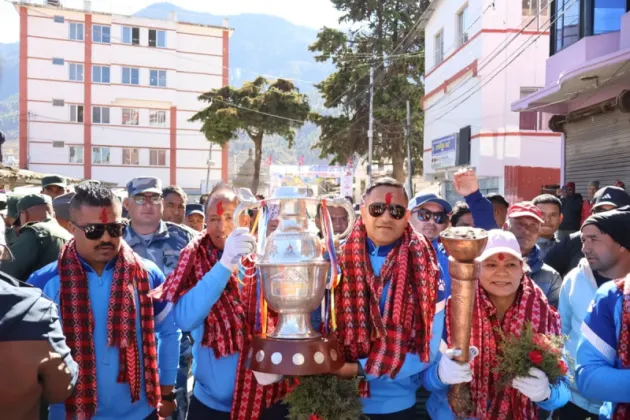
The trophy and Olympic torch of the 10th National Games were brought to Chandannath and Bhairavnath temples, two of the most revered religious sites in Jumla, on Saturday. A team of renowned Olympians led by celebrated marathon runner Haribahadur Rokaya carried the trophy and torch to the temples in a ceremony that blended the country's sporting journey with its deep cultural and spiritual heritage.
The event was reported by Baahrakhari and Ratopati, with coverage published on November 28, 2026. The visit marked a significant moment for Jumla, a high-altitude Karnali district that has produced some of Nepal's finest endurance athletes, and for the temples that stand at the heart of the district's religious and cultural life.
A Symbolic Journey Led by an Olympian
The trophy and torch were carried to the temples by a team of renowned Olympians, led by Haribahadur Rokaya, one of Nepal's most accomplished marathon runners. Rokaya's involvement carried particular weight, as his career represents the spirit of perseverance associated with Nepal's athletes who have competed at the highest international levels.
Bringing the trophies and torches of the National Games to temples is part of the ceremonial traditions surrounding the country's premier multi-sport event. Such rituals are intended to honor the religious and cultural significance of the host region before the sporting competitions unfold, underscoring the connection between the Games and the communities that host them.
Jumla's Sacred Landmarks
The Chandannath and Bhairavnath temples are the major religious sites of Jumla and hold a special place in the identity of the Karnali region. Chandannath temple, perched in the district headquarters that shares its name, draws pilgrims and devotees from across the mid-western hills, while the Bhairavnath temple is another important site of worship for the local community.
By carrying the National Games trophy and Olympic torch to these temples, the visiting team of Olympians paid tribute to the district's spiritual heritage. The choice of venues reflected the effort to root the 10th National Games not only in athletic competition but also in the living traditions of the host region, giving local devotees and residents a direct link to a national sporting occasion.
Jumla and the Spirit of Nepali Sport
Jumla's association with running is well established. The district's high-altitude terrain and the endurance of its people have long been linked with the development of distance running in Nepal, making the presence of a marathon runner of Haribahadur Rokaya's stature especially meaningful as he led the trophy and torch through his fellow countrymen's heartland.
The 10th National Games, as Nepal's flagship sporting event, brings together athletes from provinces across the country to compete in a wide range of disciplines. Ceremonies such as the one held on Saturday help build anticipation and local engagement ahead of the Games, allowing communities outside major urban centers to participate in the festivities and feel a sense of ownership over the national event.
Local Significance and National Attention
The arrival of the trophy and torch in Jumla drew attention from national media, with Baahrakhari and Ratopati both covering the event. The reports highlighted the participation of the Olympian team and the ceremonial significance of the visit to the two temples.
For the residents of Jumla, the event was a rare opportunity to see national sporting symbols brought directly to their doorstep and placed within the sacred spaces they revere. For the athletes and organizers, the visit to Chandannath and Bhairavnath served as a gesture of respect toward the region whose terrain, climate, and people have shaped much of Nepal's running tradition.
As preparations for the 10th National Games continue, Saturday's ceremony in Jumla stands as a reminder of how the event seeks to weave together sport, faith, and regional pride, carrying the Olympic torch and the Games trophy through the very temples that anchor the cultural life of the Karnali hills.