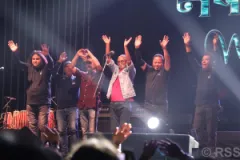
Zonta Club Kathmandu, in collaboration with Kathmandu Metropolitan Municipality, launched the 16-day campaign against gender-based violence 2026 at the historic Basantapur Durbar Square in Kathmandu on Wednesday. The campaign opened with the unveiling of a public art installation designed to draw public attention to the issue of violence against women and girls, turning one of the capital's most visited heritage sites into a platform for advocacy.
The launch event was held under the chief guesthood of Sunita Dangola, acting chief of Kathmandu Metropolitan Municipality. It brought together Zonta Club members, artists, youth leaders and members of the general public, reflecting the campaign's intent to make the movement against gender violence a broadly shared civic cause rather than a concern confined to advocacy organisations.
Public art as a call to action
A central feature of the launch was the public art installation unveiled at Basantapur. By placing the artwork in a prominent heritage space, organisers sought to ensure that the message of the campaign reaches not only those who attend formal events but also the thousands of residents and visitors who pass through the square daily.
The involvement of three young Nepali women artists in the campaign underscores its emphasis on youth leadership. Their participation signals the campaign's aim of encouraging a new generation to speak out against gender-based violence and to take ownership of the cause in their communities.
A 16-day global campaign
The 16-day campaign is part of an internationally recognised period of activism against gender-based violence, which runs each year and mobilises organisations around the world to raise awareness, honour survivors and press for stronger action. Zonta Club Kathmandu's local edition forms part of these global efforts, adapted to the context of the Nepali capital.
The club, a member of Zonta International, has long worked on issues affecting women and girls, including their health, education and safety. Campaigns such as this one represent a key strand of that work, pairing public visibility with community engagement.
Municipal partnership and participation
The collaboration with Kathmandu Metropolitan Municipality gave the campaign the weight of local government backing, with the acting chief serving as chief guest at the unveiling. Such partnerships are important for campaigns of this kind, as they link civil society advocacy with the institutions responsible for city-level policy and services.
Organisers highlighted the participation of artists, youth leadership and the general public as a hallmark of the launch. By convening a broad mix of stakeholders at Basantapur, the campaign set the tone for the 16 days ahead: sustained public engagement with the issue of gender violence, visible in the heart of Kathmandu.
As the campaign continues over the coming weeks, attention will turn to how the momentum generated at Basantapur is carried forward, with the art installation standing as a lasting reminder of the message at the centre of the movement: that violence against women and girls must end.
Sources: Ajako Artha, News of Nepal