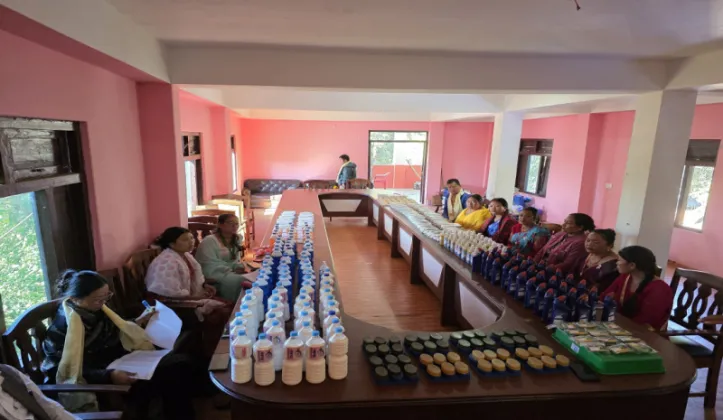
Women of Halesi Tuwachung Municipality in Khotang district have taken a significant step toward economic self-reliance by starting the production of nine different types of cleaning products, including soap, from locally available plants. The initiative, launched within the municipality, uses herbs such as ghiu kumari (aloe vera), titepati, pudina (mint) and tulsi (basil) as key raw materials, turning the area's rich natural resources into marketable goods.
Range of Products Being Made
The women's group is currently producing a diverse range of cleaning items that can rival established commercial brands available in the market. The products include:
- Clothes-washing soap
- Herbal mouthwash soap
- Liquid hand soap
- Products modelled on popular brands such as Ariel, Surf, Harpic, Colin, Lizol and phenyl
By covering everything from laundry soap to household disinfectants and surface cleaners, the producers aim to meet a wide spectrum of everyday household cleaning needs. The inclusion of herbs like tulsi and pudina in items such as the herbal mouthwash soap highlights the effort to combine traditional plant knowledge with modern cleaning products.
Municipality Support and Local Enterprise
The local government has played an important role in making this initiative possible. Halesi Tuwachung Municipality has supported the women in setting up and running the production enterprise, helping them acquire the skills and resources needed to manufacture the products. This municipal backing reflects a growing trend of local governments in Nepal encouraging income-generating activities based on locally available raw materials.
The use of plants that grow in the area means the raw materials for the products are readily accessible and inexpensive to gather. Ghiu kumari is widely known for its soothing properties, while titepati, pudina and tulsi have long been valued in Nepali households for their medicinal and aromatic qualities. Incorporating these herbs into cleaning and personal hygiene products gives the goods a distinct local identity and a potentially health-oriented appeal.
Significance for the Local Community
For the women involved, the enterprise offers a source of income and a chance to develop entrepreneurial skills without leaving their homes or their municipality. In rural districts like Khotang, where employment opportunities are limited and many residents depend on agriculture or remittances, small-scale manufacturing ventures such as this one can play a meaningful role in strengthening the local economy.
The initiative also demonstrates how locally rooted production can reduce dependence on imported consumer goods. Cleaning products bearing names like Ariel, Surf, Harpic, Colin, Lizol and phenyl are typically brought in from outside the district, often from distant urban markets. Producing similar items locally means money spent on such goods can circulate within the community instead, while also potentially shortening the supply chain for local consumers.
A Model of Herbal-Based Production
The Halesi Tuwachung initiative stands as an example of how Nepal's rich herbal resources can be harnessed for value-added products at the local level. Rather than exporting raw herbs or letting them go unused, the women's group has moved into processing and branding, which adds value at the point of origin.
If the products find a steady market within and beyond the municipality, the venture could encourage similar groups elsewhere in the district and the wider Koshi region to explore herbal-based manufacturing. For now, the nine products being made by the women of Halesi Tuwachung represent a concrete beginning: a locally supported, herb-based enterprise that pairs traditional plant resources with the practical demands of modern household cleaning.