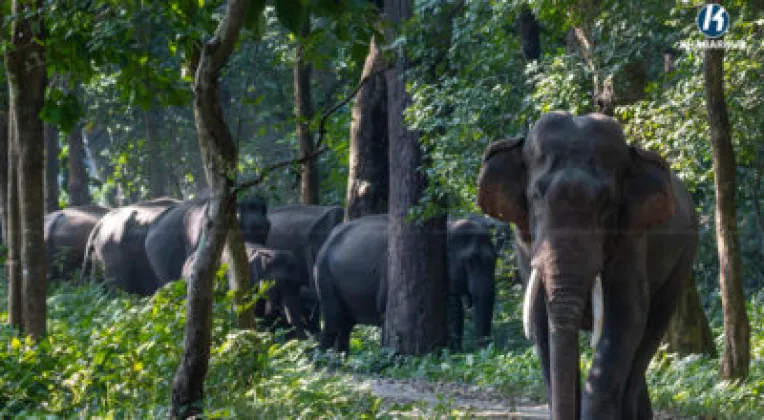
Wild elephants have been entering Nepal in large herds on a daily basis in Mechinagar Municipality-4, Bahundangi, in Jhapa district, breaking through the solar electric fence installed along the border area to stop them. The repeated intrusions, which take place in the evening, have spread fear among local residents who now face the threat of elephant encounters near their homes.
According to local reports, the elephants have been demolishing the electric barrier and slipping past the security cordon before arriving in Bahundangi settlements as dusk falls. The pattern has become so regular that residents describe the animals as arriving in droves every day, keeping villages on edge after dark.
Fence Breached Despite Safety Measures
The solar electric fence was built specifically to prevent wild elephants from crossing into Nepali territory from the bordering forest areas. However, the animals have reportedly learned to break through the structure, rendering the barrier ineffective at the points of incursion. Along with the fence, a security cordon maintained in the area has also failed to hold back the herds, which arrive in significant numbers.
Bahundangi has long been a flashpoint for human-wildlife conflict, sitting on a traditional elephant migration route along the Nepal-India border. The frequency of the current incursions, with herds crossing daily rather than sporadically, has intensified pressure on both residents and local authorities responsible for managing the conflict.
Fear Grips Local Residents
The nightly arrivals have left the people of Bahundangi terrified, according to local news reports. Families in the affected settlements must remain alert in the evenings when the elephants typically enter, limiting their movement and disrupting normal life. The fear is compounded by the size of the herds, which arrive together rather than as lone animals.
With elephants roaming near homes after dark, residents face risks to their lives, crops and property. Communities in the Terai belt that border elephant corridors routinely suffer damage to paddy fields, grain stores and houses when herds pass through, and the daily crossings in Bahundangi have heightened concerns about losses this season.
Authorities Call for Vigilance
Ward Chair Arjun Kumar Karki of Mechinagar-4 has urged local people to maintain high vigilance for their own safety in light of the regular elephant incursions. His appeal underscores the limitations currently facing local authorities, as the combination of the solar fence and the security cordon has not been enough to deter the animals.
The ward chair's warning reflects a broader challenge for settlements along Nepal's southern border, where elephant herds moving between forest patches in India and Nepal routinely cross administrative boundaries. Until the fence is repaired or reinforced and the security arrangement strengthened, residents of Bahundangi have been told to remain cautious, particularly during evening hours when the herds are known to arrive.
A Recurring Conflict in the Border Belt
Bahundangi's location along one of the major elephant migration corridors in the eastern Terai has made it one of the most conflict-prone areas in the country. Herds moving between protected areas on either side of the border pass through farmland and settlements, and encounters with humans periodically turn deadly.
Successive measures, including the solar electric fence now being breached, have been introduced over the years to reduce these encounters. The current situation, in which elephants cross daily despite both the fence and the security cordon, highlights the difficulty of containing animals that have adapted to the barriers placed in their path, and the continuing vulnerability of the communities that live along the corridor.
For now, the people of Mechinagar-4 Bahundangi remain on alert, watching the border each evening as the herds gather on the other side of the broken fence.