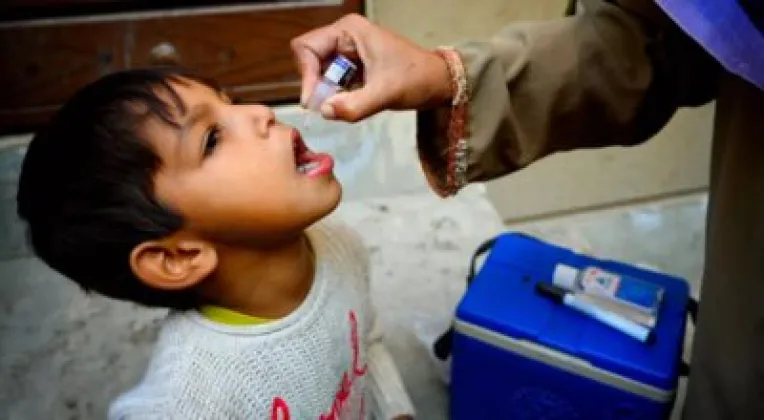
Kathmandu - Prof. Dr. Srijana Shrestha, Chairperson of the World Health Organization's (WHO) South-East Asia Regional Certification Commission for Polio Eradication, has said that Nepal's achievements in polio eradication are significant but must be sustained, urging continued efforts to maintain the country's hard-won polio-free status. Her remarks came in a video message released in Kathmandu on Saturday, October 24, 2026, as the global health community marked World Polio Day 2026.
A Timely Warning on World Polio Day
World Polio Day is observed every year on October 24, drawing worldwide attention to the campaign to eradicate polio and to the work still required to protect children from the disease. In Nepal, this year's observance was marked by the release of Shrestha's video message, which placed the country's success story alongside a clear caution: the gains built through years of immunization and vigilance can only be preserved through sustained commitment.
Shrestha, who heads the expert commission responsible for reviewing polio-free certification across WHO's South-East Asia Region, used the occasion to acknowledge Nepal's progress while underlining that a polio-free status is an ongoing responsibility rather than a finished task. Her message, released in Kathmandu, was widely picked up by Nepali news outlets, including Khabarhub, Ratopati and NepalPress.
What the Message Said
The central points conveyed in the video message were clear and consistent across coverage:
- Nepal's achievements in polio eradication are significant and worthy of recognition.
- Those achievements must be sustained, as they cannot be taken for granted.
- Continued efforts are needed to maintain the country's polio-free status.
The emphasis on sustainability reflects a reality well understood in public health: polio-free status is not a permanent shield. As long as the virus continues to circulate anywhere in the world, countries that have eliminated it remain at risk of re-importation. This is why global health authorities, including the WHO, repeatedly stress that vigilance, immunization and surveillance must continue even after major eradication milestones have been reached.
Recognition Paired With Responsibility
Shrestha's message struck a careful balance. By describing Nepal's eradication achievements as significant, she affirmed the value of the work carried out by the country's health system and its partners. By simultaneously stressing that continued efforts are needed to maintain a polio-free state, she framed the achievement not as a conclusion but as a commitment that must be actively upheld year after year.
Sustaining a Polio-Free Nepal
Polio, or poliomyelitis, is a highly infectious viral disease that can attack the nervous system and cause permanent paralysis, particularly among children under five years of age. There is no cure for the disease, which makes prevention through vaccination the most effective form of protection. For this reason, health authorities worldwide regard high routine immunization coverage and strong disease surveillance as the twin pillars of any country's defense against the virus.
For Nepal, maintaining its polio-free status means keeping those defenses active. Sustained vaccination efforts, the prompt detection of any suspected cases, and continued public awareness are broadly understood to be essential elements of the approach that Shrestha's message calls for by stressing that continued efforts are needed to maintain a polio-free state. Her remarks serve as a reminder that the absence of polio cases is the result of ongoing systems at work, not a condition that sustains itself.
The Commission Behind the Call
Shrestha's position gives her remarks particular weight. The South-East Asia Regional Certification Commission for Polio Eradication is the WHO body that reviews the polio-free status of countries across the region, Nepal among them, ensuring that certification standards continue to be met long after initial recognition. Coming from the commission's chairperson, the call for sustained effort signals that the region's certification bodies continue to monitor the situation closely rather than treating the job as complete.
Her message also sits within the broader observance of World Polio Day 2026, an occasion marked around the world to honor the progress made against a disease that once paralyzed large numbers of children every year and to renew commitments toward a world finally free of polio. That Nepal's observance centered on the question of maintenance, rather than eradication itself, underscores how far the country has come, and what is now at stake in protecting that position.
For Nepal, the video message released in Kathmandu on October 24, 2026, was therefore both a commendation and a caution. As the country marked World Polio Day 2026, its polio-free status stood as a significant achievement, one that, in the assessment of the WHO regional certification commission's chairperson, must be sustained through continued and unwavering effort.