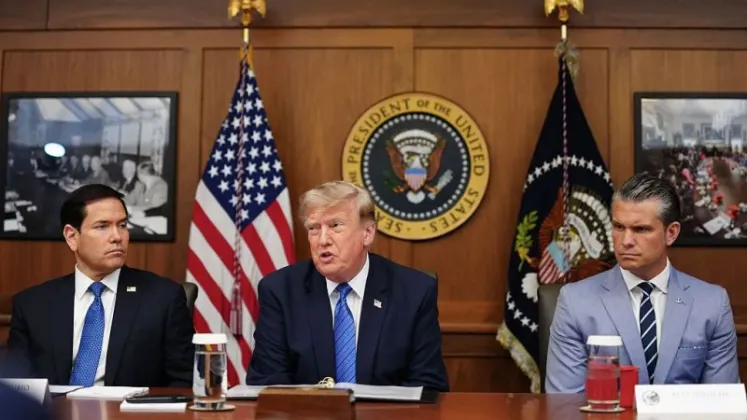
The White House has denied reports that Secretary of State Marco Rubio and Defense Secretary Pete Hegseth are preparing to leave the Trump administration, moving quickly to contain speculation that spread after Republicans suffered losses in the recent United States midterm elections. As reported by Ratopati, the administration has insisted that both men will remain in office, while Rubio himself has personally rejected claims that he planned to step down. The denials come amid a wave of speculation in American media about a possible broad reshuffle of senior staff within the administration.
White House Says Both Secretaries Are Staying
The message from the White House was direct: neither Hegseth nor Rubio is going anywhere. According to the report, the administration has stated that the two senior officials will not leave their posts, a firm rebuttal clearly intended to stop the resignation story from gaining further momentum.
The timing of the denials is significant. The reports emerged in the aftermath of the midterm elections, in which Republicans suffered losses, and such electoral setbacks are traditionally followed by intense scrutiny of an administration's inner workings. Talk of departures, internal disagreements and strategy shifts tends to flourish in that environment, and the White House appears intent on ending the chatter quickly rather than letting it build.
Rubio Personally Rejects Resignation Reports
Perhaps the most notable element of the response was Rubio's decision to address the rumors himself. The Secretary of State did not leave the task to press officers or spokespeople; he personally rejected the news that he planned to step down, closing the door on the reports as far as his own future is concerned.
Rubio leads the State Department, the arm of the US government responsible for diplomacy and foreign relations, making him one of the most visible faces of the administration on the world stage. Given the weight his voice carries, his direct rejection of the resignation claims adds considerable force to the White House's denial.
Media Speculation of a Broad Reshuffle
The resignation reports did not appear out of nowhere. They surfaced amid ongoing speculation in US media that the Trump administration could undertake a broad reshuffle of senior personnel following the midterm results. In Washington, talk of personnel changes is a familiar feature of the post-election period, as analysts and reporters look for signals about how a president intends to respond to the verdict of the voters.
The White House denial can be read as an attempt to draw a line under that conversation. By stating plainly that Hegseth and Rubio will not leave office, and by having Rubio reject the reports in personal terms, the administration has sought to project stability at a moment when attention is fixed on how it responds to the midterm losses.
What is known so far can be summarized briefly:
- The White House says Defense Secretary Pete Hegseth and Secretary of State Marco Rubio will not leave their posts.
- Rubio has personally rejected the reports that he planned to step down.
- The rumors followed Republican losses in the recent midterm elections.
- The denials came amid US media speculation of a broad reshuffle within the Trump administration.
Why the Rumors Drew Such Attention
The two positions at the center of the story are among the most consequential in the American government. The Secretary of State directs US foreign policy and represents the country in its most sensitive diplomatic engagements, while the Defense Secretary oversees the nation's military through the Pentagon. Reports that either official might resign would be significant under any circumstances; reports about both at once inevitably generated headlines.
Hegseth, as head of the Defense Department, and Rubio, as the top American diplomat, are central to the administration's national security and foreign policy agenda. Their simultaneous departure, had the reports proved accurate, would have constituted one of the most substantial shake-ups possible at the top of the US national security establishment, and would have raised immediate questions about continuity in American diplomacy and military policy.
For now, the administration's answer to those questions is unambiguous. The White House maintains that both secretaries are staying, and Rubio's personal denial leaves little doubt about his own intentions. Whether the wider speculation about a reshuffle proves to have any substance will become clear in the days ahead, but on the specific question of Hegseth and Rubio, the message from the administration is clear: the reports of their exits are, in its view, simply rumors.