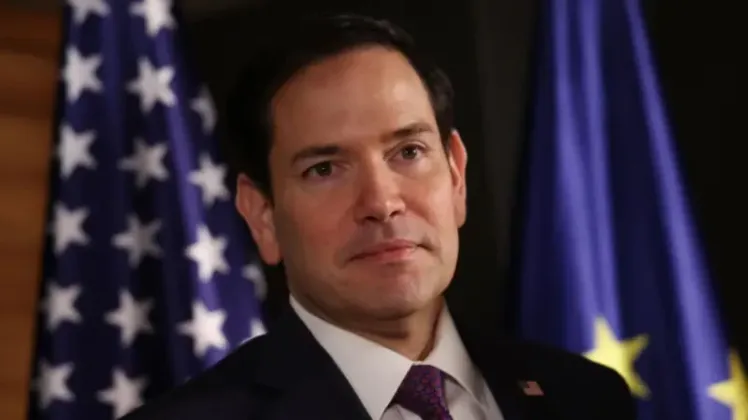
US Secretary of State Marco Rubio has said that India has made "significant progress" in diversifying its energy supply sources, in remarks reported from Kathmandu on Tuesday, October 20, 2026. The assessment from America's top diplomat concerns India, a country that has been importing large quantities of oil from Russia and is now working to expand its supply toward alternative sources. The comments were reported by Nepali news portal RatoPati and carried by its English-language service.
Rubio's assessment of India's energy shift
According to the reports, Rubio described India as having made "significant progress" in diversifying the sources from which it meets its energy needs. The statement is notable both for its source and for its substance. Rubio holds the most senior diplomatic position in the United States government, and a public evaluation of another country's energy procurement from that office is a meaningful signal.
The substance of the remark is equally direct. The reports indicate that India, which has been importing large quantities of oil from Russia, is trying to expand its supply toward alternative sources. Rubio's characterization suggests that, in Washington's view, that effort has advanced far enough to be described as significant.
The reporting did not specify the setting in which Rubio made the comments, the audience he was addressing, or whether the remarks came in response to a question. What the reports do establish is the message itself: an acknowledgment, from the top of US diplomacy, that India's energy supply base is becoming more varied.
Moving away from a concentrated supply base
The context behind the statement lies in India's pattern of oil imports. As the reports note, India has been importing large quantities of oil from Russia. Concentrating a large share of oil purchases with a single supplier carries well-understood risks. Supply can be disrupted, prices can move sharply, and a buyer that depends heavily on one source has limited room to maneuver when conditions change.
Diversification is the standard answer to that exposure. As a policy objective, it typically involves several elements:
- Broadening the number of countries from which fuel is purchased, so that no single supplier dominates the inflow;
- Spreading purchases across different arrangements and price structures, giving the buyer more flexibility;
- Expanding the overall energy mix, so that the wider economy does not rest on a single form of fuel.
The reports place India squarely within that process. The country is described as trying to expand its supply toward alternative sources, an effort that Rubio's remarks suggest has produced real movement. The phrase "significant progress" implies that the shift is not merely announced but underway in substance, though the reports did not detail the specific alternative sources involved or the scale of the change.
Why the remarks carry weight
There are several reasons the statement is drawing attention. First, it comes from the Secretary of State of the United States, a position that shapes how American foreign policy is communicated to the world. Public comments from that office about how India sources its energy are read as a reflection of how Washington views India's trajectory.
Second, the remarks concern a sector that sits at the base of any large economy. Energy supply affects industrial output, transport, household costs and, ultimately, prices across the economy. A country that manages to diversify its energy sources reduces the single points of failure that can otherwise transmit shocks through its entire system. Rubio's assessment indicates that India's movement in this direction is substantial enough to be recognized publicly.
Third, the acknowledgment has a diplomatic dimension. By crediting India with progress, the US Secretary of State has framed India's diversification in positive terms. The framing matters for how exchanges between the two countries over energy are understood, though the reports did not indicate what, if any, policy steps might follow the remarks.
What the reports leave open
While the core statement is clear, the published reporting leaves a number of questions unanswered:
- When and where Rubio made the remarks, and in what setting;
- Which alternative supply sources India is expanding toward;
- How the "significant progress" is being measured, and against what baseline;
- Whether the comments point to any wider change in how the United States views India's energy purchases.
Until those details are filled in, the significance of the story rests on the quote itself. On October 20, 2026, the US Secretary of State went on record describing India's diversification of energy supply sources as significant progress, a judgment reported from Kathmandu and now part of the public record.
For India, the remarks amount to external recognition of an internal adjustment: the effort to move away from dependence on large quantities of Russian oil and toward a wider set of suppliers. For readers tracking energy supply in South Asia, they provide a benchmark from Washington against which India's future procurement choices can be measured. The reports indicate that the effort to expand toward alternative sources continues, and further statements from either side would clarify how far that expansion has come.