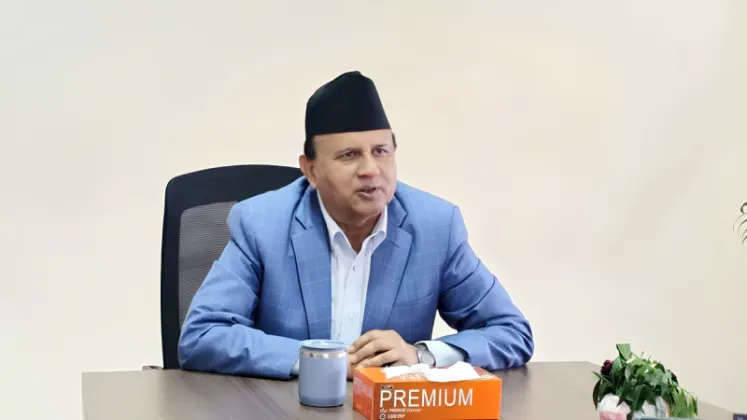
CPN (UML) General Secretary Shankar Pokharel has stressed that the upcoming local elections must be held on schedule, saying local governments cannot be left without elected representatives. Speaking at an event in Dang on Monday, Pokharel said the current term of local governments ends on Jestha 5 next year and therefore the elections should be completed within Baisakh.
Pokharel was addressing a programme organised by Press Chautari Nepal in Dang. His remarks come at a time when the question of the timing of the next local elections has been drawing growing attention in political circles across the country.
Elections within Baisakh
According to the UML General Secretary, the constitutionally mandated five-year term of the local governments will come to an end on Jestha 5 next year. He argued that to ensure there is no vacuum of elected representatives at the local level, the polls must be concluded earlier, within the month of Baisakh.
Pokharel made it clear that leaving local bodies without elected representatives was not acceptable. Local governments, formed after the 2017 and 2022 elections, have been at the front line of delivering services, and any gap in their leadership would directly affect citizens at the grassroots, he indicated.
Warning against vacuum at local level
The UML leader's statement underscores his party's position that the Election Commission and the government should begin preparations in time so that the polls can take place before the current term expires. His comments at the Press Chautari Nepal event in Dang were reported by both Nagarik News and Gorkhapatra Online.
Pokharel, one of the senior most leaders of the CPN (UML), has in recent months been vocal on issues of governance and federal practice. His latest remarks signal that the party wants the local polls prioritised on the national political agenda well ahead of the expiry of the local bodies' term.
Context of the local polls
Nepal's local governments completed their latest election cycle in 2022, with mayors, chairpersons, ward members and other representatives elected for five-year terms. With the next cycle due next year, political parties have begun signalling their expectations regarding the timing of the polls.
The event in Dang where Pokharel spoke was organised by Press Chautari Nepal, an organisation of working journalists. Speaking to the gathering of journalists on Monday, Pokharel framed the timely holding of local elections as an essential requirement of democratic practice rather than a matter of political convenience.
As the date of the end of the local governments' term, Jestha 5 next year, draws closer, debate over the election schedule is expected to intensify. Pokharel's call that the polls be completed within Baisakh adds a clear timeline to that debate, and pressure is likely to grow on the government and the Election Commission to announce the election calendar early enough for the polls to be conducted within that window.
For now, the UML General Secretary's message from Dang is unambiguous: local bodies must not be left leaderless, and the people's right to elected local representatives must be honoured by holding the elections on time, within Baisakh.