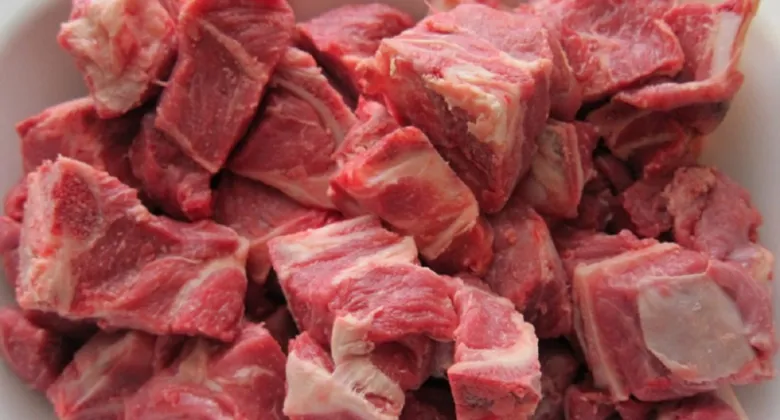
Udayapur district sends about 3,120 metric tons of meat to other districts each year, the Veterinary Hospital and Livestock Service Expert Centre Udayapur said, with the figure representing roughly 39 percent of the district’s annual meat production. The centre estimates that Udayapur produces around 8,000 metric tons of meat annually, while the other 61 percent is consumed in the local market.
Annual production and distribution
The figures show that meat produced in Udayapur serves both local consumers and markets beyond the district. Of the approximately 8,000 metric tons produced each year, 3,120 metric tons is sold and transported outside Udayapur. The remaining share is consumed within the district, according to the centre.
The amount sent outside is often described in rounded terms as about 3,000 metric tons annually. The more specific figure provided by the centre is 3,120 metric tons. Set against estimated production of around 8,000 metric tons, that quantity accounts for approximately 39 percent of the total.
Centre office chief Shukraraj Limbu said 61 percent of meat produced locally is consumed in Udayapur, while the remaining 39 percent goes to other districts. The distribution therefore places the larger share in the local market, while a substantial portion is sold beyond the district. The figures describe the destination of the meat produced in the district, rather than production alone.
Local consumption remains the larger share
Using the centre’s approximate annual production estimate, the 61 percent consumed locally amounts to about 4,880 metric tons. This is a calculation based on the reported total of roughly 8,000 metric tons and the stated local consumption share. The separately reported 3,120 metric tons transported elsewhere corresponds to the remaining 39 percent.
Together, the two shares account for the district’s estimated annual output: the locally consumed portion and the quantity sold and transported to other districts. The figures present a broad annual picture rather than a breakdown by month, type of meat, or individual destination. No such additional details were included in the centre’s reported figures.
Udayapur’s role in supplying other districts
The reported volume indicates that Udayapur is not only a source of meat for its own local market but also supplies buyers in other districts. At about 3,120 metric tons a year, the outward movement represents nearly two-fifths of the district’s estimated production. The centre’s statement links that share to meat sold and transported beyond Udayapur.
The annual figures provide a snapshot of how local production is divided between consumption within the district and trade with other areas. They do not specify which districts receive the meat or explain what factors shape the amount sold outside Udayapur. Based on the available data, the key measure is the balance: 61 percent is consumed locally and 39 percent is sent to other districts.
The Veterinary Hospital and Livestock Service Expert Centre Udayapur is the source of the production and distribution estimates. Its figures put annual meat production at around 8,000 metric tons and the quantity transported outside the district at 3,120 metric tons, while office chief Shukraraj Limbu identified local consumption as the larger share.