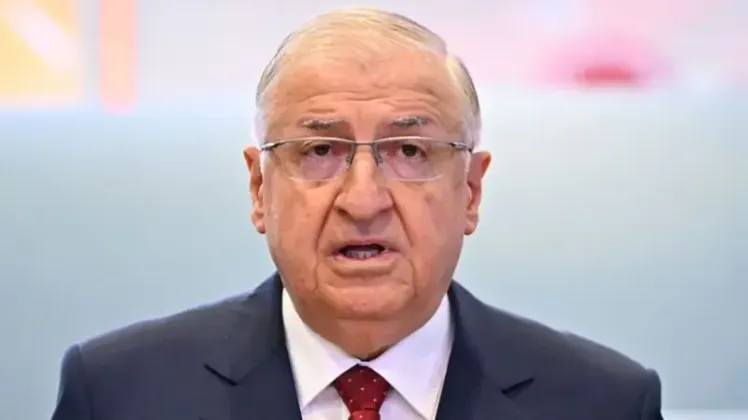
Turkey has announced that it will not take part in any military conflict against the Iran-backed Houthi rebels, a decision that comes despite the joint defence agreements it holds with Saudi Arabia and Pakistan. Turkish Defence Minister Yaşar Güler set out the position in a television interview, stating plainly that Turkey has no intention of fighting the Houthis, who have been attacking Saudi Arabia. The declaration was reported from Kathmandu on 24 October 2026, and it offers a clear picture of where Ankara stands as the rebels' attacks on one of its defence partners continue.
Güler's Statement: "No Intention" of Fighting the Houthis
Speaking in a televised interview, Defence Minister Yaşar Güler left little room for interpretation. Turkey, he said, has no intention of fighting the Houthis, and the country will not join any military conflict against the group. The choice of format matters as much as the message. Rather than letting the position emerge through unnamed officials or diplomatic hints, the Turkish defence establishment placed its stance squarely in the public domain, delivered by the minister who speaks for the country's defence policy.
The statement addresses two sensitive relationships at once. Saudi Arabia is both a Turkish joint defence partner and the state that has been under attack by the Houthis. Pakistan, the other country named in Turkey's joint defence agreements, completes the picture. By ruling out participation in a conflict against the rebels, Güler has effectively signalled how Turkey intends to read its commitments: as frameworks for cooperation, not as an automatic entry into a war.
Key Points at a Glance
- Turkey will not take part in any military conflict against the Houthi rebels.
- Defence Minister Yaşar Güler confirmed the stance in a television interview.
- The refusal stands despite joint defence agreements with Saudi Arabia and Pakistan.
- The Houthis are Iran-backed and have been attacking Saudi Arabia.
- The announcement was reported from Kathmandu on 24 October 2026.
Defence Agreements, But No Mandate for War
The most striking element of the announcement is what it reveals about the limits of Turkey's defence commitments. Ankara maintains joint defence agreements with both Saudi Arabia and Pakistan, yet its own defence minister has made clear that these arrangements do not translate into a duty to fight the Houthis. In effect, the statement draws a firm line: the partnerships exist, but participation in a military conflict against the Iran-backed group is off the table.
What the Agreements Do Not Require
Joint defence agreements can take many forms, and they do not automatically commit a signatory to every armed confrontation a partner may face. Turkey's leadership has now stated, publicly and through its top defence official, that it reads its obligations in precisely that way. The minister's phrase, "no intention," frames the refusal not as temporary hesitation but as a settled policy position. For a country whose defence partner Saudi Arabia is the very state targeted by Houthi attacks, the declaration amounts to a deliberate decision to remain outside the fight.
The Houthis and the Saudi Arabia Backdrop
The Houthi rebels, described in the announcement as Iran-backed, have been attacking Saudi Arabia. It is against this backdrop that Turkey's refusal acquires its meaning. Saudi Arabia appears in the story in two roles at the same time: as the target of the rebel attacks, and as one of Turkey's joint defence partners. That combination would ordinarily place pressure on a government to weigh a more active role. Ankara's answer, delivered in public, is that it will not join any military conflict against the group.
By characterising the Houthis as Iran-backed, the statement also locates the rebels within the regional alignments described in the report. Turkey's refusal, however, is framed strictly around its own intentions. The minister's statement, as reported, contains no conditions or caveats: Turkey simply has no intention of fighting the Houthis.
A Message of Restraint from Ankara
Taken together, the minister's words amount to a message of restraint. Turkey is not walking away from its defence agreements with Saudi Arabia and Pakistan, but it is making equally clear that those agreements will not draw it into a war against the Houthis. The public delivery of the message, by the defence minister on television, suggests that Ankara wants the position understood without ambiguity both at home and abroad.
For anyone tracking the confrontation between the Houthis and Saudi Arabia, the Turkish declaration offers one clear data point: a state with defence ties to the targeted country has chosen non-participation in any military conflict with the rebels. As the report published from Kathmandu on 24 October 2026 makes plain, Turkey's answer to the question of fighting the Houthis is no, and it has said so openly.
The announcement was carried in a report by Ratopati.