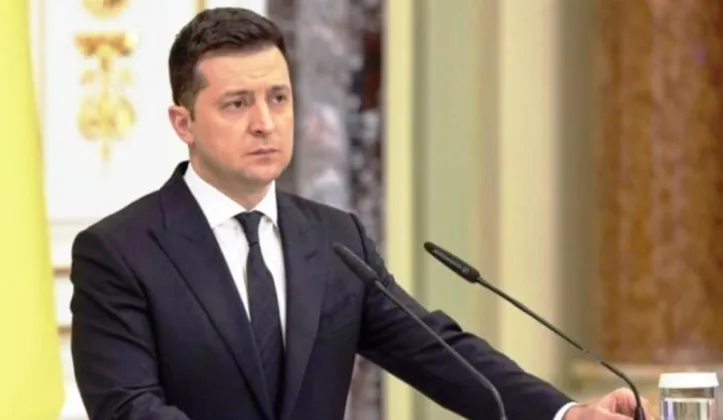
US President Donald Trump has suspended several sanctions on Russia through an executive order, saying the decision is intended to keep Moscow at the negotiating table for peace talks with Ukraine. The suspended measures had been passed by the US Congress and were due to take effect within two days, meaning the White House stepped in at the last possible moment to stop them from coming into force. The move immediately triggered a political storm on both sides of the Atlantic: Ukrainian President Volodymyr Zelensky criticised the decision and urged his supporters to press for new US sanctions on Russia, while American lawmakers denounced the suspension as irresponsible.
Congress-approved sanctions halted at the last minute
The executive order signed by Trump stops, for now, a package of sanctions that had already cleared the US Congress. As reported by Gorkhapatra Online, the measures were due to take effect within two days, leaving almost no gap between the legislative deadline and the president's intervention.
In justifying the suspension, Trump pointed to the fragile state of diplomacy. The US president said he wants to keep Moscow at the negotiating table, implying that tightening economic pressure at this juncture could push Russia away from talks rather than toward a settlement. In effect, the order treats the threat of new sanctions as leverage to be held in reserve rather than a tool to be used immediately.
The decision carries significance beyond its substance. Sanctions passed by Congress carry the weight of the legislative branch, and unilaterally suspending them through executive action underlines the sweeping authority the US president wields over American foreign policy. It also marks a shift in emphasis: instead of escalating pressure on Russia, the administration appears to be prioritising the continuity of negotiations, even at the risk of friction with Kyiv and with members of Congress in Washington.
Zelensky urges supporters to demand new sanctions
For Ukrainian President Volodymyr Zelensky, the suspension came as a sharp disappointment. He criticised the decision openly and, rather than accepting it as a tactical pause, urged his supporters to campaign for new US sanctions on Russia, according to Nagarik News. His appeal effectively asks American audiences to build pressure from below for measures that the White House has just waved away.
The reaction reflects Kyiv's consistent position that economic pressure on Moscow is essential to forcing an end to the war. From the Ukrainian perspective, easing sanctions at the very moment talks are under way risks signalling to Russia that delay carries no cost. Zelensky's choice to take his case directly to the American public, rather than confine his objections to diplomatic channels, underlines how high the stakes have become for a country still resisting Russia's war.
The clash also exposes the delicate balance Ukraine must strike. The United States remains Kyiv's most important international backer, and Zelensky cannot afford a full rupture with the Trump administration even as he disagrees with this particular decision. His response, combining public criticism with a call for grassroots pressure, is calibrated to register strong disapproval without closing the door on future cooperation.
US lawmakers call the decision irresponsible
The suspension did not go unchallenged inside the United States either. US lawmakers reacted sharply, calling the decision irresponsible, as Ratopati reported. Their criticism carries particular weight because the sanctions in question originated in Congress: legislators had done the work of passing the measures, only to see the executive branch block their implementation two days before they were due to take effect.
That sequence, in which Congress approves sanctions and the president then suspends them, is likely to feed an already simmering debate in Washington over the proper division of power in Russia policy. For critics, the episode revives concerns that Trump is more willing to extend a hand to Moscow than to stand firm against its war in Ukraine. For the administration, the counterargument is that sanctions are a means to an end, and that if diplomacy can deliver peace, the leverage should be preserved rather than spent.
High stakes for the peace process
The episode lands at a sensitive moment in international efforts to end the war between Russia and Ukraine. Trump has staked considerable credibility on his ability to negotiate a settlement, and his explanation for the suspension, that Moscow must be kept engaged, suggests the White House views Russian participation as the key variable. Zelensky, by contrast, has long maintained that only sustained pressure will compel Russia to negotiate seriously.
Those two positions are not easily reconciled. The suspension may preserve goodwill with Moscow in the short term, but it risks weakening the very leverage that Kyiv believes is essential to a fair and lasting deal. The outcry from US lawmakers, meanwhile, suggests that domestic opposition will complicate any further easing of pressure on Russia.
For now, the immediate consequences are clear. Sanctions that Congress approved and that were two days from taking effect remain on hold, with no clarity on when or whether they will be enforced. Zelensky, undeterred, is pushing for an entirely new round of American sanctions, while lawmakers opposed to the decision are likely to keep up their criticism. Whether the gambit succeeds in keeping Russia at the negotiating table, or instead emboldens Moscow to dig in, will help determine not only the direction of the peace talks but also the credibility of American diplomacy in one of the world's most consequential conflicts.